
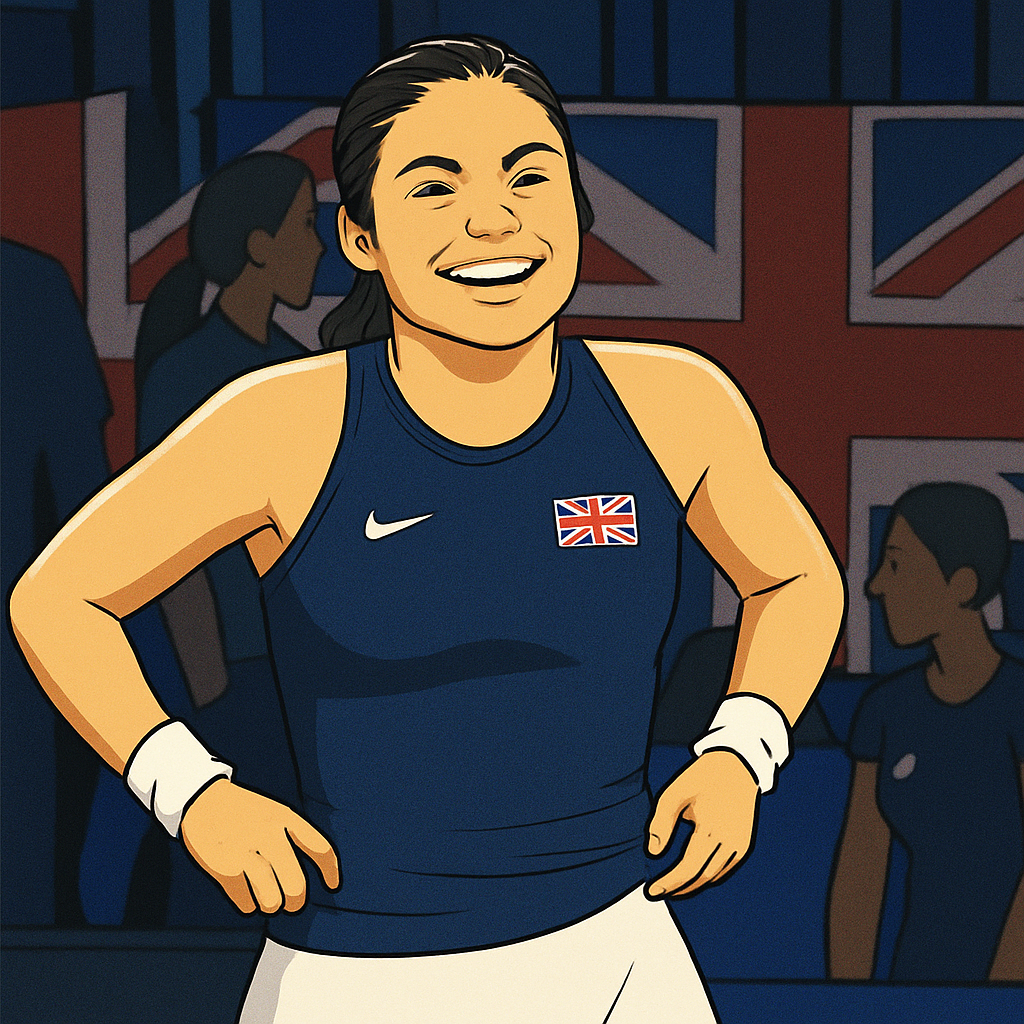
LONDON — In a significant and somewhat surprising announcement, the Lawn Tennis Association (LTA) has confirmed its team for the upcoming Billie Jean King Cup qualifier against France, with former US Open champion Emma Raducanu notably absent from the four-player squad. The decision, made by captain Anne Keothavong, has sparked widespread discussion, placing a spotlight on the delicate balance between individual career management and national team duty in modern tennis.
The British team, set to face a formidable French side on clay in Le Portel on April 12-13, will be led by world No. 28 Katie Boulter. She will be joined by Harriet Dart (No. 102), Heather Watson, and debutante Francesca Jones. The omission of Raducanu, along with the injured Jodie Burrage and the retired Johanna Konta, underscores a transitional period for British women's tennis. Keothavong emphasized that the selection was made with the "best interests of the team" and the players' individual development plans in mind.
Raducanu's Absence: A Mutual Decision
The exclusion of Emma Raducanu is the headline story. The 21-year-old, who rocketed to global fame with her fairytale 2021 US Open victory, has been carefully managing her return to the tour following multiple surgeries last year. Her current world ranking of No. 302, while climbing steadily, reflects her time away from competition. Captain Anne Keothavong stated the decision was reached collaboratively, citing Raducanu's ongoing physical transition back to the WTA Tour's relentless schedule. "I’ve been in dialogue with Emma, her team, and the LTA for the last few weeks," Keothavong explained. "It’s important for her to keep building on her recent progress, and we’ve collectively agreed that focusing on a full training block and her individual tournament schedule is the best way forward for her at this stage."
This rationale highlights the intense physical demands of switching surfaces from the hard courts of the American swing to European clay, especially for a player rebuilding her body. The BJK Cup tie, a best-of-five match format played over two days, requires significant physical and mental reserves. For Raducanu, whose primary goals are to regain match sharpness and climb the rankings unimpeded, the commitment was deemed a potential disruption to a carefully structured plan.
The Chosen Squad: Blend of Experience and Youth
In the absence of its biggest star, the responsibility falls to a determined quartet. Katie Boulter, firmly established as the British No. 1 after a career-best year, will be the anchor. Her powerful baseline game and growing confidence make her a crucial point-winning option. Alongside her, Harriet Dart brings tenacity and recent form, having scored notable wins over top-40 opponents this season. The experience of Heather Watson, a stalwart with over 10 years of BJK Cup service and 40 ties under her belt, provides invaluable leadership and composure in a potentially hostile away environment.
The most intriguing selection is that of Francesca Jones. The 23-year-old, born with a rare genetic condition affecting her fingers and toes, has overcome immense adversity to break into the world's top 150. Her call-up represents a reward for perseverance and a belief in her unique game. "Fran brings a fantastic attitude and a different look to our team," said Keothavong. "She’s earned this opportunity, and her presence will be a great boost to the group dynamic."
The team's key challenges against France will include:
- The Clay Surface: Playing away on red clay, a surface few British players excel on naturally.
- French Depth: France boasts a deep squad likely featuring Top 20 players like Caroline Garcia.
- Atmosphere: Contending with a passionate and vocal French home crowd.
The Wider Context and French Threat
The decision also reflects a broader, perhaps more pragmatic, strategy within British tennis. With the Paris 2024 Olympics on the horizon, where tennis events will be held on the clay of Roland Garros, managing player workloads is paramount. The LTA and player teams are meticulously plotting schedules to ensure peak performance for both the Grand Slam season and the Games. The BJK Cup qualifier, while prestigious, is seen by some as a logistical and physical hurdle in that Olympic-year planning.
Meanwhile, the French team presents a formidable obstacle. Led by former world No. 4 and 2022 WTA Finals champion Caroline Garcia, and potentially supported by the likes of Alizé Cornet, Diane Parry, or Clara Burel, France will be strong favorites on home soil. French captain Julien Benneteau will have a wealth of options, all comfortable on the clay. For Keothavong's British side, the tie is a classic "nothing to lose" scenario, where the pressure of expectation rests squarely on the French team's shoulders.
A Legacy of Commitment and a Look Ahead
The Raducanu decision inevitably draws comparisons to past instances where top British players have skipped BJK Cup ties, often leading to debate about national pride versus professional priorities. However, the current climate in sports science and career management is increasingly player-centric, focusing on longevity. The LTA's support of Raducanu's decision signals a modern approach, prioritizing a player's long-term health and career trajectory over a single, albeit important, team event.
This does not diminish the commitment of those selected. Boulter, Dart, Watson, and Jones will carry the British flag with pride, aiming to pull off a major upset. Their campaign represents a chance to write their own chapter in British tennis history, independent of the Raducanu narrative. A victory against the odds would be a monumental achievement, securing a place in the BJK Cup Finals and proving the depth of talent available.
Conclusion: A Calculated Gamble
Ultimately, the selection of the British BJK Cup squad is a calculated gamble. By opting for a squad free of the distractions and physical uncertainties surrounding Emma Raducanu, captain Anne Keothavong has chosen cohesion and specific readiness. She is banking on the proven grit of Boulter and Dart, the veteran savvy of Watson, and the inspirational story of Jones to coalesce into a competitive unit. The message is clear: this is a team event, and the players chosen are those deemed most prepared to function as a team under intense pressure.
Whether this strategy pays off will be seen on the clay courts of Le Portel. One thing is certain: the narrative surrounding British women's tennis continues to evolve. While the spotlight often follows Raducanu, this moment belongs to a dedicated quartet tasked with a daunting challenge. Their performance will not only determine Britain's fate in the 2024 BJK Cup but will also serve as a powerful statement about the state of the nation's tennis beyond its single, iconic champion.