
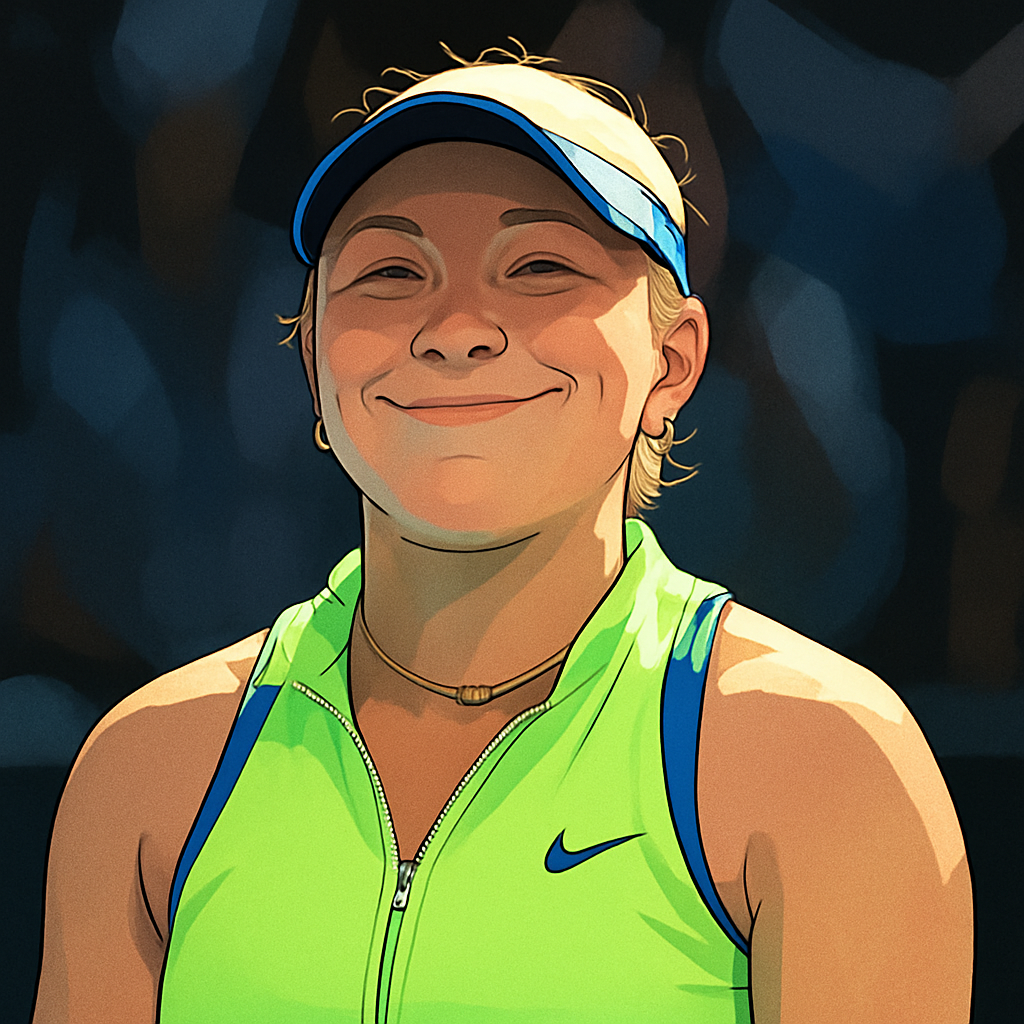
MELBOURNE — The political shadow of former U.S. President Donald Trump unexpectedly loomed over the Australian Open on Tuesday, creating a moment of palpable tension during a press conference with American tennis star Amanda Anisimova. The world No. 4, who had just secured a convincing 6-3, 6-4 victory over Nadia Podoroska to advance to the second round, found herself fielding a question that had nothing to do with her powerful groundstrokes or her comeback season.
An Uncomfortable Question
During the standard post-match media session, a reporter shifted the focus from tennis to politics, asking Anisimova for her thoughts on Donald Trump being in attendance at the tournament. The query was a reference to widespread but unconfirmed reports and social media speculation that Trump, who is currently campaigning for the 2024 Republican presidential nomination, was present at Melbourne Park. The atmosphere in the room instantly chilled.
Anisimova, known for her quiet and focused demeanor, paused for a moment before delivering a brief, pointed response. "I don't have anything to say. I think it's not relevant," she stated, her tone flat and her expression unreadable. The curt reply hung in the air, a stark contrast to the typically routine exchanges about match tactics and fitness. The reporter attempted to follow up, but Anisimova held firm, repeating her stance and effectively shutting down the line of questioning.
The Source of the Speculation
The question did not emerge from a vacuum. For days, the Australian Open had been buzzing with rumors that Trump was in Melbourne. The speculation was fueled by several factors, creating a perfect storm of hearsay that ultimately intruded into the player's press conference. The key elements included:
- Social Media Sighting: A viral photo circulated online purportedly showing Trump in a luxury suite at Rod Laver Arena. The image, however, was grainy and unverified, with many users quickly debunking it as either old or from a different event.
- Local Media Reports: Several Australian tabloids and news outlets ran stories on the "mystery" of Trump's alleged visit, citing unnamed sources and adding a layer of legitimacy to the rumors.
- Security Presence: An increased and noticeable security detail around certain corporate and player areas was noted by attendees, which some speculatively linked to a high-profile visitor.
Despite the chatter, tournament officials and Tennis Australia remained silent on the matter, neither confirming nor denying the presence of the controversial former president. This official silence only served to amplify the speculation, leaving players potentially vulnerable to being ambushed by questions on a highly charged political topic.
Navigating the Political Minefield
Anisimova's reaction underscores the delicate and often uncomfortable position athletes find themselves in when political figures intersect with sporting events. Tennis, a global individual sport, has a diverse cohort of players from nations with vastly different political landscapes. For an American player like Anisimova, a question about Trump is not a simple inquiry about a celebrity spectator; it is a potential trap door into the fraught arena of U.S. politics.
Her decision to offer no comment was a textbook example of damage control. By stating the topic was "not relevant," she accomplished several things at once: she declined to engage, protected her personal views from public dissection, and attempted to redirect focus back to her profession. "I'm just here to play tennis," was the unspoken message, a sentiment many athletes have had to invoke in similar circumstances.
This incident is not isolated. The world of sports has increasingly become a stage for political statements and confrontations. From activism on racial justice to responses to international conflicts, athletes are constantly pressured to have an opinion. However, the intrusion of a figure as polarizing as Donald Trump presents a unique challenge. Any comment, whether supportive or critical, risks alienating a significant portion of fans, sponsors, or even fellow players.
A Pattern of Sporting Intersections
Donald Trump himself is no stranger to the world of sports, often using major events as a backdrop for his public appearances. He has attended UFC fights, World Series games, and college football championships, where his presence is typically met with a mix of boos and cheers, instantly becoming the center of attention. His potential appearance at a globally broadcast event like the Australian Open fits this pattern, transforming a sporting venue into an inadvertent political platform.
For the tournament organizers, the rumors presented a logistical and public relations dilemma. Acknowledging his presence could be seen as an endorsement and would dominate the news cycle, overshadowing the athletic achievements on court. Remaining silent, however, created the very scenario that played out with Anisimova—where players are left to deal with the fallout unprepared.
The Aftermath and Focus on Tennis
Following the frosty exchange, the press conference moved on to more conventional tennis topics. Anisimova discussed her satisfaction with her performance, her work on maintaining aggression, and her happiness to be back competing at a high level after taking a break for mental health reasons in 2023. The Trump question, however, remained the headline-grabbing moment from the session.
The episode sparked immediate debate on social media and sports talk platforms. Some criticized the reporter for injecting politics into a tennis setting, arguing that athletes should not be put on the spot about partisan figures. Others defended the line of questioning, stating that Trump's presence, if true, was newsworthy and that public figures, including athletes, can be asked about current events.
Reaction from other players was muted, with most following Anisimova's lead in avoiding the topic. When asked, tournament referee Wayne McKewen declined to comment on the identity of specific guests in private suites, citing privacy protocols. "We have many distinguished guests at the Australian Open from all walks of life," he stated diplomatically. "Our primary focus is on delivering a world-class tennis event."
Conclusion: When the Game is Overshadowed
The uncomfortable press conference with Amanda Anisimova highlights the increasing difficulty of separating sports from the political currents that swirl around them. While the Australian Open is a celebration of athletic excellence, it exists in a world where figures like Donald Trump command attention that can easily divert the narrative. Anisimova's terse, "no comment" response was a defensive shot played under unexpected pressure—a reminder that for the players, the court is where they have control, not in the interview room when faced with a political volley.
Ultimately, the rumors of Trump's attendance remained unconfirmed by the tournament's conclusion. Yet, the brief, frosty exchange they provoked ensured that for one day, at least, a discussion about a former president's speculated whereabouts overshadowed the powerful comeback of a top-five tennis talent. In the end, the incident served as a case study in how modern sporting events must navigate a landscape where the personal, the athletic, and the political are inextricably and often uncomfortably linked.