
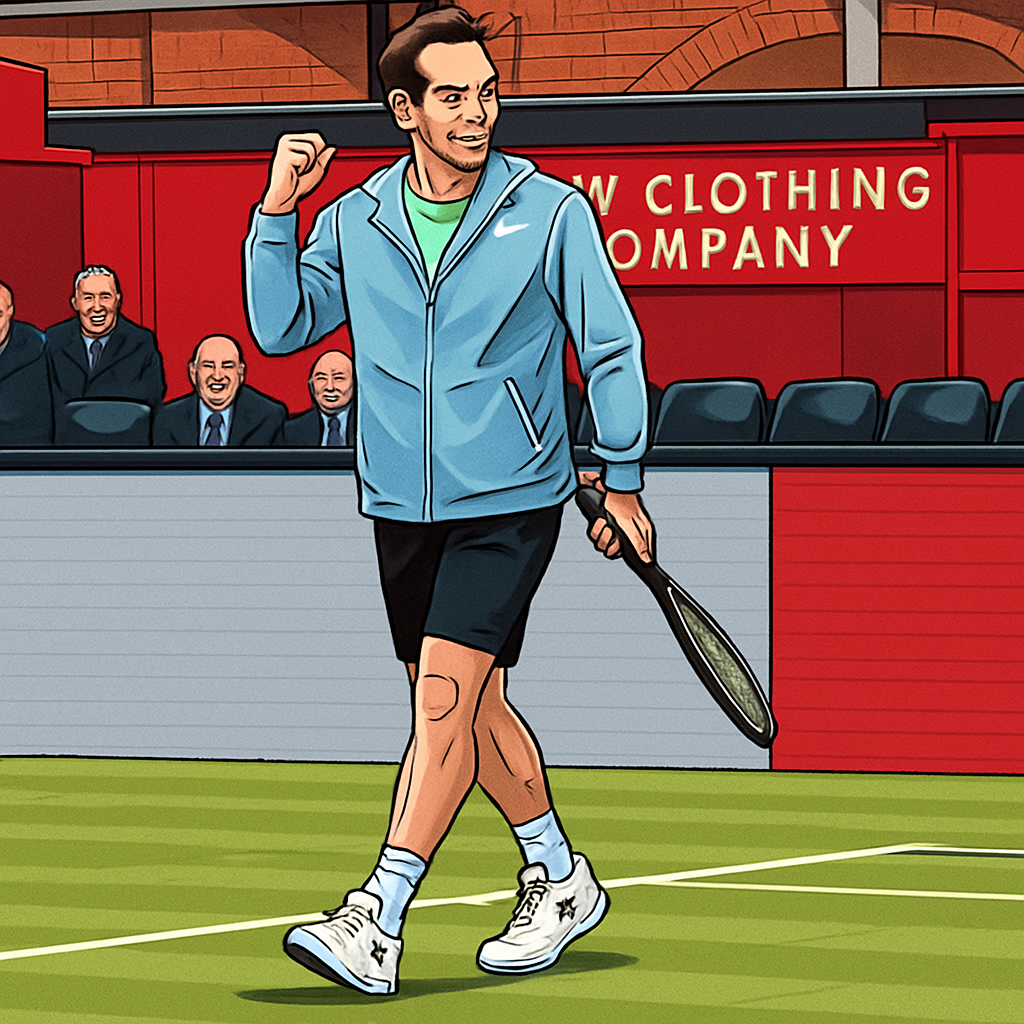
LONDON — In a surprising result that has sparked widespread debate, a major new survey has crowned Andy Murray as the most inspirational British sports star of the 21st century, seeing off competition from global icons including David Beckham and Lewis Hamilton. The study, commissioned by Betting.com and polling over 2,000 British adults, placed the Scottish tennis legend at the pinnacle, highlighting his relentless determination and historic achievements as key factors in his victory.
The Methodology and the Top Contenders
The research asked participants to rank a pre-selected list of modern British sporting greats based on who they found most inspirational. The criteria were left open to individual interpretation, encompassing on-field success, personal journey, resilience, and impact beyond sport. The final ranking delivered a fascinating snapshot of public perception, with Murray securing 18% of the vote. He was followed closely by seven-time Formula 1 world champion Lewis Hamilton (16%) and footballing superstar David Beckham (13%).
The rest of the top ten featured a mix of Olympic heroes and team sport pioneers:
- 4. Jessica Ennis-Hill (Athletics)
- 5. Mo Farah (Athletics)
- 6. Sir Chris Hoy (Cycling)
- 7. Beth Mead (Football)
- 8. Jonny Wilkinson (Rugby)
- 9. Kelly Holmes (Athletics)
- 10. Ronnie O'Sullivan (Snooker)
Why Murray? The Case for the Underdog
The result speaks volumes about the qualities the British public values most in its sporting heroes. While Beckham and Hamilton have achieved stratospheric, globally-recognised fame and commercial success, Murray’s narrative is fundamentally different. His career has been a masterclass in perseverance against the odds. For years, he carried the immense weight of a nation's 77-year wait for a male Wimbledon singles champion, facing and losing his first four Grand Slam finals in an era dominated by the "Big Three" of Roger Federer, Rafael Nadal, and Novak Djokovic.
His breakthrough, therefore, felt seismic. The 2012 US Open victory was followed by the cathartic 2013 Wimbledon title, a moment of national celebration. But perhaps even more inspirational than those triumphs is his later career. Battling a severe hip injury that left him barely able to walk, let alone play elite tennis, Murray underwent major metal resurfacing surgery in 2019. Many wrote his career obituary. His subsequent return to the tour, even claiming titles and battling the world's best with a metal hip, is seen as a staggering feat of willpower.
As one sports psychologist quoted in the analysis noted, "Murray’s story isn't one of untouchable genius; it's one of human grit. The public sees someone who has faced profound physical and psychological adversity and has refused to quit. That resonates on a deeply personal level far beyond tennis."
The Snub: Context for Beckham and Hamilton
The placing of David Beckham and Lewis Hamilton behind Murray is not a dismissal of their achievements, but perhaps a reflection of their perceived distance from the average person. Beckham, despite his humble beginnings and incredible work ethic, has long since transcended sport to become a billionaire fashion and business icon. His life is one of glamour and global celebrity. Similarly, Lewis Hamilton’s success in the ultra-exclusive, technologically-driven world of Formula 1, combined with his jet-setting lifestyle and activism, can sometimes feel removed from everyday struggles.
A commentator on the survey results observed, "Inspiration is often rooted in relatability and perceived struggle. Hamilton and Beckham are admired and revered, but Murray is seen as having fought a more visceral, lonely battle—first against sporting giants, then against his own body. His vulnerability and public emotionality make his successes feel earned in a way that touches a different nerve."
The Legacy of Breaking Barriers
Murray’s inspiration also extends to his role as a trailblazer. He has been a powerful and consistent advocate for gender equality in tennis, famously correcting reporters who overlooked female players. His hiring of Amélie Mauresmo as his coach was a bold statement in a male-dominated field. Furthermore, his journey has redefined what is medically possible in professional sport, offering hope to countless amateur athletes dealing with similar injuries. This broader impact, combining sporting glory with social consciousness and medical defiance, creates a powerful inspirational package.
Public and Pundit Reaction
The survey's findings have ignited lively discussion across sports media and social platforms. Many agree wholeheartedly, citing Murray’s "never-say-die" attitude as the epitome of inspiration. Former British number one Tim Henman, a long-time friend and colleague, stated, "What Andy has done, especially post-surgery, is nothing short of miraculous. He is the ultimate competitor."
However, there is a vocal contingent questioning the snub of Hamilton, who broke barriers as the first Black driver in F1 and has matched Michael Schumacher's record of seven world titles. Supporters argue his fight against racism and dedication to diversity initiatives represent a profound form of modern inspiration. Similarly, Beckham’s advocates point to his role in popularising football globally, his philanthropic work, and his transformation from a player ridiculed after the 1998 World Cup to a national captain and icon.
Conclusion: A Triumph of Grit Over Glamour
Ultimately, the survey reveals that for the British public in 2024, raw perseverance and relatable triumph may carry more inspirational weight than sustained dominance or global celebrity. Andy Murray’s award is a testament to a career defined not just by its peaks—those two Wimbledon titles, two Olympic golds, and a rise to world number one—but by the valleys in between and the sheer bloody-mindedness required to climb back out. While David Beckham and Lewis Hamilton will forever be legends in their fields, this particular honour celebrates a different kind of heroism: the inspiring power of an indomitable will.
As Murray himself continues to battle on tour, potentially in his final season, this accolade serves as a powerful reminder that his greatest legacy may not be the silverware in his cabinet, but the indelible mark he has left on the sporting psyche of a nation. He has shown that inspiration is not merely about winning, but about how you fight, how you fall, and how you find a way to get back up again.