
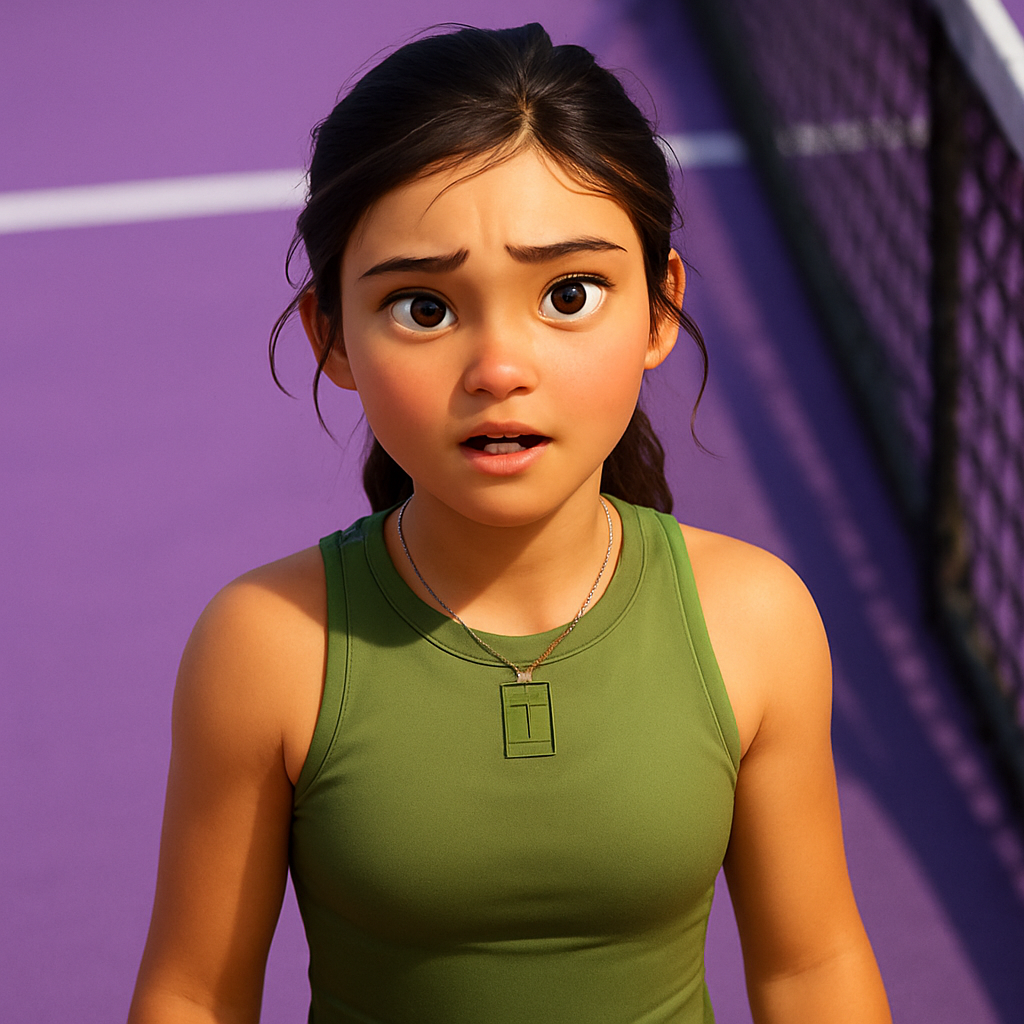
The coaching carousel in tennis is a well-worn narrative, especially for young talents navigating the pressures of the professional tour. For Emma Raducanu, whose stunning 2021 US Open victory was achieved without a full-time coach, the search for a lasting partnership has been a public saga. Since that New York fairytale, she has cycled through a series of high-profile mentors, from Andrew Richardson and Nigel Sears to Torben Beltz and Dmitry Tursunov. Her current status, once again, is that of a solo operator. Yet, rather than viewing this as a crisis or a sign of instability, there is a compelling argument to be made that Raducanu should lean into this period of independence. In fact, she might find the perfect blueprint for success by looking to the career of Roger Federer and a pivotal, coach-less chapter in his own journey.
The Federer Precedent: Liberation in Independence
Following his split with coach Tony Roche in 2007, Roger Federer entered a period where he relied on a close-knit team—his physio, fitness coach, and his own unparalleled tennis IQ—but did not appoint a new head coach for over a year. This was not a period of decline; it was an era of utter dominance. During this stretch, Federer won the 2007 Wimbledon title, the 2007 US Open, and reached the finals of the French Open and the Australian Open in 2008, all while solidifying his status as the world's best. For Federer, this time was less about technical overhaul and more about trusting the game and the team that had brought him to the summit.
The Swiss maestro has often reflected on this phase as one of clarity and self-reliance. He was free to play his natural, instinctive game without the filter of a new voice. As he told The Guardian in 2009, "I've had a great run without a coach, and I feel I know exactly what I need to do to win tournaments." This confidence in his own process allowed him to manage his schedule, his practice, and his in-match adjustments with a sovereign command that few players ever achieve. It was a masterclass in self-belief, proving that for an established champion, sometimes the best coach is the one already inside your head.
Raducanu's Unique Path and Present Challenge
Emma Raducanu's situation is, of course, different. She burst onto the scene with a once-in-a-generation run at Flushing Meadows, a victory built on fearless tennis and a clear, aggressive game plan executed to perfection. Since then, her career has been hampered by injuries and the immense weight of expectation. Each coaching change brought a subtle shift in tactics, footwork, or mentality—a search for the missing ingredient that was, perhaps, never really lost. The constant has been Raducanu's own formidable ball-striking ability and athleticism.
Now, after recovering from triple surgery on her wrists and ankle, Raducanu is rebuilding her game and ranking. The absence of a formal coach could be framed as a disadvantage. However, it also presents a golden opportunity to reconnect with the player who won the US Open. That version of Raducanu was not the product of a single coaching philosophy; she was a fusion of her own hard work, the guidance of her childhood coach, and the临场 coaching of LTA's Iain Bates during the tournament. She played with a liberated, problem-solving mindset. As she navigates the 2024 season, this period of self-reliance could allow her to:
- Rediscover her instinct: Play without over-complication, trusting the aggressive baseline game that brought her greatest success.
- Own her development: Identify, on her own terms, what aspects of her game need strengthening post-surgery, rather than adapting to a new coach's immediate priorities.
- Build resilience: Develop the in-match problem-solving skills that are hallmarks of all great champions.
The Voices of Support
This perspective is not merely theoretical. Prominent figures in the sport have publicly endorsed the idea of Raducanu embracing this solo phase. Former British No. 1 and now respected pundit Laura Robson has been vocal in her support. Following Raducanu's encouraging run to the fourth round of Indian Wells—where she defeated players like Maria Sakkari and Caroline Dolehide—Robson noted the positive signs. "She's playing like the Emma of old," Robson said. "There's a freedom to her game right now that comes from just going out there and playing, not overthinking a specific game plan from a new voice. Sometimes you just need to play matches and remember what you're good at."
This sentiment echoes the experience of Federer. The break from a formal coach allowed him to strip the game back to its essentials. For Raducanu, whose game can be technically excellent but has sometimes appeared bogged down by strategic uncertainty, a similar simplification could be revolutionary. The goal is not to forever eschew coaching, but to use this time to establish a core, unshakeable identity on the court that any future coach can then build upon, rather than redefine.
The Modern "Team" vs. The Singular "Coach"
It is crucial to distinguish between having no coach and having no team. Federer was never truly alone; he had his long-time fitness coach Pierre Paganini and physio Pavel Kovac. Raducanu is in a similar position. She is working closely with her childhood coach, Nick Cavaday, on a part-time, informal basis, and is supported by a dedicated physical trainer and team. This model—a trusted inner circle without a single, overarching technical director—is increasingly common and can offer stability without creative constraint.
The key for Raducanu is to leverage this structure to foster independence, not dependence. Her performance at Indian Wells and her gritty win over Angelique Kerber in Stuttgart demonstrated a player re-finding her fight and her flow. The decisions on the court—when to attack, when to change direction—were coming from her. This builds a type of confidence that no amount of sideline instruction can replicate. As eight-time Grand Slam champion Andre Agassi once reflected on his own career, "The most important voice on the court has to be your own. A coach's job is to make that inner voice smarter and stronger, not to replace it."
Conclusion: A Time for Self-Discovery, Not Panic
The pressure to appoint a "big-name" coach will always be there for a player of Raducanu's profile. However, the lesson from Roger Federer's most successful coach-less period is profound: for a player with a Grand Slam-winning game already embedded, enforced independence can be a catalyst for greatness, not a step back. It is a chance to mature as a tennis tactician, to build resilience, and to solidify a playing identity that is authentically and unapologetically her own.
Emma Raducanu should not rush to fill the vacant head coach seat. Instead, she should copy Federer's simple, yet powerful, call: to trust herself. By leaning into this period, working with her trusted support network, and playing with the liberated instinct of her US Open run, she can lay a foundation that is stronger than any built on a revolving door of external philosophies. This chapter is not about finding a coach; it's about rediscovering the champion within. And as history shows, that can be the very best thing for her.