
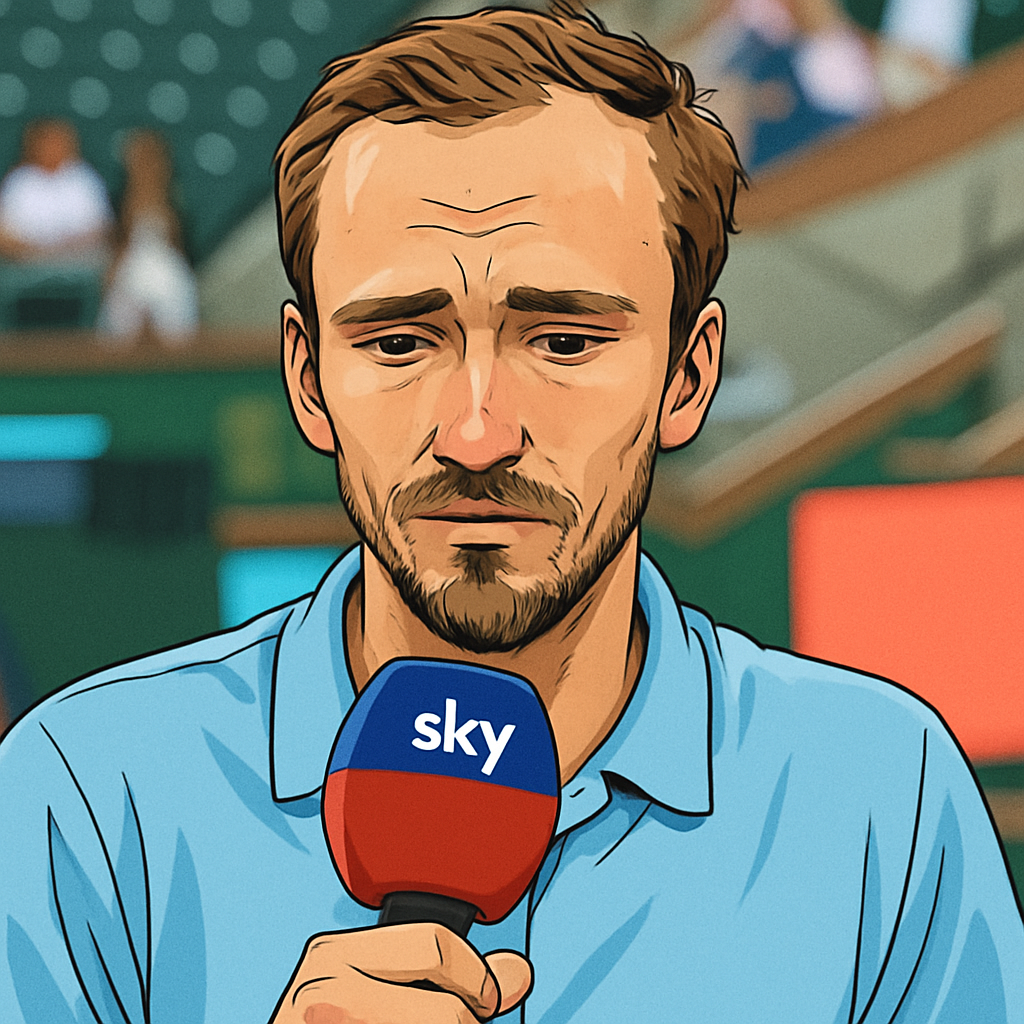
MONTE CARLO — The tennis world knows Daniil Medvedev for his cerebral, chess-like approach to the game, his unorthodox but devastatingly effective groundstrokes, and, yes, his fiery on-court temperament. Last year, a significant shift occurred in the Russian's camp when he and his long-time coach Gilles Cervara, the architect of his rise to World No. 1 and a Grand Slam title, decided to part ways. It was a move that prompted deep introspection. In a recent, revealing interview, Medvedev shared the crucial advice he sought and received from some of the "best coaches in the game" in the aftermath of that split and his subsequent, very public meltdowns.
A Crossroads and a Search for Wisdom
The 2023 season was a rollercoaster for Medvedev. He began spectacularly, winning five titles including prestigious Masters 1000 events in Rotterdam, Doha, Dubai, and Miami, and reaching the pinnacle of the sport once more. However, following a heartbreaking five-set loss to Carlos Alcaraz in the Wimbledon semifinals, his form dipped. The partnership with Cervara, which had yielded his sole major at the 2021 US Open, had run its course. By the autumn, they had amicably separated. Medvedev found himself navigating the tour's final stretch without his primary strategist, a period punctuated by notable outbursts, including a fiery tirade against a umpire in Vienna.
It was in this state of transition that Medvedev, a player known for overthinking, decided to seek external counsel. He didn't just talk to anyone; he deliberately sought out the minds he respects most. "I spoke to some of the best coaches in the game," Medvedev disclosed. "Not necessarily my coaches, but coaches that I know, that are on tour, that I talk [to] sometimes." His mission was singular: to understand how to better manage the intense emotions that sometimes boil over during competition.
The Unanimous Verdict: Let It Out
The consensus from these seasoned tacticians was not what some fans or pundits might have expected. They didn't advise him to suppress his feelings or to cultivate a stoic, robotic exterior. Quite the opposite. "All of them told me one thing: 'It's impossible to keep it inside,'" Medvedev recounted. The coaches explained that attempting to bottle up frustration and anger is a losing battle—the pressure will inevitably find a release, often at the most inopportune moment or in a more destructive way. Their collective wisdom pointed toward controlled expression as the healthier, more performance-oriented path.
This advice led Medvedev to a profound realization about his own psychology and that of his peers. He began to observe other top players, noting that even the most composed have their breaking points. "I started to look at other players and [see] that everyone is doing it," he said. "Maybe in different ways." The key takeaway was normalization. His emotions weren't a unique flaw but a shared human experience in the high-stakes arena of professional sport.
The Spectrum of On-Court Expression
Medvedev's observations highlighted the diverse ways champions handle pressure:
- The Internalizers: Players like Novak Djokovic or Rafael Nadal often channel intensity into fierce self-talk, intense stares, or celebratory roars directed at their own team.
- The Externalizers: Himself, Andy Murray, or Nick Kyrgios, who are more prone to direct verbal engagement with their box or the umpire.
- The Physical Venters: Those who might slam a racquet (within limits) or use a loud grunt to release energy.
- The Tactical Pausers: Using towel breaks, slow walks to the back fence, or meticulous racket preparation as a moment to reset.
Implementing the Lessons: A New Equilibrium
Armed with this perspective, Medvedev's goal shifted. It was no longer about eliminating outbursts entirely—a task deemed "impossible"—but about managing their frequency and impact. "The goal is to try to do it less," he stated pragmatically. The focus became on quicker recovery, ensuring that a moment of frustration doesn't spiral into a lost set or, worse, a lost match. This philosophy aligns with his current coaching setup, working with former French pro Gilles Simon, who is known for his own calm demeanor and strategic genius.
The results of this mental recalibration are becoming evident. The 2024 season has seen a more consistent Medvedev. While the passion is still unmistakably present—see his animated discussions with his box or his sarcastic applause—the prolonged, match-derailing meltdowns have been less frequent. He reached the Australian Open final, pushing Jannik Sinner to a thrilling five sets, and has again been a fixture in the latter stages of major tournaments. He speaks now with the clarity of someone who has made peace with a part of himself he once might have seen as a weakness.
"Before, I was maybe too hard on myself about it," Medvedev reflected. "I thought, 'Why do I do this? I need to stop.' And then you try to stop, you keep everything inside, and at one moment you blow up even more. So now I understand it's part of the game." This acceptance is not an excuse for poor behavior, but a strategic understanding of his own engine. He acknowledges the line that cannot be crossed, but allows himself the space to vent steam before the pressure cooker explodes.
Conclusion: Embracing the Fire
Daniil Medvedev's journey following the split from Gilles Cervara is a compelling case study in athlete development beyond technique and tactics. By consulting the "best coaches in the game," he gained access to a collective wisdom that reframed his greatest perceived liability. The lesson was clear: the fire within is not the enemy; it is the fuel. The art lies not in extinguishing it, but in learning to regulate its burn. For Medvedev, the path forward is not about becoming a different person on court, but about being a more integrated and self-aware competitor. He is learning to harness his notorious intensity, not hide from it—a nuanced adjustment that may well be the key to unlocking the consistency needed to add more Grand Slam titles to his legacy. In the high-pressure world of elite tennis, sometimes the best coaching advice isn't about how to hit a better backhand, but about how to better handle the heart and mind holding the racket.