
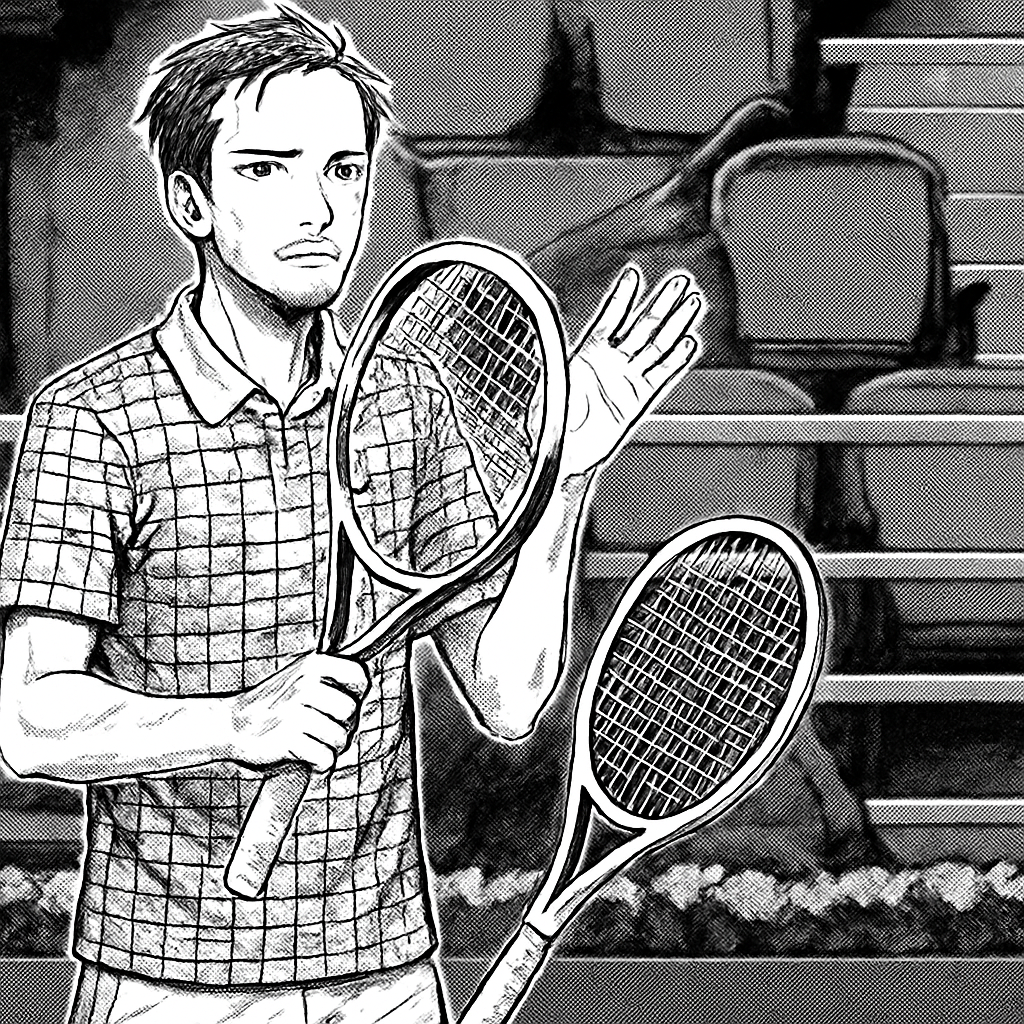
MONTE CARLO — Daniil Medvedev, the former world No. 1 known for his cerebral and often brutally honest court-side analysis, has turned his focus to a far more complex opponent: the ATP Tour schedule itself. Following a grueling defeat to Karen Khachanov at the Monte-Carlo Masters, Medvedev delivered a scathing assessment of the modern tennis calendar, offering a simple yet radical solution he admits the sport’s powers are unlikely to ever implement.
The Russian star’s frustration stems from a relentless itinerary that sees top players bounce from continent to continent with minimal recovery time. His comments come amid a growing chorus of player complaints about physical burnout and injury risks, highlighting a fundamental tension between commercial interests and athlete welfare. Medvedev’s prescription was stark: "For me, what would be ideal is to get rid of all these tournaments that are back-to-back, like one week on hard court, one week on clay."
The Impossible Grind: A Schedule Built for Revenue, Not Recovery
The core of Medvedev’s argument attacks the very structure of the ATP Tour, which is designed to maximize tournament entries and broadcast revenue through a near-constant stream of events. The current model frequently forces players to compete in consecutive weeks, often on different surfaces—a brutal physical transition that Medvedev argues is unsustainable. "You finish on Sunday, and Monday you’re already playing on a different surface," he lamented.
This isn't merely a complaint about fatigue; it's a critique of a system that prioritizes quantity over quality. The packed calendar leaves little room for proper training blocks, strategic rest, or even adequate recovery from minor niggles, inevitably leading to more withdrawals and a diluted product for fans. Medvedev pointed to the recent "Sunshine Double" of Indian Wells and Miami as a prime example of the problem, despite its prestige.
"Even Indian Wells and Miami, I don’t think it’s good back-to-back," he stated, challenging a sacred cow of the tour. "It’s just the way it is. They’re great tournaments, but for health, if you ask any physio or any doctor, they would say it’s not good to play five-set matches in Indian Wells, final on Sunday, and then first round on Wednesday in Miami on a different continent."
The Brutal Reality Check: "It Will Never Happen"
What makes Medvedev’s comments particularly poignant is his resigned acceptance that his ideal solution is a fantasy. He understands the economic and contractual realities that bind the tour. Tournaments pay substantial fees for their spots in the calendar, broadcasters demand consistent content, and sponsors expect star players to appear at designated events. Streamlining the schedule would mean fewer tournaments, less revenue, and a complex renegotiation of the entire tennis ecosystem.
"This will never happen because we have a 1,000 [point tournament] in Shanghai, then a 500 in Beijing, then a 250 in Tokyo," he explained, listing the typical Asian swing. "They all want to have their tournaments. So, for health, it’s terrible. For the sport, I’m not sure. But it will never happen, so there is no reason to talk about it."
This fatalism underscores a deep-seated frustration among players. They are vocal about a problem with a clear logical solution, yet feel utterly powerless to enact change against the entrenched interests of tournaments, national federations, and the tour’s own business model. Medvedev’s rant is less a proposal and more a public airing of a painful truth the ATP must eventually confront.
A Growing Chorus: The Physical Toll Demands Attention
Medvedev is far from a lone voice. The list of players sidelined or hampered by injuries linked to the schedule’s demands grows each season. The physical toll of switching surfaces—particularly the jarring shift from clay to grass, and then back to hard courts—is well-documented. The current calendar creates a perfect storm for soft-tissue injuries, stress fractures, and chronic wear-and-tear.
Key issues players like Medvedev highlight include:
- Insufficient Adaptation Time: The one-week gap between the French Open (clay) and Wimbledon (grass) is notoriously inadequate for the body to adjust, leading to compromised performance and higher injury risk.
- Travel Fatigue: Constant long-haul flights across time zones disrupt sleep patterns and hinder recovery as much as the matches themselves.
- No Off-Season: The so-called "off-season" has shrunk to barely six weeks, leaving minimal time for restorative rest and foundational fitness work.
This environment forces players into a brutal calculus: play through pain and risk long-term damage, or withdraw and sacrifice ranking points, earnings, and fan engagement. As Medvedev implies, the system incentivizes short-term participation at the potential cost of long-term career longevity.
Is There a Path Forward? Incremental Change vs. Radical Overhaul
While Medvedev’s call to "get rid of them" may be politically impossible, his outburst adds significant weight to calls for smarter scheduling. The ATP has made some efforts, such as extending the offseason and trialing condensed formats for some events. However, players are increasingly demanding more substantive reforms.
Potential compromises could involve:
- Mandatory Rest Periods: Enforcing longer breaks between major surface switches or after deep runs in Grand Slams and Masters 1000 events.
- Surface-Specific "Swings": Better clustering of tournaments on the same surface to reduce the frequency of drastic transitions.
- Reduced Mandatory Commitments: Allowing top players more flexibility to skip certain events without severe ranking penalties, enabling them to peak for the majors.
Yet, each of these measures faces stiff resistance. Tournament directors fear losing star draws, and the ATP must balance the interests of its 500+ members. Medvedev’s cynicism is born from this exact political gridlock.
Conclusion: A Champion’s Warning to the Sport
Daniil Medvedev’s comments in Monte Carlo are more than just post-match venting; they are a stark warning from one of the game’s sharpest minds. He has diagnosed a systemic illness in professional tennis—a schedule that consumes its own participants. By bluntly stating that the ideal fix "will never happen," he hands the ATP a brutal reality check.
The tour’s leadership is now faced with a critical question: can it continue to ignore the rising medical data and player testimony in favor of the status quo? Or will it find the courage to prioritize the health and longevity of its athletes, even if it means difficult financial and structural reforms? Medvedev may not believe change is coming, but by so forcefully stating the problem, he has ensured the row over the tennis calendar will rumble on louder than ever.