
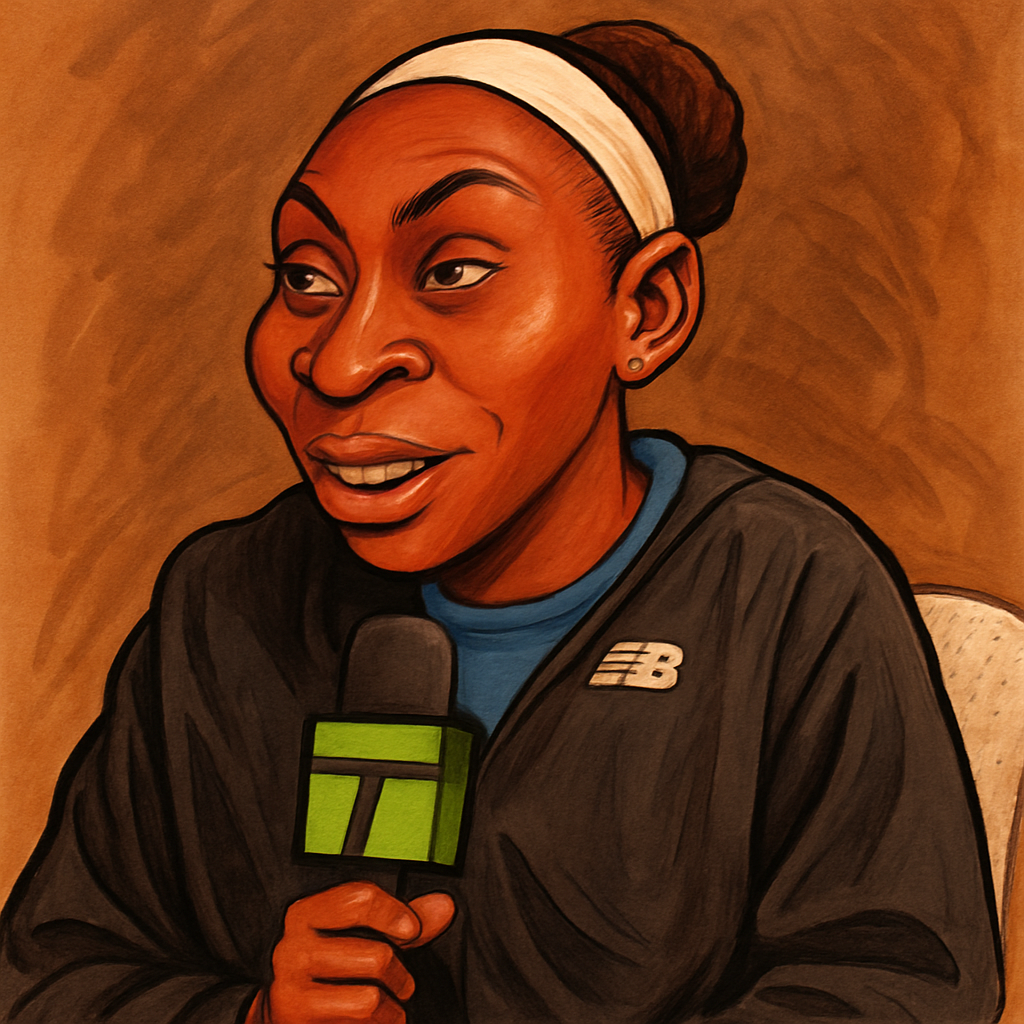
INDIAN WELLS — The tennis world’s spotlight often shines brightest on prodigious young talent, and few rivalries capture the imagination like that of Coco Gauff and Emma Raducanu. Both Grand Slam champions before their 20th birthdays, their paths have been a study in contrasting trajectories. At the 2024 BNP Paribas Open in Indian Wells, their narratives intersected not on the court, but in a candid press conference where Gauff offered a thoughtful and empathetic perspective on Raducanu’s most recent career pivot.
The controversy stemmed from Raducanu’s decision to part ways with her childhood coach, Nick Cavaday, after a promising Australian Open run and just weeks before the prestigious Sunshine Double. This move, perceived by some as another chapter in Raducanu’s frequent coaching changes, drew scrutiny. It was in this context that world No. 3 Coco Gauff, known for her maturity beyond her years, was asked for her thoughts. Her response was not one of judgment, but of understanding and a surprising admission about her own career management.
The Coaching Carousel: Raducanu's Search for Stability
Since her fairytale run to the 2021 US Open title as a qualifier, Emma Raducanu’s coaching situation has been a constant topic of discussion. She has worked with a succession of high-profile names, including Andrew Richardson (during her US Open win), Nigel Sears, Torben Beltz, and Dmitry Tursunov. The partnership with Cavaday, who guided her through a successful junior career, was seen as a potential return to a stable, familiar foundation. Their split, therefore, raised eyebrows and led to questions about Raducanu’s long-term planning.
Raducanu has consistently defended her right to seek the right fit, emphasizing the need for a team that aligns with her specific needs at any given moment. In a statement, she framed the decision as a proactive one, saying, "I've made a lot of changes in my career, and this is just another one. I'm very comfortable and confident in making those decisions, and I stand by them." This self-assuredness, however, has often been met with external criticism from pundits who believe consistency is key to development.
Gauff's Empathetic Take: "I've Been Through That"
When posed with the question about Raducanu’s latest change, Coco Gauff’s answer was revealing. Rather than critique, she drew a parallel to her own experiences, particularly her highly publicized split with coach Diego Moyano in 2021 and subsequent work with a team that eventually solidified with Brad Gilbert and Pere Riba. "I've been through that," Gauff admitted. "I went through a period where I was changing coaches a lot, and people had a lot to say about it."
Gauff emphasized that outsiders rarely have the full picture of a player-coach dynamic. She highlighted several key factors that a player must consider, which the public and media often overlook:
- Communication Style: Does the coach’s method of delivering information resonate with the player?
- Philosophical Alignment: Do they share the same vision for game style and development?
- Personal Chemistry: Is there a trust and comfort level that extends beyond the court?
"At the end of the day," Gauff explained, "we are the ones out there on the court. We are the ones who have to feel confident in our game plan and in the voice we're listening to in our ear during a tough match. If something doesn't feel right, it's our career, and we have to make the change we believe is best." This defense of player agency cut to the heart of the debate, framing Raducanu’s decision not as indecision, but as assertive career management.
The Pressure of the Spotlight on Young Champions
Both Gauff and Raducanu have navigated unprecedented fame from a young age, but their journeys have differed. Gauff’s rise was a steady climb marked by gradual breakthroughs, while Raducanu’s was a meteoric, life-altering explosion. Gauff acknowledged this shared yet distinct burden. "When you win a Slam so early, like Emma did, everything is magnified," she noted.
The American pointed out that every subsequent decision—from tournament schedules to coaching hires—is dissected under a microscope that most 21-year-olds never experience. "People expect you to have it all figured out immediately, but you're still learning, still growing into your game and as a person," Gauff said. Her comments served as a reminder that professional development is not linear, and what looks like turmoil from the outside can be a necessary process of trial and error for the athlete.
Finding the Right Voice at the Right Time
Gauff’s own career is a testament to the value of finding the correct coaching match. Her partnership with Brad Gilbert, in particular, has been credited with refining her aggressive instincts and improving her point construction, culminating in her 2023 US Open triumph. She implied that Raducanu is on a similar quest. "Sometimes you have to try different things to find what truly works for you. It's not a sign of weakness; it's a sign of you knowing yourself."
This perspective challenges the traditional narrative that frequent change is inherently negative. Instead, Gauff reframed it as a proactive, if difficult, search for the optimal environment for success. For a player like Raducanu, who has battled multiple injuries and the weight of expectation, finding a coach who can manage both her physical and mental game is a uniquely complex challenge.
A Conclusion of Mutual Respect, Not Rivalry
Ultimately, Coco Gauff’s comments after her own match at Indian Wells transcended the typical soundbite. They provided a rare glimpse of solidarity between two of the sport’s brightest young stars. By admitting her own past struggles with similar decisions, Gauff normalized Raducanu’s process and redirected the conversation from criticism to comprehension. "I have a lot of respect for Emma," Gauff concluded. "She's handling a unique situation, and she's doing it her way. I think we all should respect that."
In an era where every move is analyzed, Gauff’s empathy stood out. Her words served as a powerful reminder that behind the headlines and coaching controversies are young athletes navigating immense pressure, making difficult decisions to craft careers that are not only successful but sustainable on their own terms. The admission was less about Raducanu’s specific choice and more about the universal right of an athlete to seek the partnership that makes them feel most confident to compete at the highest level.