
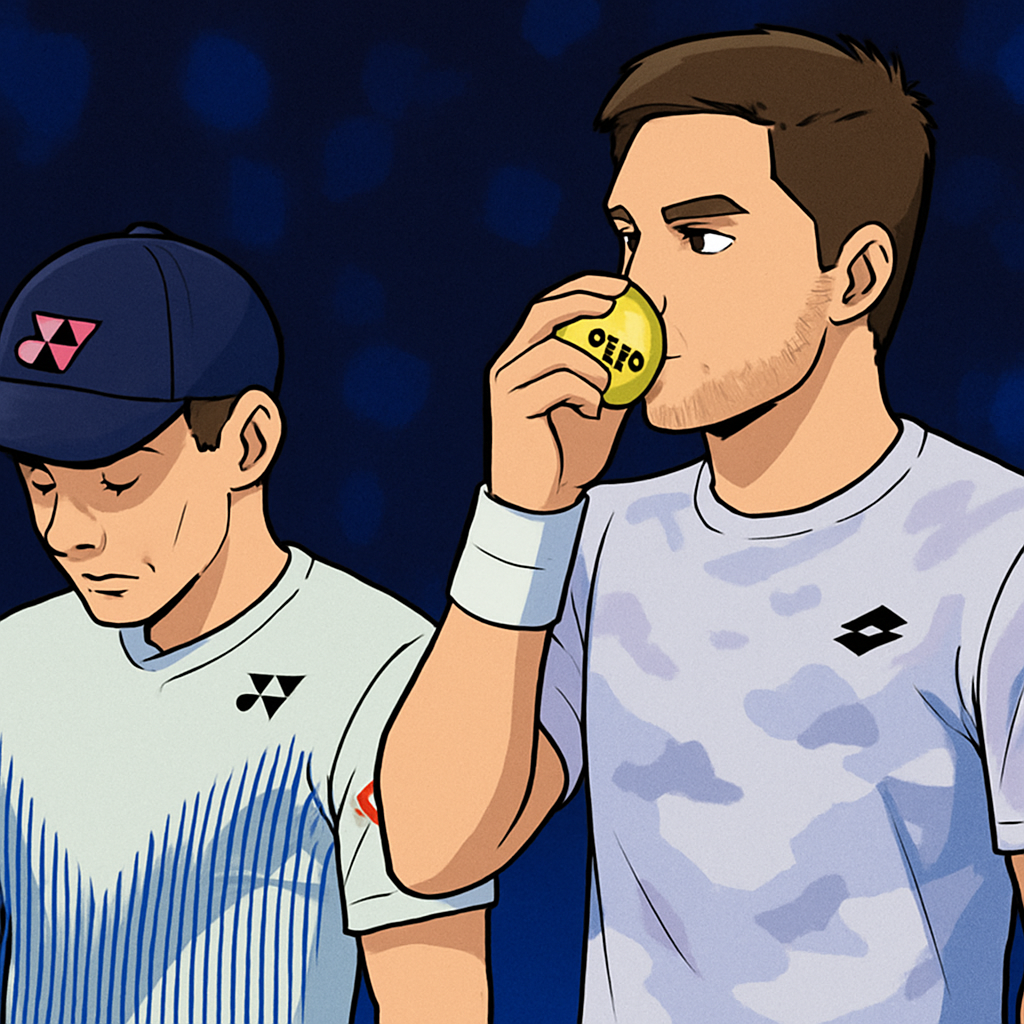
DUBAI — The 2024 Dubai Duty Free Tennis Championships, a prestigious stop on both the ATP and WTA tours, concluded with a flurry of on-court drama and championship victories. However, the real story for a group of players began after the final ball was struck, as a severe weather system plunged the region into chaos, leaving several competitors, including British doubles star Henry Patten, stranded in the United Arab Emirates.
Unprecedented rainfall, described by the UAE's National Center of Meteorology as the heaviest in 75 years, battered the country, turning major highways into rivers, flooding homes and infrastructure, and bringing Dubai International Airport—one of the world's busiest aviation hubs—to a virtual standstill. The tournament, which had proceeded without major interruption, suddenly found its departing athletes caught in a logistical nightmare far beyond the control of organizers.
A Tournament in Crisis Management Mode
As images of flooded runways and terminal chaos circulated globally, the Dubai Duty Free Tennis Championships organization swiftly transitioned from event host to crisis support team. Recognizing the plight of players and their teams who were unable to secure flights out, tournament director Salah Tahlak and his staff took decisive action. They extended hotel accommodations for the affected individuals, ensuring they had a safe and secure base amidst the travel turmoil.
A tournament spokesperson confirmed the measures, stating, "In light of the extreme weather conditions and the subsequent disruption at Dubai Airport, we have taken the step to extend hotel stays for players and their teams who have been unable to depart. Our priority is the safety and well-being of everyone involved in our event." This move provided crucial stability for athletes like Henry Patten, who had been facing uncertain and potentially expensive alternative arrangements.
The Stranded Contingent: Patten and Peers
Henry Patten, the 28-year-old British doubles specialist who reached the second round in Dubai with Finnish partner Harri Heliövaara, became one of the most prominent names among the stranded. For players like Patten, who compete on a week-to-week schedule across different continents, such disruptions have a direct impact on training, recovery, and preparation for the next tournament. The ATP Tour moves swiftly, with the prestigious "Sunshine Double" in Indian Wells and Miami following closely on the calendar.
Patten was not alone. Reports and social media posts indicated that several other players from the tournament were also stuck, including:
- Tallon Griekspoor of the Netherlands, a singles competitor.
- Jan-Lennard Struff of Germany, another singles main draw player.
- Several other players and coaching staff whose travel plans were completely upended.
The situation highlighted the precarious nature of international sports travel, where athletes are highly dependent on intricate flight schedules. Griekspoor took to social media to share a video of the flooded airport tarmac, captioning it with a succinct summary of the scene. The sentiment among the group was one of resigned frustration, mixed with an understanding that they were witnessing a genuinely historic weather event.
Airport Chaos: The Root of the Problem
The core of the issue lay at Dubai International Airport (DXB). The torrential rain, exceeding a typical year's worth in just hours, overwhelmed drainage systems. Videos showed aircraft taxiing through deep water, while floodwaters invaded terminal buildings. The airport was forced to temporarily halt arrivals, and departures were severely disrupted for days. Emirates, the flagship carrier based in Dubai, suspended check-in for all passengers, advising those not already at the airport to stay home.
The airport's status page was a litany of cancellations and delays, with a warning that "recovery will take some time." For the tennis players, many of whom rely on specific flights to connect to their next destination—often a smaller city hosting a Challenger event or a training base—the blanket disruption meant few to no alternatives. Rebooking was a challenge for everyone, with thousands of passengers vying for a limited number of seats on future flights.
The Ripple Effect on the Tennis Calendar
The stranding had immediate consequences for the tennis calendar. Players scheduled to compete in the following week's events faced a race against time. The ATP 250 event in Estoril, Portugal, and various Challenger tournaments were due to begin shortly. A player like Struff, a seed in Estoril, faced the real possibility of missing his first-round match or arriving with no time to acclimatize or practice. The tournament's action to house the players mitigated the financial and safety concerns, but it could not solve the scheduling clash created by forces of nature.
Community and Comradery in Confinement
In an interesting twist, the situation fostered an unexpected sense of community among the stranded athletes. Isolated from their usual routines and next destinations, they found themselves in a shared experience. Reports surfaced of players organizing informal practice sessions at local facilities unaffected by the floods, turning a period of forced downtime into an opportunity for extra training. Others used the time for recovery and physiotherapy, making the best of a difficult situation. The tournament hotel effectively became an impromptu players' lounge, with competitors from different nations bonding over their shared plight.
Henry Patten, maintaining a professional outlook, acknowledged the support from the tournament. "It's obviously a very difficult situation that no one could have predicted," he was reported to have commented. "The most important thing is that everyone is safe. The tournament has been fantastic in looking after us, which we really appreciate. Now it's just a waiting game and hoping to get out as soon as it's safe to do so to prepare for the next event."
Conclusion: Beyond the Baseline
The image of elite tennis players stranded in Dubai serves as a stark reminder that even the most glamorous global sports are not immune to the disruptive power of nature and infrastructure failure. While the Dubai Duty Free Tennis Championships successfully navigated the competitive event, its legacy for 2024 will also include the swift humanitarian response to the subsequent weather crisis. The episode underscores the vulnerability of the touring tennis professional's lifestyle, where a week's planning can be undone by a day's rain. For Henry Patten and his fellow stranded stars, the championship week extended far beyond the final match, becoming an unexpected test of patience and adaptability far from the familiar confines of the court.