
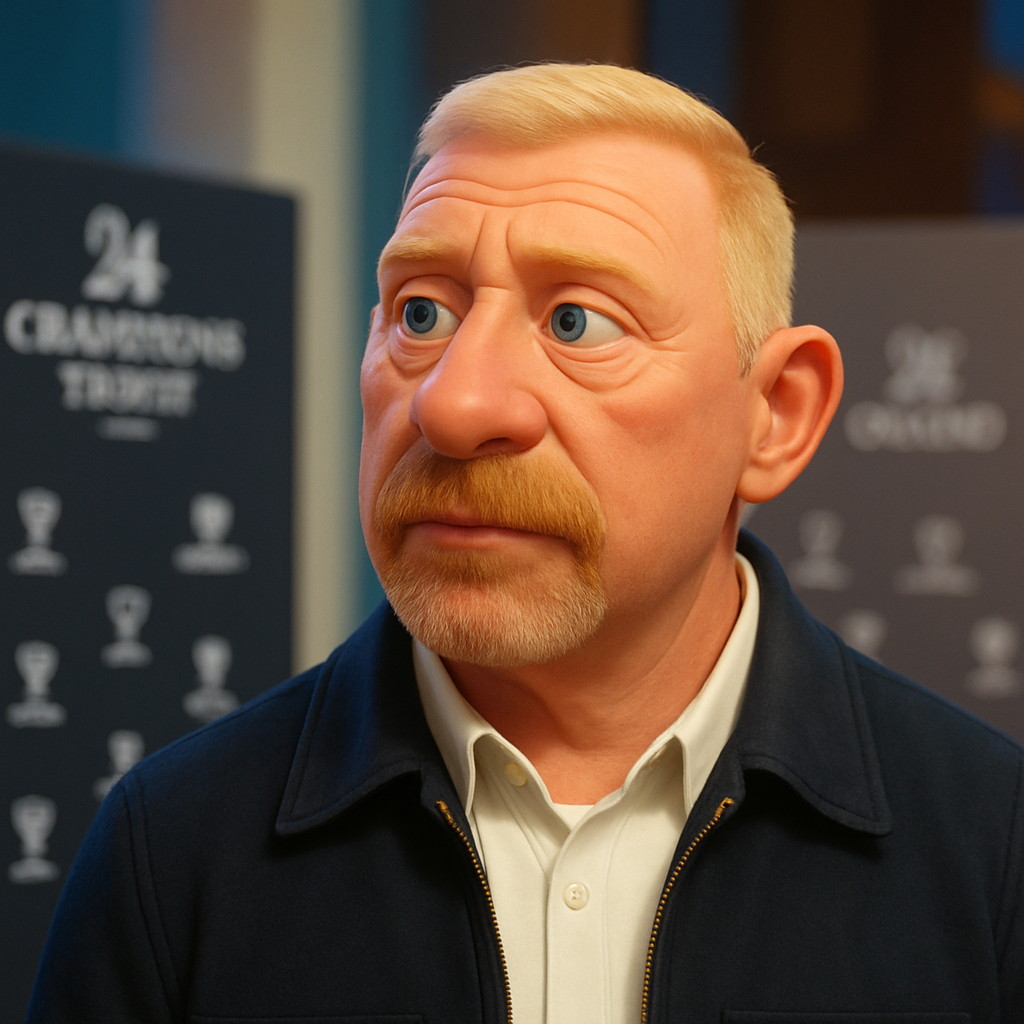
LONDON — In a raw and revelatory new documentary, tennis legend Boris Becker has publicly confessed to a profound personal betrayal, detailing how he cheated on his then-pregnant wife, Barbara Feltus, while she was hospitalized with a life-threatening condition. The admission forms a central, gut-wrenching chapter in the two-part Apple TV+ film, Boris Becker: The Fall of a Titan, which chronicles his dramatic fall from sporting royalty to a prison sentence for bankruptcy offenses.
The three-time Wimbledon champion, now 56, describes the period in 1999 when Feltus, carrying their second child, was diagnosed with HELLP syndrome, a severe variant of pre-eclampsia. Becker recounts visiting her in a Munich hospital, seeing her connected to machines, and being told by doctors that both she and the unborn child were in grave danger. "It was life and death," he states somberly in the documentary.
A Descent into "Madness" and Betrayal
Becker explains that the immense stress and fear triggered a self-destructive spiral. Instead of remaining steadfast at his wife's side, he retreated into what he calls a state of "madness." "I didn't know how to handle the pressure," he admits. "I didn't know how to be there for her."
It was during this harrowing time that Becker engaged in a brief affair. He does not name the other woman in the documentary but is explicit about the act and its timing. "I did betray my wife when she was in hospital," he confesses directly to the camera, his voice heavy with remorse.
The revelation provides shocking context to the couple's subsequent divorce in 2001, which was finalized shortly after the birth of their son, Elias. At the time, the split was attributed to the strain of Becker's playing career and media scrutiny. Now, Becker lays bare the foundational crack in their marriage:
- The life-threatening hospitalization of his pregnant wife.
- His inability to cope with the emotional weight of the crisis.
- The decision to seek solace in an affair.
Reflecting on his actions, Becker offers no excuses. "It was the worst thing I could have done. You're supposed to be together, you're supposed to hold hands, you're supposed to get through it together. I ran away," he says, framing the infidelity as a catastrophic failure of character during a moment that demanded strength and loyalty.
The Aftermath and a Public Apology
The documentary shows that Becker's confession is not just for the audience; it is part of a long-overdue reckoning. In a poignant scene, he meets with his ex-wife, Barbara Feltus-Becker, now an accomplished artist, to discuss their past. Sitting together, he explicitly apologizes to her for the infidelity. "I am sorry for what I did," he tells her, to which she quietly acknowledges, "I know you are."
Feltus-Becker's perspective in the film is one of dignified reflection. She speaks of the immense pain of that period but also of the personal growth that followed their separation. Her presence in the documentary suggests a complex, healed relationship where forgiveness, or at least understanding, has been reached after decades.
This public airing of his gravest personal failing is intertwined with Becker's account of his financial and legal collapse. He draws a direct line between the impulsive, avoidant behavior he displayed in 1999 and the poor decision-making that later led to his 2022 conviction for concealing £2.5 million in assets and loans to avoid paying debts.
A Pattern of Avoidance
"When the going got tough, I didn't face the music. I ran away from it," Becker analyzes, connecting the dots between the personal and professional crises. The documentary posits that the man who thrived on the intense, public pressure of Centre Court was ultimately undone by his inability to manage private, off-court turmoil.
Reactions and Broader Context
The confession has sparked widespread media coverage and public debate. Many have expressed shock at the bluntness of the admission, while others have criticized it as a strategic move to garner sympathy ahead of the documentary's release. However, the raw emotion displayed in the scenes with his ex-wife and his children suggests a genuine, if belated, attempt at accountability.
The documentary uses this personal nadir to explore the broader theme of Becker's identity. Having achieved global fame as a teenager by winning Wimbledon at 17, he spent decades living a life of immense wealth, celebrity, and expectation. The film argues he was never equipped to handle normal life, let alone profound crisis.
Key elements of his downfall explored alongside the infidelity include:
- A costly divorce from Feltus and a subsequent divorce from his second wife.
- Profligate spending and failed business investments.
- The denial and deception surrounding his bankruptcy.
- His eventual imprisonment and deportation from the UK.
Conclusion: A Stark Portrait of Fallibility
Boris Becker's confession about cheating on his hospitalized wife is more than a tabloid headline. In the context of the documentary, it serves as the emotional core of his story—a defining moment of moral failure that set a precedent for the disasters to come. It strips away the glamorous facade of the sporting icon to reveal a deeply flawed man grappling with the consequences of his actions.
"I've made mistakes in my life. I've paid the price for them," Becker concludes. By exposing this painful chapter with such candor, he offers a stark, unvarnished portrait of fallibility, suggesting that his journey through shame, prison, and public humiliation is, ultimately, a search for redemption and a hard-won understanding of himself.