
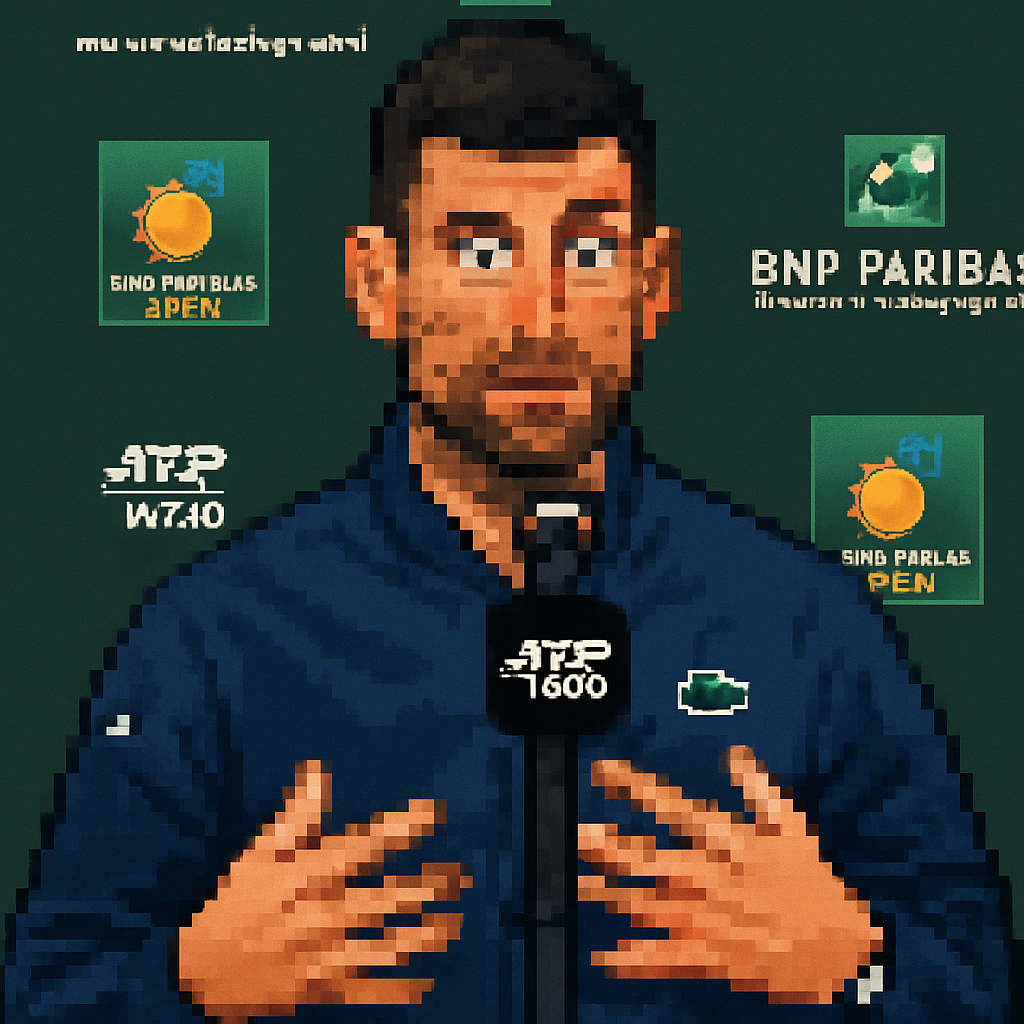
INDIAN WELLS — The BNP Paribas Open witnessed a seismic shift in its third round as Novak Djokovic, the world No. 1 and holder of a record 24 Grand Slam titles, suffered a stunning defeat to British No. 1 Jack Draper. The 6-4, 3-6, 6-3 loss marked Djokovic's earliest exit from the tournament since 2021 and was followed by a terse, bitter press conference where the Serbian icon bluntly rejected a line of questioning.
Draper, the 22-year-old left-hander ranked 56th in the world, played with fearless aggression and tactical maturity to secure the biggest win of his career. The victory was not just a statement of Draper's immense potential but a stark reminder of the relentless march of time, even for the sport's most dominant figures. Djokovic, who has struggled with illness and form since the Australian Open, looked uncharacteristically vulnerable and frustrated throughout the two-hour, ten-minute battle.
A Tactical Masterclass from Draper
From the outset, Draper’s game plan was clear: attack Djokovic’s serve, particularly the second delivery, and use his powerful lefty forehand to dictate rallies. He executed this to near perfection in the first set, breaking Djokovic in the opening game and never relinquishing the advantage. Draper’s serve, a weapon that has grown in potency, consistently pushed Djokovic back, and his willingness to come forward and finish points at the net added a crucial dimension to his assault.
Djokovic, as he so often does, rallied in the second set. He raised his level, cut down on errors, and began to find his rhythm from the baseline, breaking Draper to love to level the match. The momentum seemed to have swung decisively in the veteran’s favor. However, Draper’s resilience was the story of the third set. He weathered an early storm, saving break points, before unleashing a barrage of winners to break Djokovic for a 4-2 lead. He then held his nerve, serving out the match with an emphatic love hold, sealed with a thunderous ace.
Key factors in Draper’s historic win included:
- First-Strike Tennis: Draper won 82% of points on his first serve, denying Djokovic any foothold in return games.
- Aggression on Second Serves: He repeatedly attacked Djokovic’s second serve, winning 55% of those points.
- Physical and Mental Fortitude: After dropping the second set, he regrouped impressively, showing no signs of the physical issues that have plagued his young career.
Djokovic's Uncharacteristic Struggles
For Djokovic, the match was a catalogue of unforced errors and visible frustration. He struggled to find his range off the ground, particularly on the forehand side, and was unusually passive for long stretches. Questions about his current physical state were inevitable post-match. Since winning the Australian Open in January, his season has been disjointed, with this being only his fourth match of the year following a surprise semi-final loss to Jannik Sinner in Melbourne.
The 36-year-old has been open about managing his schedule more carefully, but his lack of match sharpness was evident. His movement, while still elite, lacked its customary explosive edge, and his trademark ability to absorb and redirect power seemed slightly off. After the match, he conceded, "He [Draper] was just the better player today. I have to congratulate him. I started well in the second set, but he held his nerve. He deserved to win."
The Bitter Post-Match Exchange
The real storm, however, brewed in the press conference room. When a journalist asked Djokovic to elaborate on whether his recent struggles were more related to a lack of matches or a deeper issue with his form and fitness, the champion’s demeanor turned icy. He stared directly at the reporter and delivered a curt, dismissive response.
"I said what I said in the on-court interview. If you didn't get it, I can't help you. I don't have anything else to add. Next question."
The tense moment highlighted a player clearly dissatisfied with his performance and unwilling to engage in a deeper autopsy in public. It was a stark contrast to his usual composed and expansive media persona, signaling a level of irritation rarely seen. The exchange quickly became a major talking point, overshadowing even the brilliance of Draper’s performance for some observers.
What This Means for Both Players
For Jack Draper, this is a transformative victory. Beating the GOAT on a stage like Indian Wells validates the belief that he belongs with the elite. His path forward in the tournament opens up significantly, and the confidence gained will be invaluable. The win also propels him closer to a seeding at Grand Slams, a crucial step for managing his workload and avoiding top players in early rounds.
For Novak Djokovic, the questions are mounting. While it is far too early to sound any alarms for a player of his caliber, the early-season pattern is concerning. The defeat raises immediate questions about his preparation for the clay-court season and his defense of the French Open title. His immediate schedule is now unclear, with speculation rife about whether he will add another tournament before Roland-Garros or focus solely on practice.
The broader implications are also significant. This loss, coupled with Carlos Alcaraz's victory here last year and Jannik Sinner's dominance so far in 2024, reinforces the narrative that a new generation is not just knocking on the door but is beginning to break it down. Djokovic and his great rival Rafael Nadal have long been the sport's immovable objects, but the force of youth, embodied by Draper's powerful performance, is becoming increasingly difficult to resist.
Conclusion: A Watershed Moment
The 2024 BNP Paribas Open will be remembered as the tournament where Jack Draper announced himself as a genuine threat to the established order. His composed, powerful tennis under the desert sun was a masterpiece of big-match execution. For Novak Djokovic, the defeat and his subsequent reaction signal a period of introspection. The bitter taste of this loss will linger, serving as potent motivation for a champion who has built his legacy on responding to adversity.
As the tennis world digests this result, one thing is certain: the landscape is shifting. Draper’s stormer in Indian Wells wasn't just a win; it was a declaration. And Djokovic’s rejection of the narrative post-match wasn't just defensiveness; it was the sound of a champion recalibrating, aware that the challenges ahead are now coming from all directions, and with ever-increasing force.