
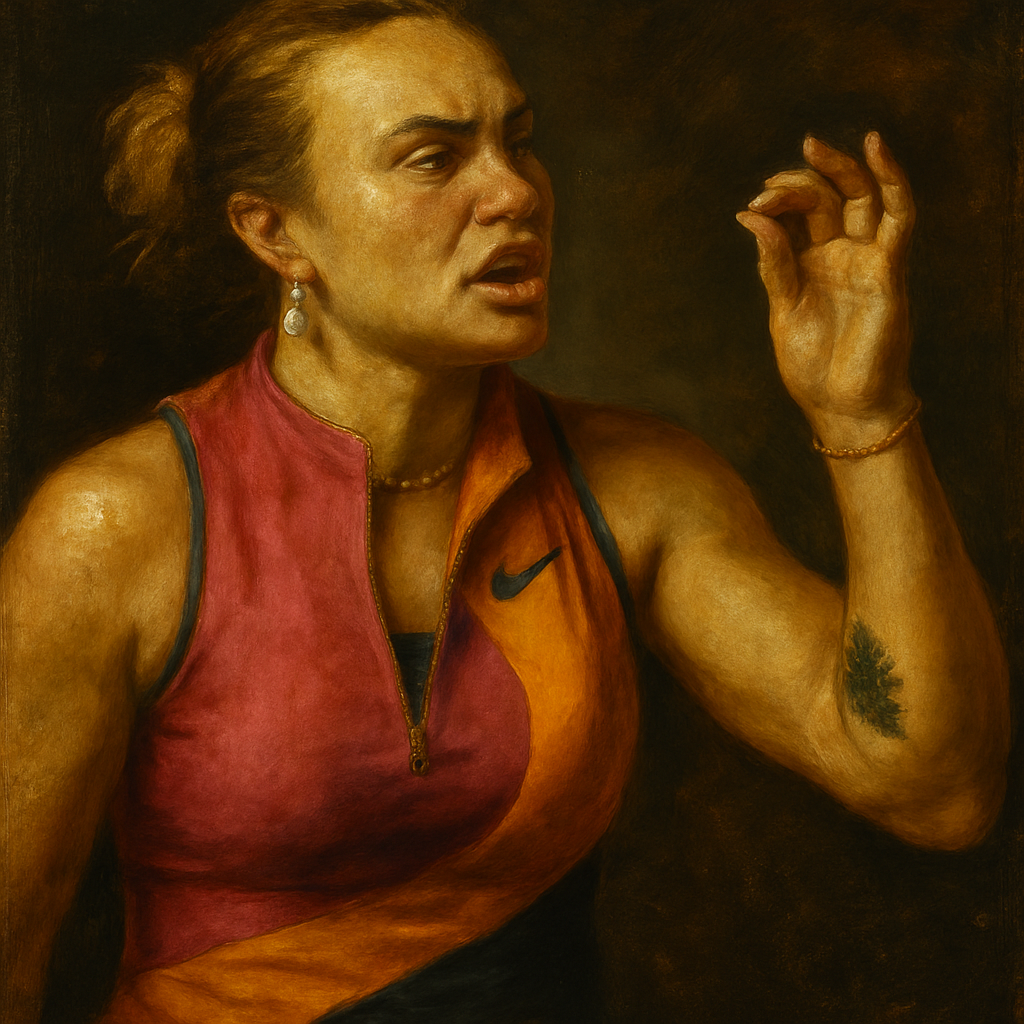
LONDON — The prestigious Wimbledon warm-up event, the Rothesay International in Eastbourne, has been rocked by a series of high-profile withdrawals, none more significant than that of world No. 3 Aryna Sabalenka. The two-time Australian Open champion pulled out of the tournament just days after securing a staggering £1 million payday for her semi-final finish at the Libema Open in 's-Hertogenbosch, a decision that has left fans and organizers reeling.
A Sudden Withdrawal and a Lucrative Week
Sabalenka's withdrawal was announced by tournament officials on Monday, citing the shoulder injury that had plagued her during her run in the Netherlands. The Belarusian star had fought through the discomfort to reach the final four, where she was forced to retire against Russia's Liudmila Samsonova. That semi-final appearance, however, came with an enormous financial silver lining. The Libema Open is part of the WTA's lucrative 500 series, and thanks to a revised prize money structure and a unique "million-dollar challenge" bonus for performance across the grass-court swing, Sabalenka's efforts netted her approximately £1,000,000 (€1.2 million).
In a statement released by the Eastbourne tournament, Sabalenka expressed her regret: "I'm so disappointed not to be able to play in Eastbourne this year. It's a beautiful tournament with amazing fans, but unfortunately my shoulder is not 100% fit. I need to listen to my body and make sure I'm ready for the coming weeks." This last line is a clear reference to the impending start of Wimbledon on July 1st, where Sabalenka is considered one of the top favorites for the title.
An Exodus of Stars from the Eastbourne Draw
Sabalenka was not the only marquee name to scratch her name from the Eastbourne entry list. The women's field was decimated by a cascade of absences, turning what is traditionally one of the strongest pre-Wimbledon events into a shadow of its intended self. The withdrawals included:
- Markéta Vondroušová: The defending Wimbledon champion and a major draw for the event.
- Ons Jabeur: A two-time Wimbledon finalist and fan favorite.
- Madison Keys: The 2023 Eastbourne champion.
- Karolína Muchová: Another top player managing a return from injury.
This exodus forced organizers into a frantic reshuffle, promoting lucky losers and alternates into the main draw. The situation sparked frustration among ticket-holders and raised questions about the scheduling pressures on top players in the condensed grass-court season. A tournament spokesperson acknowledged the challenge, stating, "While player health is always the ultimate priority, we share the disappointment of our fans. We have a fantastic field of athletes ready to compete, and we are confident they will deliver a week of world-class tennis."
The Broader Context: A Packed Calendar and Player Welfare
The mass withdrawals at Eastbourne are not an isolated incident but a symptom of a wider issue on the WTA and ATP tours. The calendar is notoriously packed, with the transition from the physically demanding clay of Roland-Garros to the unique, lower-bouncing grass courts happening in a matter of weeks. This period demands a drastic adjustment in movement and technique, placing immense strain on players' bodies, particularly their lower limbs and shoulders. For elite players like Sabalenka, who have deep runs at Grand Slams, the decision often comes down to a choice: risk aggravating a minor injury at a preparatory event or prioritize recovery and peak condition for Wimbledon.
This dilemma highlights the ongoing tension between tournament commitments, financial incentives, and athlete longevity. The £1 million bonus Sabalenka earned in 's-Hertogenbosch is a testament to the significant money on offer, even outside the majors. However, as her Eastbourne withdrawal shows, even such a windfall does not override the imperative to be fit for the sport's most historic tournament. Veteran coach David Witt recently commented on the situation, noting, "The grass season is a sprint. You have to be incredibly smart. If a player is carrying anything, even a 5% issue, it's not worth jeopardizing Wimbledon for one or two matches elsewhere. The math is very clear for the top players."
Focus Shifts to Wimbledon Preparations
With Eastbourne now off her schedule, Sabalenka's team confirmed she has traveled to London and will begin her final preparations for Wimbledon at the All England Club. The focus will be on intensive treatment for her shoulder and limited, specific practice sessions on the grass courts. Her powerful game, built on a dominant serve and crushing groundstrokes from both wings, is perfectly suited to the surface, making her a formidable contender. However, the shoulder concern introduces a note of uncertainty. Her first-round retirement in Berlin the previous week, followed by the retirement in 's-Hertogenbosch, marks an uncharacteristically fragile build-up for the typically robust Sabalenka.
The women's draw at Wimbledon appears more open than in recent years. World No. 1 Iga Świątek is still adapting her game to grass, and defending champion Vondroušová has been inconsistent since her triumph. This landscape presents a prime opportunity for Sabalenka, should she be healthy. Her absence from Eastbourne, while disappointing for that event, is a strategic gamble aimed at the biggest prize. The tennis world will now watch closely as the Wimbledon draw is unveiled, scrutinizing Sabalenka's practice sessions for any signs of the shoulder issue that has disrupted her grass-court campaign.
Conclusion: A Calculated Risk for Grand Slam Glory
Aryna Sabalenka's late withdrawal from the Rothesay International, following her lucrative week in the Netherlands, underscores the modern tennis professional's constant balancing act. It is a decision born of pragmatism, where short-term spectacle is sacrificed for long-term ambition. While Eastbourne is left to navigate a tournament stripped of several headliners, the narrative swiftly moves to SW19. Sabalenka's £1 million bonus is now a footnote; the true cost of her shoulder injury will be measured solely by her performance at the All England Club. Her gamble highlights a hard truth in professional sports: no amount of prize money from a warm-up event can compare to the legacy-defining glory of a Wimbledon title, and sometimes, the most important move a champion can make is not to play at all.