
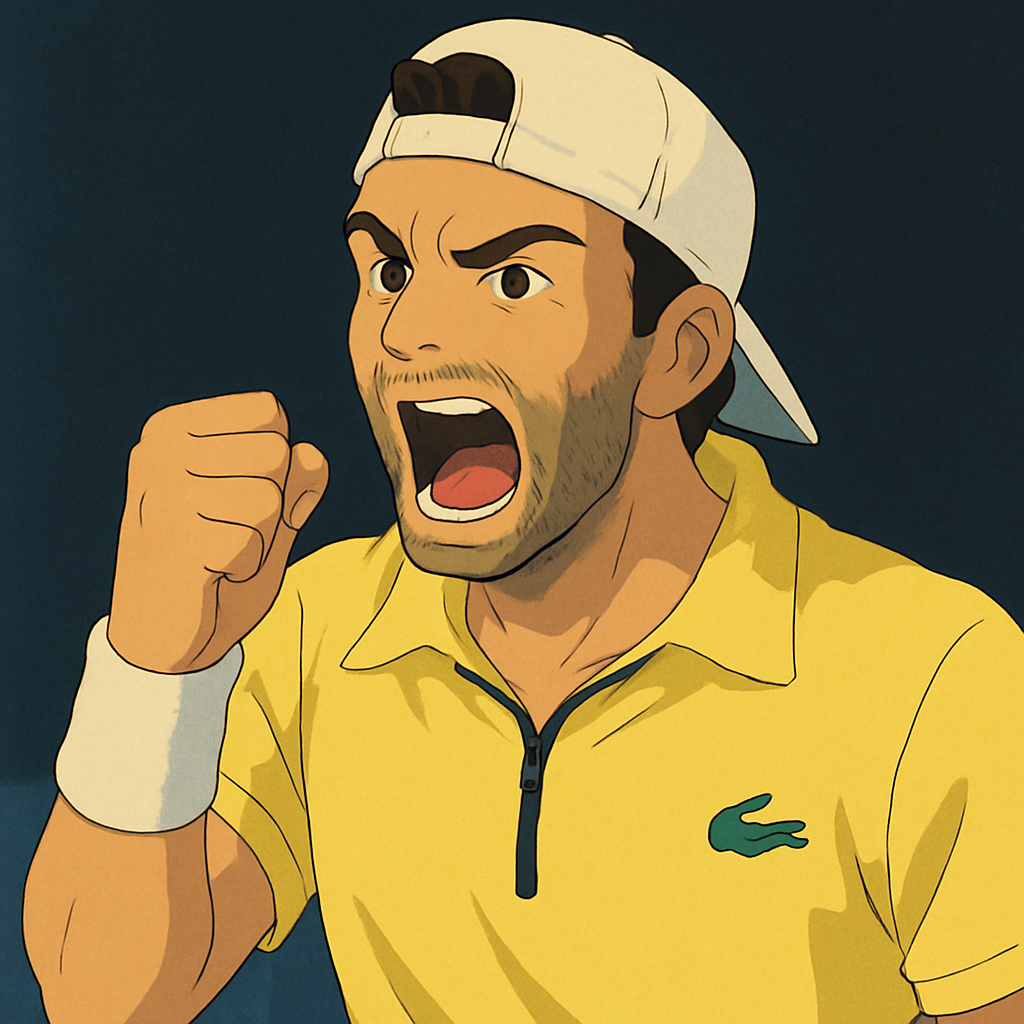
BRISBANE — In a moment that resonated far beyond the scoreline, Grigor Dimitrov marked a triumphant and emotional return to the ATP Tour, securing a commanding 6-1, 6-2 victory over Andy Murray at the Brisbane International. The win, achieved in a brisk 68 minutes, was a powerful statement to open his 2024 season, but its significance was rooted in a harrowing scene from Wimbledon just six months prior.
A Wimbledon Nightmare
The 2023 Wimbledon Championships were supposed to be a showcase for Dimitrov’s resurgent form. Instead, they ended in heartbreak. During his fourth-round match against Holger Rune, Dimitrov suffered a severe shoulder injury. The pain was so acute and debilitating that he was forced to retire from the match in tears, a rare public display of anguish from the typically composed Bulgarian. "I knew immediately it was bad," Dimitrov later recalled, describing the moment his season derailed.
The diagnosis was a partial tear in his rotator cuff, an injury that threatened not just his season but his career trajectory. For a player whose elegant, all-court game relies heavily on a fluid and powerful serve and whip-like forehand, shoulder issues are a particular terror. The subsequent months were a grueling test of patience and perseverance, spent not on the match court but in the silent, repetitive world of rehabilitation.
The Long Road to Recovery
Dimitrov’s journey back was neither quick nor guaranteed. The 32-year-old, once ranked as high as World No. 3 and dubbed "Baby Fed" in his youth, has battled injuries and fluctuations in form throughout his career. This setback felt different, more ominous. His rehabilitation process was exhaustive, focusing not just on healing the tear but on rebuilding the surrounding musculature to prevent recurrence.
Key phases of his recovery included:
• Initial rest and anti-inflammatory treatment to calm the acute injury.
• Progressive physical therapy to restore range of motion and basic strength.
• Intensive strength and conditioning with a focus on shoulder stability.
• Gradual reintroduction of tennis-specific movements, starting with gentle groundstrokes.
Throughout this period, Dimitrov maintained a characteristically positive public facade, but admitted to moments of deep doubt. "There are days you question everything," he said in an off-season interview. "But you have to trust the process, trust your team."
A Statement Win in Brisbane
The draw for the Brisbane International, a key Australian Open warm-up event, presented a formidable first test: a resurgent Andy Murray, a three-time Grand Slam champion known for his relentless competitive spirit. It was a match that promised physical and tactical warfare. What transpired, however, was a demonstration of Dimitrov’s renewed physical confidence and sharp technical prowess.
From the first serve, Dimitrov moved with a freedom that had been absent since before his injury. His shoulder held up powerfully, allowing him to fire seven aces and win a staggering 94% of points behind his first serve. His famous one-handed backhand was a weapon of both precision and flair, and he moved around the court with elastic ease. Murray, himself no stranger to career-threatening injuries, was simply outplayed on the day.
The victory was sealed with a forehand winner, prompting a roar of relief and joy from Dimitrov. In his post-match interview, the emotion of the journey was palpable. "I'm just grateful to be back on the court and competing," he said, a wide smile breaking across his face. "After everything that happened at Wimbledon, this feels very special."
Tactical Mastery on Display
Beyond the emotional narrative, the match was a tactical clinic from Dimitrov. He executed a clear game plan with near-flawless precision:
• Dominating Serve Patterns: He consistently targeted Murray’s backhand return, opening the court for plus-one forehands.
• Aggressive Return Positioning: He stepped inside the baseline to attack Murray’s second serve, applying immediate pressure.
• Variety and Disruption: He effectively used slice backhands and drop shots to disrupt Murray’s renowned defensive rhythm.
• Net Court Authority: He won 11 of 13 points at the net, showcasing confident forward movement.
Looking Ahead to Melbourne
This victory does more than just advance Dimitrov to the second round in Brisbane; it sends a clear message to the tour. A healthy, confident Grigor Dimitrov remains a threat to anyone on any surface. His blend of power, touch, and athleticism makes him a uniquely dangerous opponent, especially in the fast conditions expected at the upcoming Australian Open.
The win also provides a massive psychological boost. Overcoming a severe injury is one challenge; returning to immediately defeat a player of Murray’s caliber and mentality is another. It erases any lingering doubts about his physical readiness and proves his game can still compete at the highest level. Tennis analysts were quick to note the significance. "This wasn't just a win; it was a declaration of intent," remarked one commentator.
A Testament to Resilience
The image of a tearful Dimitrov walking off the court at Wimbledon in July is now powerfully contrasted by the image of a jubilant, victorious Dimitrov in Brisbane in January. His journey in those six months encapsulates the brutal realities and inspiring triumphs of professional sport. It is a story not of decline, but of renewal.
For fans, Dimitrov’s return to form is a welcome sight. His stylish brand of tennis has always been a fan favorite. For his peers, it is a reminder of his enduring quality. And for Dimitrov himself, the 68-minute masterclass in Brisbane was more than a match win; it was a cathartic release, a reclaiming of his place in the sport, and a perfect, emphatic answer to the tears of Wimbledon. The 2024 season has begun, and Grigor Dimitrov has announced he is well and truly back.