
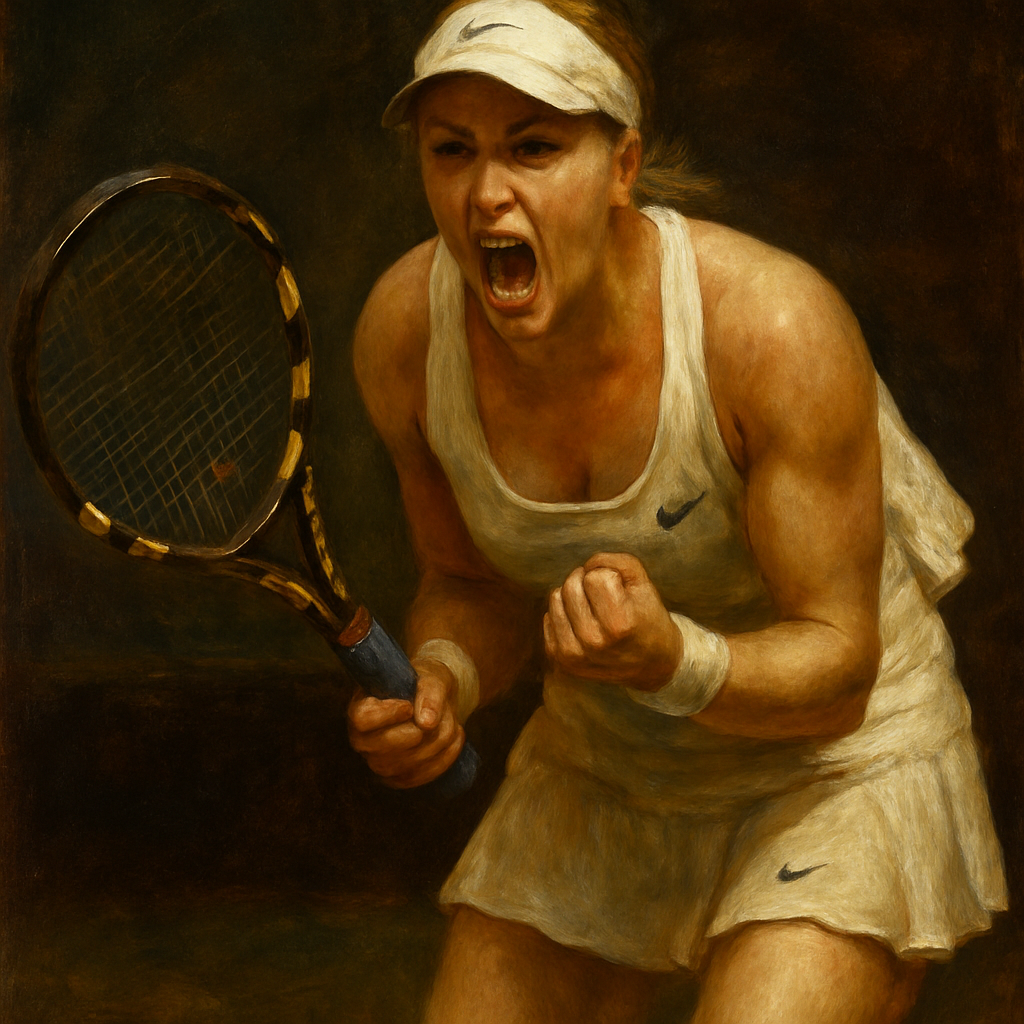
LONDON — A decade after her stunning run to the Wimbledon final catapulted her to global fame, Eugenie Bouchard has revealed a startling detail about the commercial pressures she faced at the peak of her career. In a candid interview, the Canadian tennis star disclosed that a major endorsement deal with luxury watchmaker Rolex was abruptly terminated after she shaved her head in 2015, an act she described as a personal "rebirth" but which a corporate executive deemed damaging to her marketable image.
The Meteoric Rise and the Signature Style
Eugenie Bouchard’s ascent in 2014 was nothing short of meteoric. The Montreal native, then just 20 years old, became the first Canadian-born player to reach a Grand Slam singles final in the Open Era when she faced Petra Kvitova at Wimbledon. Her powerful baseline game, combined with a poised and glamorous off-court persona, made her an instant media darling and a marketer’s dream. Dubbed “Genie” by fans and press alike, she graced the covers of sports and fashion magazines, signed a string of lucrative endorsement deals, and was celebrated for her long, blonde hair—a key part of her carefully curated brand.
This brand alignment was no accident. Bouchard was managed by the powerful agency IMG and was seen as the heir apparent to Maria Sharapova in terms of crossover appeal. Her portfolio included partnerships with Coca-Cola, Nike, and, most prestigiously, Rolex. The watchmaker, synonymous with tradition, excellence, and a certain classic aesthetic, had added the young star to its roster of "Rolex Testimonees," a group that includes Roger Federer and Caroline Wozniacki. For a brief period, Bouchard embodied the perfect fusion of athletic prowess and commercial viability.
The Chop: A Personal Decision with Professional Repercussions
In the summer of 2015, following a dip in form and seeking a change, Bouchard made a drastic personal choice. She shaved off most of her hair, leaving only a short, pixie-style cut. In interviews at the time, she framed it as an empowering act of independence. “I just felt like it. I wanted a change. I did it on a whim,” she told reporters. “It felt like a rebirth. It was for me, not for anyone else.” However, this act of personal agency was met with stark disapproval from one of her most high-profile partners.
Bouchard recently revealed that shortly after her new look debuted, she received a damning email from a Rolex executive. The message was blunt: her drastic change in appearance violated the terms of their agreement and was not in keeping with the image the brand wished to project. The deal was terminated. “They said I wasn’t the person they signed,” Bouchard recounted. “The hair was a big part of my brand, apparently. It was shocking, but it showed me how conditional that world could be.”
This incident highlights the often-unseen contractual clauses and image expectations placed upon female athletes, particularly those marketed for their looks as much as their athletic achievements. Key expectations Bouchard’s new look ostensibly breached included:
- Brand Consistency: Maintaining a recognizable and consistent public image throughout the partnership period.
- Demographic Appeal: Adhering to a specific, traditionally feminine aesthetic believed to resonate with the luxury brand’s target audience.
- Control: The brand’s desire for approval over major changes to the athlete’s appearance, a common stipulation in high-end endorsement deals.
Broader Context: Image and Athletics
Bouchard’s experience is a pointed example of the double bind female athletes frequently navigate. While male athletes are largely judged on performance, women in sport are often subjected to additional scrutiny regarding their appearance, fashion, and marketability. The Rolex incident underscores how a woman’s autonomy over her own body can be directly linked to her financial worth in the sports-commerce complex. Her story echoes the experiences of other athletes, like Norwegian beach handball players fined for wearing shorts instead of bikini bottoms, who have challenged rigid uniform and appearance policies.
In the years following the split with Rolex, Bouchard’s on-court struggles continued, with injuries and loss of form seeing her ranking plummet from a career-high of No. 5 in 2014 to outside the top 100. The loss of the endorsement was both a financial and symbolic blow during an already difficult period. It forced a reckoning with the transient nature of fame built on image. “It was a tough lesson,” she admitted. “It made me question what I was really valued for. Was I a tennis player or a model?”
The Legal and Ethical Landscape
While the specifics of Bouchard’s contract with Rolex are private, such "morality" or "image" clauses are standard in high-value endorsements. They typically allow a company to terminate an agreement if the athlete engages in conduct that brings the brand into disrepute. The ethical question raised by Bouchard’s case is where the line is drawn between genuine reputational damage and a brand enforcing outdated or restrictive beauty standards. Legal experts suggest that while a brand is within its rights to protect its image, a termination over a haircut could be perceived as capricious and potentially discriminatory if argued that different standards are applied across genders.
Reflection and Moving Forward
Today, Bouchard, now 30 and working her way back on the tour after setbacks, views the episode with a mix of regret and defiance. While she acknowledges the commercial reality of sponsorship, she expresses disappointment in the lack of support for her personal expression. “I understand they have an image to uphold, but it was my hair, my choice,” she stated. “I wish they had seen the confidence behind it, not just the change.”
Her story has resonated widely, sparking conversations about the pressures on young women in the spotlight and the often-invisible strings attached to corporate sponsorship. It serves as a cautionary tale for the next generation of stars about the importance of understanding the fine print and negotiating for personal freedoms within commercial agreements.
Ultimately, the tale of the lost Rolex deal is more than a celebrity anecdote; it is a microcosm of the ongoing conflict between personal identity and corporate branding in professional sports. Eugenie Bouchard’s Wimbledon final run defined her as a player of immense potential, but the decision to shave her head—and the severe consequence that followed—may have defined her understanding of the industry’s complexities just as profoundly. As she continues her career, the episode remains a stark reminder that in the high-stakes game of sports marketing, a woman’s image is often considered a contractual asset, one she may not fully control.