
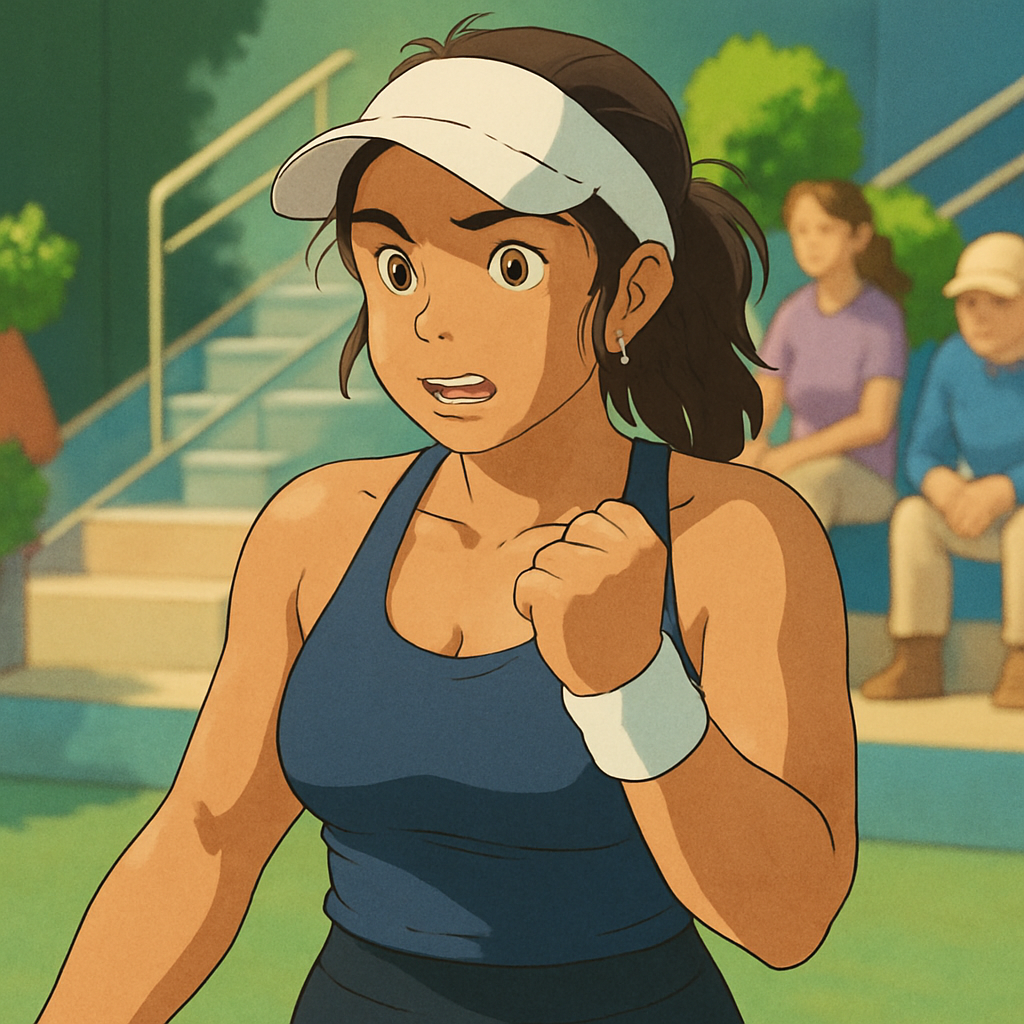
MELBOURNE — The tennis world was left reeling on Wednesday as Australian talent Destanee Aiava, once hailed as the future of the sport in her country, announced her immediate retirement at just 25 years old. The announcement, made via a raw and explosive Instagram post, was a far cry from the polished statements typical of professional athletes. In a blistering caption accompanying a carousel of career photos, Aiava wrote, "I’m done. I quit. Retired. F*** you."
The post sent shockwaves through the Australian tennis community and beyond, marking a sudden and dramatic end to a career that promised so much. Aiava, who turned professional at 15 and became the first player born in the 2000s to win a main-draw match at a Grand Slam (the 2017 Australian Open), has long been open about her struggles with mental health, body image, and the immense pressures of the tour. Her retirement statement, however, was a visceral culmination of those battles, pointing a finger directly at the systemic issues within the sport.
A Prodigy's Promise and Mounting Pressure
Destanee Aiava burst onto the scene as a powerful, hard-hitting teenager with a game that drew comparisons to the Williams sisters. Coached by her mother, Rosie, she rocketed up the junior ranks and captured the imagination of Australian fans. Her early success, however, came with a heavy burden. The label of "next big thing" was placed upon her shoulders almost immediately, a weight that she has described as increasingly difficult to bear in recent years.
In her Instagram post, Aiava elaborated on her decision, writing, "I’ve sacrificed my whole life to this sport since I was four years old. I’ve missed birthdays, graduations, weddings, funerals. I’ve spent countless hours in gyms, on courts, in airports and hotel rooms. For what?" This sentiment echoes interviews she has given in the past, where she discussed the loneliness of the tour and the constant scrutiny of her physique and performance.
Her career was a rollercoaster of brilliant highs and challenging lows. Key moments include:
- 2017 Australian Open: A landmark first-round win as a 16-year-old wildcard.
- Career-High Ranking: Reaching World No. 147 in 2017.
- Fed/Billie Jean King Cup: Representing Australia on four occasions.
- Injury Battles: Persistent knee and foot issues that required surgery and disrupted her momentum.
The Breaking Point: Mental Health and the System
While injuries played a role, Aiava's statement made it clear that the primary reasons for her departure were psychological and systemic. She has been a courageous advocate for mental health in tennis, previously taking breaks from the sport in 2021 and 2023 to focus on her wellbeing. In her retirement post, she accused the tennis establishment of failing its players.
"The tour is a brutal, lonely place," she wrote. "They don’t care about you as a person, only as a product. They’ll chew you up and spit you out and then ask why you’re broken. The pressure, the constant travel, the criticism—it’s not sustainable. I’m choosing my peace." This "f*** you," therefore, appears directed not at the sport itself, but at a culture and structure she feels is exploitative and indifferent to the human cost of competition.
Tennis Australia, the national governing body, issued a statement in response, saying, "Destanee Aiava has been a passionate and talented competitor who has represented Australia with distinction. We have always supported Destanee through her career, including her wellbeing, and we respect her personal decision. We wish her all the very best for the next chapter of her life." The response was notably measured, acknowledging her contributions while stopping short of engaging with the specific criticisms leveled in her post.
A Wider Conversation in Women's Tennis
Aiava's explosive exit is the latest in a series of incidents that have put the mental and physical demands of professional tennis, particularly on the WTA tour, under intense scrutiny. In recent years, stars like Naomi Osaka, Bianca Andreescu, and Emma Raducanu have taken extended breaks or spoken openly about the overwhelming nature of the spotlight. Aiava's case is distinct, however, in its rawness and its origin from a player who fought on the sport's challenging lower tiers, where financial and institutional support is far scarcer than at the top.
Her retirement raises urgent questions about the support systems in place for players outside the top 100. While the Grand Slams and major tournaments have increased mental health provisions, the grind of the ITF and Challenger circuit—where players like Aiava often compete—remains notoriously tough, with minimal prize money, sparse crowds, and relentless travel. The psychological toll of this existence is rarely discussed so publicly.
Reaction from the Tennis Community
The reaction from fellow players was one of overwhelming support and understanding. Australian compatriot Daria Saville replied to Aiava's post, writing, "Sending you so much love. Proud of you for choosing you." Other players, including Maddison Inglis and Lizette Cabrera, left heart emojis and messages of solidarity. This collective support underscores that Aiava's feelings, while expressed with unique force, resonate deeply within the locker room.
Sports psychologists and commentators have noted that Aiava's statement, while shocking, is a potentially important moment for tennis. Dr. Sarah Kelly, a specialist in athlete wellbeing, stated, "What we're seeing is an athlete reaching a breaking point and using the only platform she has to express the depth of her distress. The language is confrontational, but the message is a cry for help and a demand for change. It forces the industry to look in the mirror."
What's Next for Destanee Aiava?
In her post, Aiava gave no specific indication of her future plans beyond a firm commitment to prioritizing her mental health. She wrote, "For now, I’m going to breathe. I’m going to sleep in my own bed. I’m going to rediscover who I am outside of being a tennis player." Given her outspoken nature and lived experience, many speculate she could become a powerful advocate for player welfare reform or a coach who emphasizes holistic development.
Her retirement at 25 leaves a complex legacy. Statistically, it is the story of potential unfulfilled. Yet, in its manner, it may become a defining moment in the ongoing conversation about the price of sporting excellence. Destanee Aiava's final shot was not a forehand winner, but a searing indictment of a system. As the dust settles, the tennis world is left to ponder the cost of losing a vibrant talent so young, and the urgent need to ensure others do not feel compelled to say "f*** you" on their way out the door.