
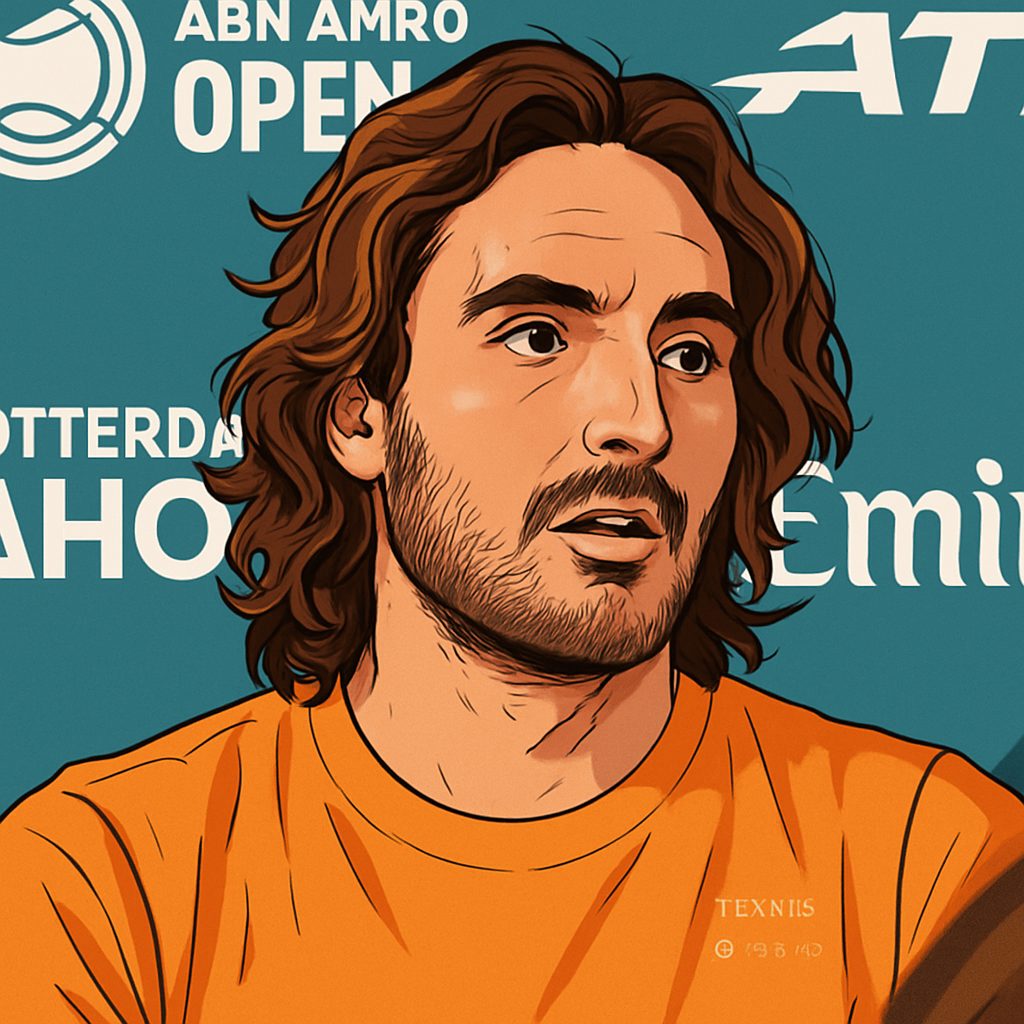
MONTE CARLO — The serene backdrop of the Monte Carlo Country Club was disrupted this week not just by the roar of the Mediterranean, but by a vocal complaint from one of its most prominent residents. World No. 12 Stefanos Tsitsipas launched a pointed critique at the ATP Tour, accusing the governing body of men's professional tennis of making financial "promises" to players that have gone unfulfilled, reigniting a long-simmering debate about prize money distribution and tour governance.
Speaking after his third-round victory at the Rolex Monte-Carlo Masters, Tsitsipas expressed frustration that the ATP had not followed through on assurances regarding revenue sharing. "There have been promises made, and I feel like some of those promises have not been delivered," the Greek star stated. His comments come at a time of heightened tension between players and the tour leadership, with many competitors outside the very top echelons struggling with the high costs of travel, coaching, and physiotherapy.
The Core of the Complaint: Unmet Financial Expectations
While Tsitsipas did not specify the exact nature of the promises, his remarks align with broader player grievances that have been bubbling for over a year. The context traces back to the ATP's strategic plan, "OneVision," launched in 2022, which aimed to unify the tour's commercial and media rights and, crucially, increase player earnings. A central tenet was to grow the overall financial pie and ensure a larger slice for the athletes.
However, players have grown increasingly vocal about the perceived gap between these ambitions and the on-ground reality. Tsitsipas's complaint suggests that expectations were set for more significant, or more immediate, increases in prize money across tournaments, particularly at the ATP 250 and 500 levels. "We were given a certain expectation, and the reality right now is different," he elaborated, highlighting a disconnect between tour communications and the financial statements players are seeing.
A Widespread Player Sentiment
Tsitsipas is far from a lone voice. His public airing of grievances echoes private frustrations shared by the Professional Tennis Players Association (PTPA), the breakaway group co-founded by Novak Djokovic and Vasek Pospisil. The PTPA has consistently argued that players receive too small a percentage of the tour's generated revenues compared to other major sports. Key player concerns often cited include:
- Prize Money Stagnation: While Grand Slam and Masters 1000 purses have seen notable increases, lower-tier events have not kept pace proportionally, creating a steeper financial cliff between the elite and the journeymen.
- Tournament Minimums: Debates continue over whether the ATP is enforcing strong enough financial commitments from all tournament organizers.
- Revenue Transparency: Players have called for clearer breakdowns of how tour revenue from media rights and sponsorships is allocated.
The issue gained public traction earlier this year when players, including Tsitsipas, were seen in heated discussions with ATP Chairman Andrea Gaudenzi during the Australian Open. The topic on the table was reportedly the tour's business model and the implementation of the OneVision plan.
The ATP's Position and the Challenge of Growth
The ATP has publicly defended its progress under Gaudenzi's leadership. In statements and presentations, they point to record-breaking total prize money figures, new long-term partnerships with sponsors like Pepperstone, and the successful consolidation of media rights which theoretically gives the tour more leverage. The official stance is that building a more profitable and sustainable ecosystem takes time and that investments made now will yield greater player rewards in the future.
However, this long-term vision clashes with the immediate financial pressures faced by the majority of the tour's membership. For every Tsitsipas, who has earned over $30 million in prize money, there are hundreds of players scrambling to break even. The ATP's challenge is to balance:
- Rewarding top stars who drive viewership.
- Ensuring a viable pathway and livelihood for developing and lower-ranked professionals.
- Investing in tournament infrastructure and global marketing to grow the sport.
This trilemma is at the heart of the current dispute. Tsitsipas's comments suggest that players, especially those in the top 20-30 who are regular tour fixtures but not necessarily Grand Slam champions, feel the balance is off and that communicated timelines for improvement have slipped.
The Impact on Player Morale and Performance
Beyond the balance sheets, Tsitsipas hinted at a deeper consequence: eroded trust. "When you are promised something and you are a professional and you expect that promise to be delivered, it's sort of like a contract in a way," he said. This sentiment of a broken "contract" can impact player morale and their relationship with the tour apparatus. The psychological effect of financial uncertainty, even for established players, is a rarely discussed but significant factor in the high-pressure world of professional tennis.
Looking Ahead: A Crucial Juncture for the ATP
Tsitsipas's public complaint is a symptom of a larger governance conversation. The ATP, uniquely, is a partnership between players and tournaments, which can often lead to conflicting priorities. The current player unrest tests the effectiveness of this model. The tour now faces the immediate task of addressing these "promises" head-on, either by clarifying its timeline, accelerating certain financial distributions, or improving communication to manage expectations.
The coming months will be critical. With the PTPA gaining momentum as an alternative voice for players, the ATP cannot afford to let the trust gap widen. The French Open and Wimbledon, with their massive prize money pools, may temporarily quiet the discourse, but the underlying structural issues at the ATP 250 and 500 levels will remain. As Tsitsipas concluded, "It's something that I hope gets resolved soon, because we are all here to make a living and we are all here to enjoy the sport we love."
The Monte Carlo complaint is more than just a top player's gripe; it is a stark reminder that in the business of professional tennis, success on the court is inextricably linked to confidence in the boardroom. How the ATP responds will not only affect its relationship with stars like Tsitsipas but will also define its ability to foster a stable and prosperous future for the entire men's game.