
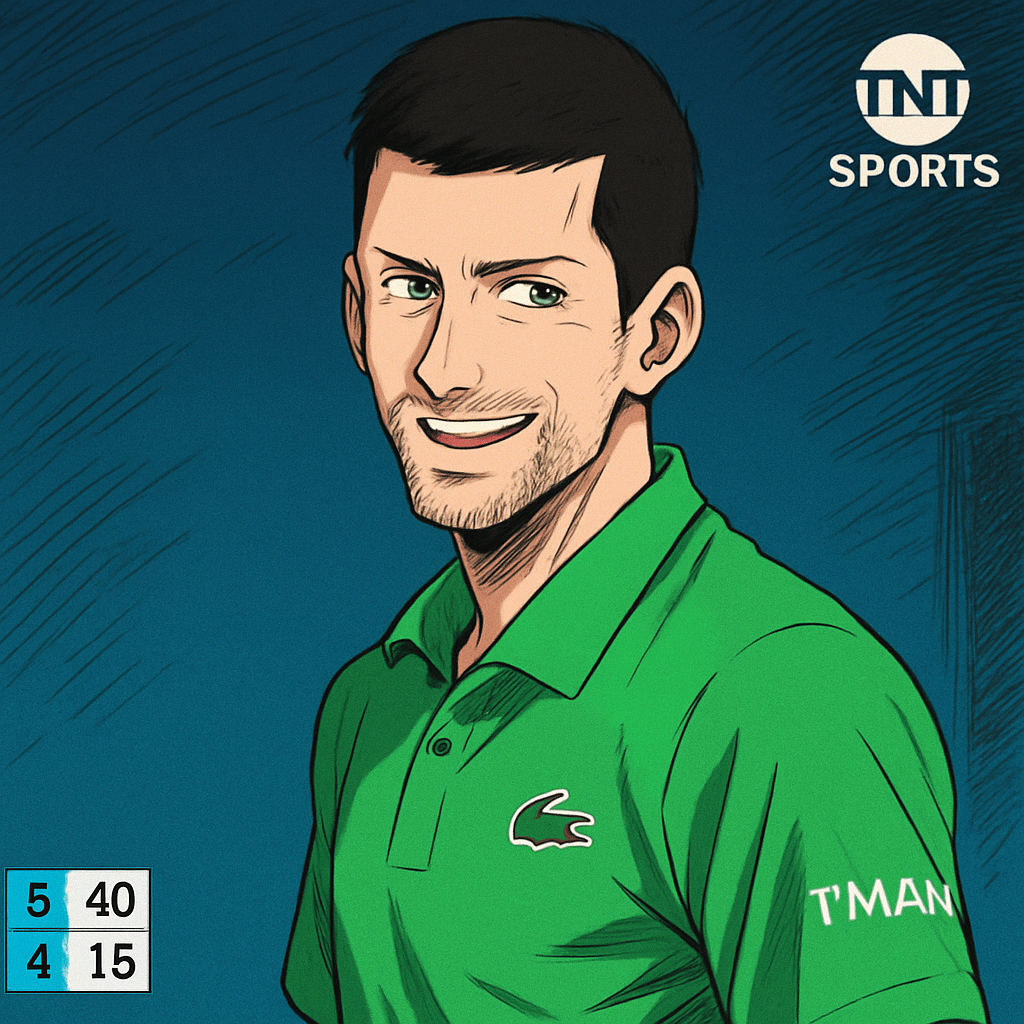
MELBOURNE — In the high-stakes, often tense atmosphere of a Grand Slam quarterfinal, a moment of unexpected levity can cut through the pressure like a summer breeze. That’s precisely what happened on a sweltering night at Rod Laver Arena, when a fan’s impromptu heckle, invoking the name of a long-retired legend, prompted a rare and revealing reaction from Novak Djokovic.
During his commanding 7-6(3), 4-6, 6-2, 6-3 victory over American Taylor Fritz at the 2024 Australian Open, Djokovic was preparing to serve at a critical juncture. The stadium, typically a cauldron of noise, fell into a respectful hush. Suddenly, a lone voice pierced the silence, shouting, "Bring out Roger Federer!" The comment, a playful nod to the absent 20-time major champion and Djokovic’s greatest rival, was so incongruous and well-timed that it stopped the 10-time Australian Open champion in his tracks.
A Pause, a Smile, and a Glimpse Behind the Mask
Djokovic, known for his intense, almost meditative focus during points, couldn't suppress his reaction. He paused his service motion, lowered his racket, and broke into a wide, genuine smile. He then looked directly toward the section of the crowd where the shout originated, sharing a moment of amusement with the spectators. The incident, lasting only seconds, was a fascinating departure from his usual on-court demeanor. It showed a player comfortable enough in his skin and his game to acknowledge the absurdity, and perhaps the nostalgia, of the moment.
In his post-match press conference, Djokovic was asked about the interruption. His response was characteristically thoughtful and layered. "I did hear it," he confirmed with a chuckle. "It was a nice, funny comment. I thought he was going to say something else, and he said, 'Bring out Roger Federer.' It was nice. It was a respectful, I thought, towards Roger, and also towards me."
This analysis is key. Djokovic didn’t interpret the shout as a taunt or a wish for a different, more beloved champion to replace him. Instead, he saw it as a tribute to the rivalry that defined an era and, by extension, a recognition of his own place within it. The smile was not one of annoyance, but of shared understanding—a veteran acknowledging the ghost of a legend that still haunts every court he plays on.
The Shadow of the Rivalry in the "Big Three" Era
The mention of Federer at a Djokovic match is never just a random name-drop. It is an invocation of the most storied and aesthetically contrasting rivalry in modern tennis. For years, Djokovic battled not just Federer and Rafael Nadal across the net, but also the overwhelming public sentiment that often favored the Swiss maestro’s elegant artistry over his own relentless machine-like precision. The dynamic was a core narrative of his career.
The fan’s comment, therefore, tapped into a deep well of tennis history. It was a reminder that even in Federer’s absence, his legacy is a constant benchmark. Djokovic’s reaction suggested a man who has made peace with that history. He is no longer the challenger to the throne but the king whose reign has now surpassed both of his great rivals in the major title count. The smile seemed to say, "I remember him, too. Look how far we’ve come."
Beyond the Rivalry: A Shift in Public Persona
This incident also fits into a broader, perceptible shift in Djokovic’s public persona over the past 18-24 months. While his competitive fire burns as brightly as ever, there has been a noticeable softening of his exterior—a greater willingness to show vulnerability, humor, and connection with fans. This was evident in several ways during the Australian Open fortnight:
- Playful Interactions: Engaging in extended, funny chats with the crowd during matches, even when struggling.
- Emotional Openness: Crying after tough wins, speaking openly about personal and professional challenges.
- Generational Bridge-Building: Offering public praise and mentorship to younger players like Jannik Sinner and Carlos Alcaraz.
The Federer heckle moment was a microcosm of this evolution. The old Djokovic might have glared or used the interruption as fuel to intensify his focus. The 2024 version disarmed it with a smile, transforming a potential distraction into a moment of human connection and a nod to the sport’s rich tapestry.
The Match Context: Mastery Under Pressure
It’s important to note that this moment of levity occurred within a match that was far from a foregone conclusion. Taylor Fritz had played superb tennis, particularly in the second set, pushing Djokovic to his limits. The Serb was battling not just a formidable opponent but also illness and unusual levels of frustration with his own game. The fan’s shout came at a tense moment, serving as a brief pressure release valve.
Djokovic’s ability to instantly reset after the smile was equally telling. He went back to the line, composed himself, and executed a strong serve to continue the point. This seamless transition from shared amusement to ruthless execution is the hallmark of his champion’s mentality. He can acknowledge the moment, but he never loses sight of the mission.
Tennis psychologist Dr. Ann Quinn, analyzing the incident, noted, "What we saw was emotional agility. Djokovic allowed himself a genuine, positive emotional response—the smile—which likely lowered his stress hormones momentarily. Then, he channeled that relaxed energy back into focused play. It’s a sign of immense mental maturity."
A Legacy Defined by More Than Numbers
While Novak Djokovic’s legacy is securely built on the indomitable pillars of 24 Grand Slam titles, a record 400+ weeks at world No. 1, and a double Career Grand Slam, moments like these add a crucial human dimension. They show a competitor who is beginning to savor the environment of his achievements, not just the achievements themselves. The reverence for Federer’s name, even from a heckler, is a part of the story Djokovic helped write.
In the end, the smile was about more than a funny comment. It was a recognition of history, a display of current confidence, and a signal of a champion evolving in the public eye. As Djokovic continues to chase history, these glimpses of his "true colours"—a blend of fierce competitor, respectful historian, and engaged showman—suggest that his final chapters may be his most relatable. The man who once seemed driven solely by the conquest of records is now also playing with, and for, the spirit of the game he has come to dominate so completely.