
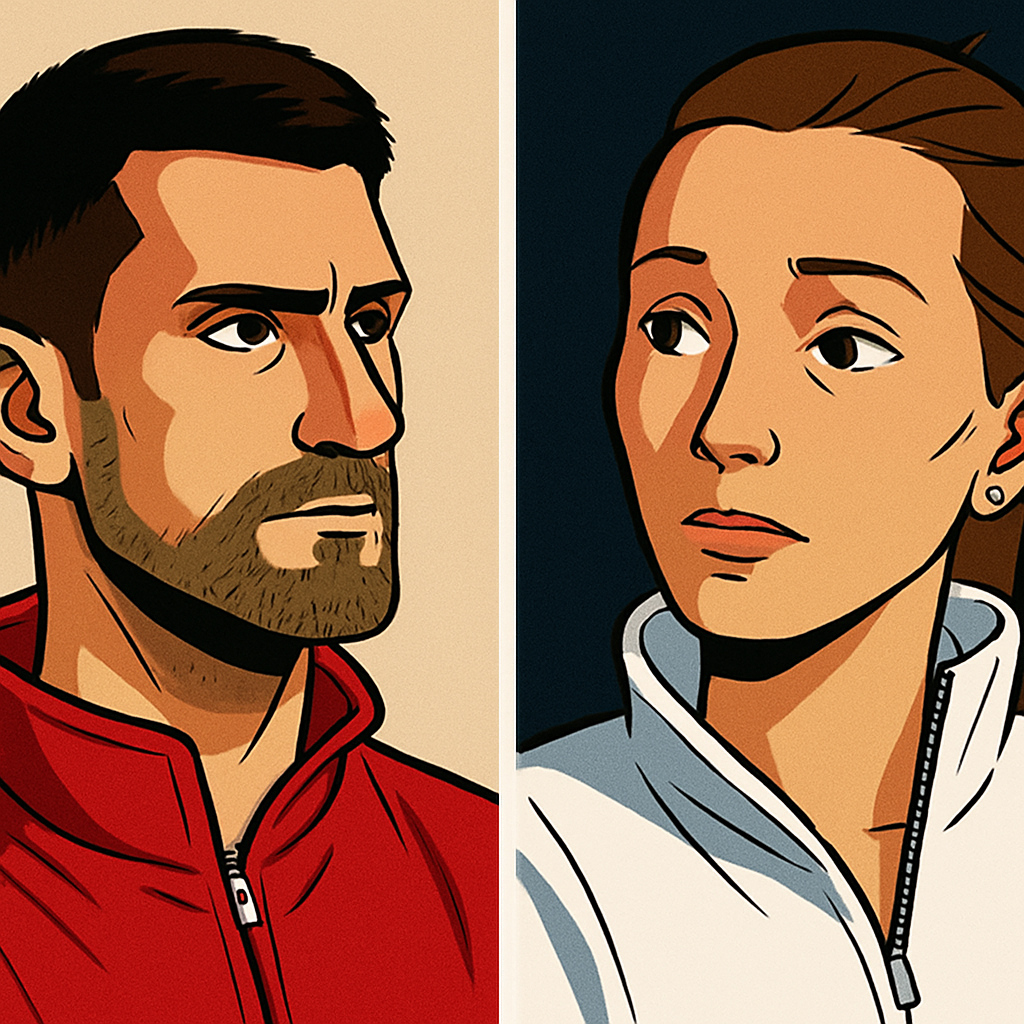
MONTE CARLO — In the high-stakes world of professional tennis, where discipline and focus are paramount, Novak Djokovic has long been known for his meticulous approach to his craft. Now, it appears that same level of intentionality is being applied to his family life. In a revealing interview, Djokovic's wife, Jelena Djokovic, opened up about the couple's parenting philosophy, admitting to having significant "fears" about raising their two children, Stefan and Tara, in the relentless glare of the public spotlight.
The conversation, which has resonated with parents worldwide, centered on the couple's decision to implement a specific "ban" on their children's use of smart devices and social media. This proactive stance, while increasingly common, takes on a deeper meaning when considered against the backdrop of the Djokovic family's unique circumstances—a life of extraordinary privilege, constant travel, and intense global scrutiny.
The Core of the "Ban": Protecting Childhood
Jelena, who manages the Novak Djokovic Foundation and is deeply involved in philanthropic work focused on early childhood education, explained that the decision was born from a place of protection, not punishment. "We have a sort of ban on smartphones and social media," she stated plainly. The goal is to shield Stefan, 9, and Tara, 6, from the potential pitfalls of the digital world for as long as possible, fostering a childhood rooted in real-world experiences.
The couple's concerns are multifaceted. Beyond the typical worries about screen time affecting attention spans and sleep, Jelena expressed a more profound anxiety about the nature of fame and identity. "My biggest fear is them growing up too fast and not having a real childhood," she admitted, highlighting the pressure that can come with being the child of a global icon.
The Specifics of the Djokovic Household Rules
While not draconian, the family's guidelines are clear and consistently enforced. The children do not have their own smartphones or social media accounts. Their exposure to tablets or computers is primarily for educational purposes and is strictly limited and supervised. This policy extends to their environment, with the aim of creating a digital-minimalist space at home. The key principles behind their approach include:
- Delayed Introduction: Postponing smartphone ownership until the children are much older and, in Jelena's words, "emotionally ready" to handle the complexities of the online world.
- Supervised Access: Any screen time is a shared, family activity, not a solitary pursuit.
- Focus on Alternatives: Actively filling their children's time with sports, reading, outdoor play, and family interaction.
Jelena emphasized that this is not about creating a bubble of isolation, but about building a strong foundation. "We want them to build their own personalities, their own interests, without the noise and comparison that can come from social media," she explained. This is particularly poignant given that their father is one of the most compared and analyzed athletes in history.
Jelena's "Fears" and Parental Unity
The candid admission of fear is what made Jelena's comments so relatable. She did not present herself as a perfect, fearless parent, but as one navigating universal anxieties amplified by extraordinary circumstances. Her fears extend beyond screens to the very nature of their lifestyle. "Traveling the world, living out of suitcases, being surrounded by attention—it's not a normal childhood," she reflected.
Crucially, she and Novak are a united front on this issue. Novak, whose own discipline is legendary, has often spoken about the importance of presence and mindfulness. He views the ban on unchecked technology as an extension of the values that have made him champion: focus, hard work, and living in the moment. In previous interviews, Novak has said, "When I am with my children, I try to be truly with them. The phone is away. That time is sacred."
This alignment is vital. It prevents the children from playing one parent against the other and sends a consistent message about family priorities. Jelena credited their shared vision for providing stability amidst the chaos of the tour. "We talk about everything. We are a team, first and foremost," she said.
Balancing Privilege with Normalcy
The Djokovics face the unique challenge of providing a grounded upbringing within a life of immense wealth and fame. The ban on social media is one tool in a larger arsenal aimed at instilling normalcy. The children attend regular schools when possible, have household responsibilities, and are encouraged to pursue their own passions—Stefan for tennis and soccer, Tara for ballet and art—without the pressure of public expectation.
Jelena's fears are balanced by hope and intentional action. She and Novak are acutely aware that their children will one day have to navigate their digital identities, especially given their famous last name. The current "ban" is seen as preparation for that future. "We are trying to equip them with a strong sense of self first," Jelena noted. "So that when they do eventually go online, they know who they are, and that value doesn't come from likes or comments."
The conversation sparked by Jelena Djokovic transcends celebrity gossip. It touches on a central dilemma of modern parenting in the digital age: how to protect innocence while preparing children for an increasingly connected world. For the Djokovics, the answer lies in conscious delay, active engagement, and a united commitment to preserving the simple, messy, and real experiences of childhood—a challenge they are tackling with the same strategic focus that has defined Novak's record-breaking career.