
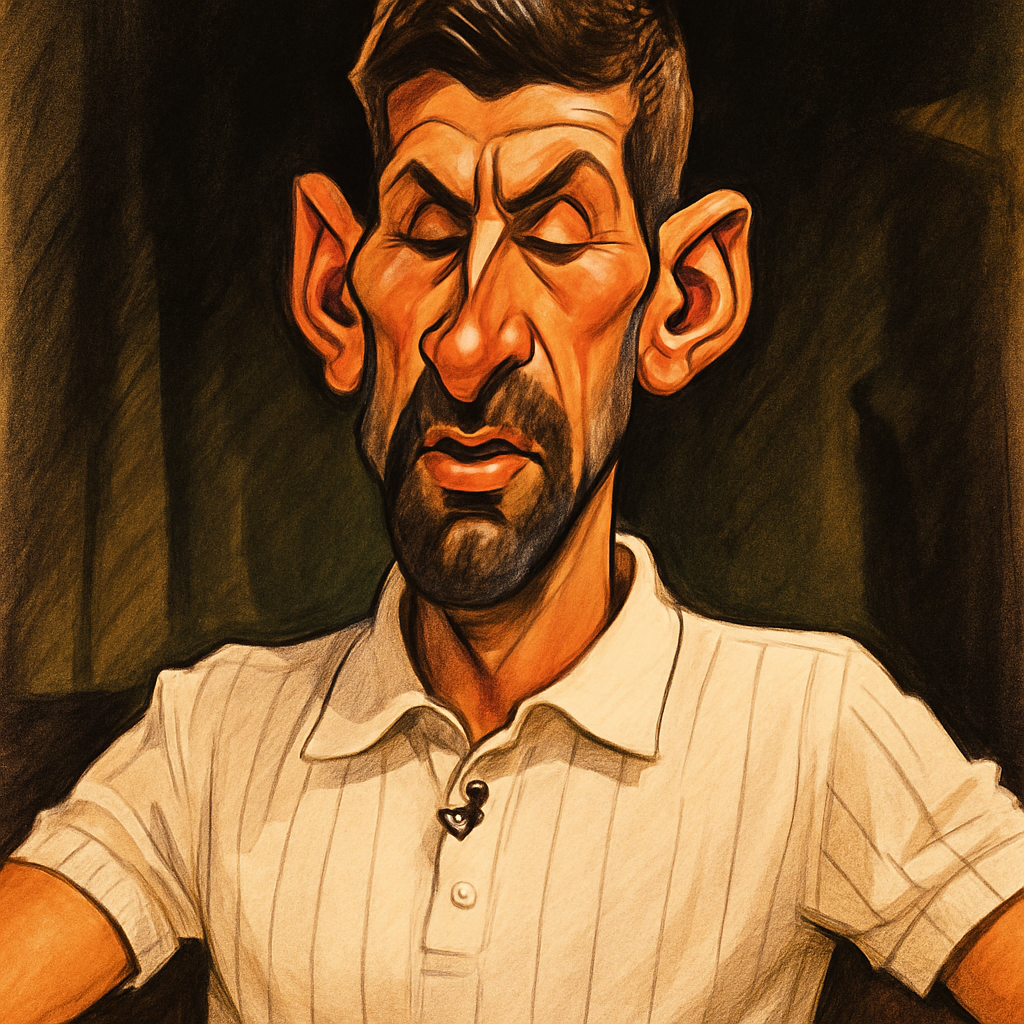
LONDON — In a raw and revealing interview that laid bare the man behind the champion, Novak Djokovic was moved to the brink of tears while discussing the profound impact that the concept of death has on his life and career.
The 24-time Grand Slam champion sat down with Piers Morgan for a wide-ranging conversation on "Piers Morgan Uncensored," where the topic shifted from forehands and trophies to the deepest motivations driving one of history's greatest athletes. It was there that Djokovic delivered a poignant, six-word philosophy that silenced the room.
"The awareness that I'm going to die…" Djokovic stated, his voice cracking with emotion as he paused to compose himself, "is the biggest motivation I have in my life. Because it puts things in perspective."
A Champion's Vulnerability
For an athlete known for his almost machine-like mental fortitude on the court, the display of vulnerability was a stark contrast. Djokovic, who has built a legacy on overcoming seemingly insurmountable pressure, explained that this existential awareness is the very bedrock of his success, not a source of fear.
He elaborated that the certainty of mortality fuels a relentless pursuit of living a life aligned with his purpose. "When you are aware of that, and you really embrace that, and you feel that, and you feel the presence of death, then every day, every moment, becomes super valuable," he told Morgan, his eyes glistening.
The Perspective of Impermanence
This isn't a morbid obsession for Djokovic, but rather a spiritual and philosophical tool. He described it as a mechanism to cut through the noise of trivial concerns and focus intensely on what truly matters: his family, his passions, and his personal growth.
"It really helps me to not be distracted by things that are, let's say, not adding to my higher purpose, my mission, and the values that I have," he said. This perspective allows him to navigate the extreme highs and lows of professional tennis with a unique equilibrium.
The interview highlighted a maturity that has evolved over his two decades in the spotlight. The same man who once smashed rackets in frustration now channels that intensity through a lens of profound gratitude and purpose, driven by the very finiteness of existence.
Channeling Awareness into Performance
This philosophy directly translates to his performance. Djokovic explained that being acutely aware of life's transient nature eliminates the fear of failure. If every moment is precious, then the outcome of a single tennis match, while important, is put into its proper, smaller context.
This mindset has been visibly evident in his ability to stage miraculous comebacks, most notably from two sets down in major finals. The pressure that crushes other competitors seems to elevate his game, a phenomenon he attributes to this foundational awareness.
"Why would I be afraid of losing a tennis match when I'm aware that this is part of life?" he questioned rhetorically. "It's a huge lesson and a huge blessing, in a way."
A Life Beyond the Baseline
The conversation made it clear that Djokovic's motivations extend far beyond adding to his already record-breaking tally of Grand Slam titles. His focus is on legacy, family, and the impact he can have off the court.
He spoke passionately about his role as a father and husband, and his work with the Novak Djokovic Foundation, which focuses on early childhood education. These elements are all part of the "higher purpose" he feels compelled to fulfill with the time he has.
Key aspects of his life that are shaped by this philosophy include:
- Family First: Prioritizing time with his wife, Jelena, and their two children above all else.
- Philanthropic Drive: A deep commitment to giving back, rooted in the desire to create lasting, positive change.
- Holistic Health: A famed dedication to physical and mental wellness, viewing his body as the vessel for his life's work.
Public and Peer Reaction
The emotional moment from the interview quickly circulated on social media, with fans and commentators praising Djokovic's honesty and depth. Many noted that it provided a rare glimpse into the complex inner world of an athlete often perceived as stoic and calculated.
Tennis journalist Ben Rothenberg posted on X (formerly Twitter): "We so rarely see athletes, especially those at the very top, engage with such raw, human vulnerability. This is the side of Novak that his fiercest critics never see, and it's profoundly humanizing."
The moment also resonated with fellow professionals, who understand the unique psychological pressures of the tour. It underscored a universal truth that connects the superstar to every person: the shared human condition and the search for meaning.
A Legacy Forged in Meaning
In the end, Novak Djokovic's emotional comment to Piers Morgan was more than a soundbite; it was a key to understanding his unparalleled drive. He is not just playing for history books or material wealth, but for something far more profound.
He is playing, and living, with the constant, gentle reminder of his own mortality. This awareness pushes him to extract every drop of potential from his career, his relationships, and his life, making his journey about more than just tennis.
"It's the biggest motivation," he reiterated, the weight of the words clear in his expression. In that moment, the world saw not just a champion, but a man fully engaged in the beautiful, fleeting struggle of being alive.