
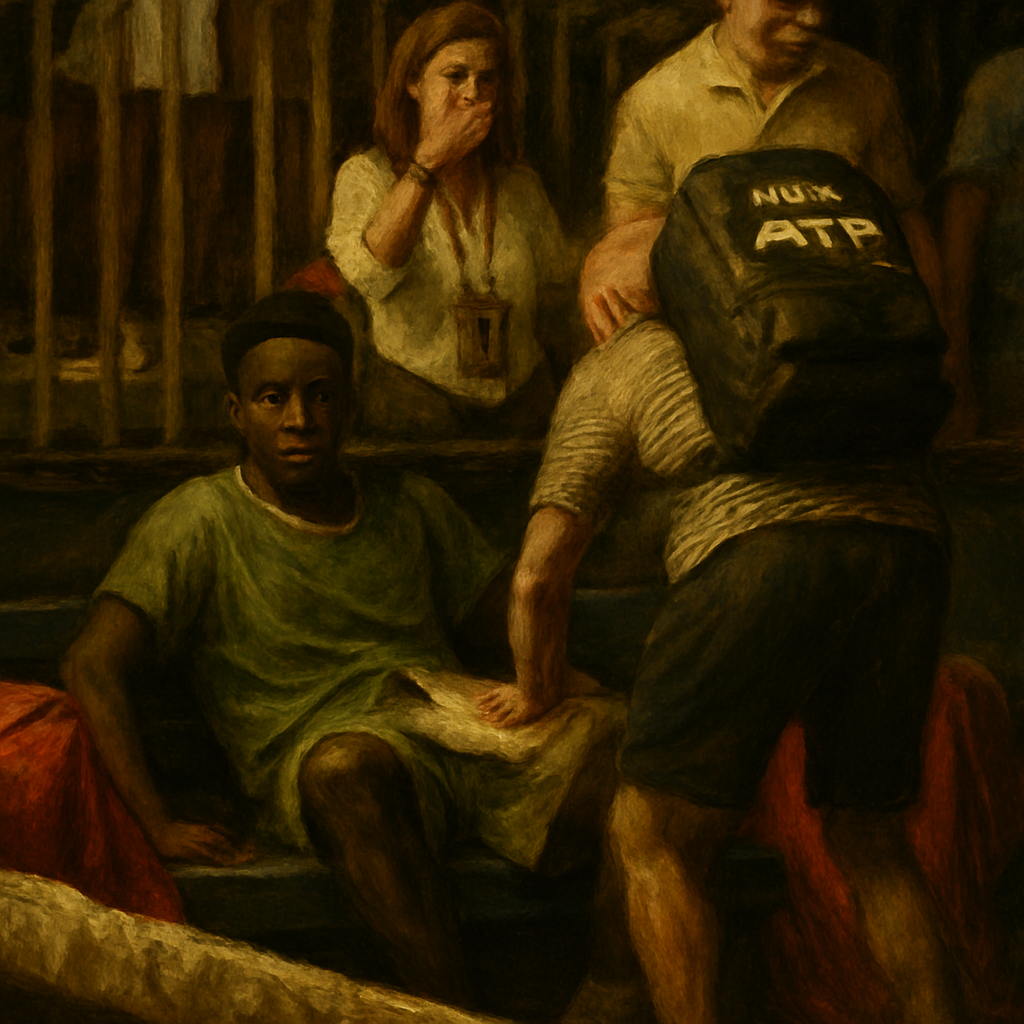
MIAMI — The moment of triumph for a 17-year-old tennis prodigy is usually one of unbridled joy, a celebration of a dream realized. For Moise Kouame, that moment arrived on a humid afternoon at the Miami Open, but it was immediately followed by a scene of profound concern. After securing his first-ever ATP Tour-level victory, a monumental 6-4, 6-4 win over fellow Frenchman Hugo Gaston, Kouame collapsed to the ground in visible pain, clutching his left leg. The celebration was cut short as a wheelchair was urgently brought onto Court 7, and the tournament physio was summoned, casting a shadow over what should have been a career-defining breakthrough.
A Dream Debut Turns Sour
Moise Kouame, a promising talent who received a wildcard into the Miami Open qualifying draw, had just authored the biggest win of his young career. Displaying a maturity beyond his years, he navigated the pressure against the more experienced Gaston, a former top-100 player. His powerful groundstrokes and tactical discipline were on full display, earning him a standing ovation from the gathered crowd. As the final ball was struck, Kouame’s face initially broke into a wide smile, embracing the reality of his achievement. However, within seconds, that expression contorted into one of agony. He fell to the blue hardcourt, unable to put weight on his left leg, prompting immediate intervention from the on-site medical team.
The sight of a wheelchair being rolled onto the court was a stark and unsettling contrast to the jubilant atmosphere moments before. Tournament staff and the physio carefully helped the teenager into the chair, his head bowed, as he was escorted off for further evaluation. The incident sent a wave of anxiety through the tennis community, with fans and commentators expressing their hopes on social media that the injury was not severe. The French Tennis Federation later released a statement confirming Kouame had suffered "acute cramping in his left calf" following the extreme physical and emotional exertion of the match.
The Physical Toll of a Breakthrough
For a young athlete like Kouame, playing in his first ATP Masters 1000 event, the physical and nervous strain can be immense. The combination of Miami’s heat, the intensity of a high-stakes match, and the adrenaline crash after securing such a significant win created a perfect storm. Cramping, while often not a long-term structural injury, is a debilitating condition that speaks to the extreme demands placed on a player’s body. Sports physiotherapists note that such episodes are not uncommon in debutants or in scenarios of heightened stress, where the body’s electrolyte balance and hydration levels are pushed to their limit.
Speaking to reporters after receiving treatment, a relieved but exhausted Kouame shed light on the moment. "I felt it lock up completely as soon as I stopped moving," he explained. "The pain was incredible. In that moment, you forget the win, you just think about the pain. I was scared, of course. But the physio was amazing and helped me very quickly." His comments highlight the sudden and overwhelming nature of the episode, which momentarily robbed him of the chance to savor his victory.
The Road to Miami
Kouame’s journey to this painful breakthrough is a testament to his rapid ascent. Hailing from Paris, he has been a standout on the junior circuit and in lower-level professional events. His game is built around a formidable serve and aggressive baseline play, drawing comparisons to some of France’s recent power players. Key milestones that led him to this Miami Open wildcard include:
- Winning the prestigious Orange Bowl junior title in 2023.
- Reaching a career-high ITF junior ranking of No. 6.
- Securing his first professional title on the ITF Men’s World Tennis Tour earlier this year.
This wildcard was a reward for his potential and a crucial opportunity to test himself against the world’s best. His performance against Gaston proved he belonged at that level, showcasing not just skill but remarkable mental fortitude to close out the match under pressure.
A Bittersweet Victory
The aftermath of the match was a mixture of celebration and concern. While the diagnosis of severe cramping was a relief compared to potential muscle tears or ligament damage, it forced Kouame to withdraw from his next qualifying match. This meant he was unable to attempt to reach the main draw, a cruel twist of fate after such a heroic effort. The ATP Tour rules on medical withdrawals in qualifying are strict, and with insufficient time to recover, the teenager had to concede his place. "It’s the most difficult decision," he said. "To work so hard for this moment and then not be able to try to continue is heartbreaking. But my team says I must think long-term."
The incident sparked conversations about the support systems in place for young players making their first forays onto the big stage. The immediate and professional response from the Miami Open medical team was praised. Furthermore, veterans of the sport took to social media to offer encouragement, noting that such physical reactions, while frightening, are part of the learning curve in a grueling professional sport. The focus quickly shifted from the injury itself to the quality of tennis Kouame had displayed, with many pundits marking him as a name to watch in the coming years.
Looking Ahead: Resilience Forged in Adversity
In the days following the incident, updates from Kouame’s camp were positive. Intensive physiotherapy and hydration protocols were employed, and he was expected to make a full recovery within a week. The experience, though jarring, provides a powerful lesson in the realities of professional athletics. Winning at the highest level requires not just talent, but physical resilience and meticulous preparation for all contingencies, including managing the body’s response to extreme stress and euphoria.
Moise Kouame’s first ATP win will forever be etched in memory not just for the scoreline, but for the dramatic and worrying scenes that followed. Yet, this story is ultimately one of triumph. He proved he could compete and win against a seasoned professional. The wheelchair and the physio are part of the narrative, but they do not define it. They underscore the human element of sport—the vulnerability that exists alongside incredible strength. As he recovers, the tennis world will be watching, eager to see the next chapter from a young man who has already shown he possesses the heart of a champion. His final reflection captured a mature perspective: "I got my first win. I will never forget that. Next time, I will be better prepared. Next time, I will walk off the court."