
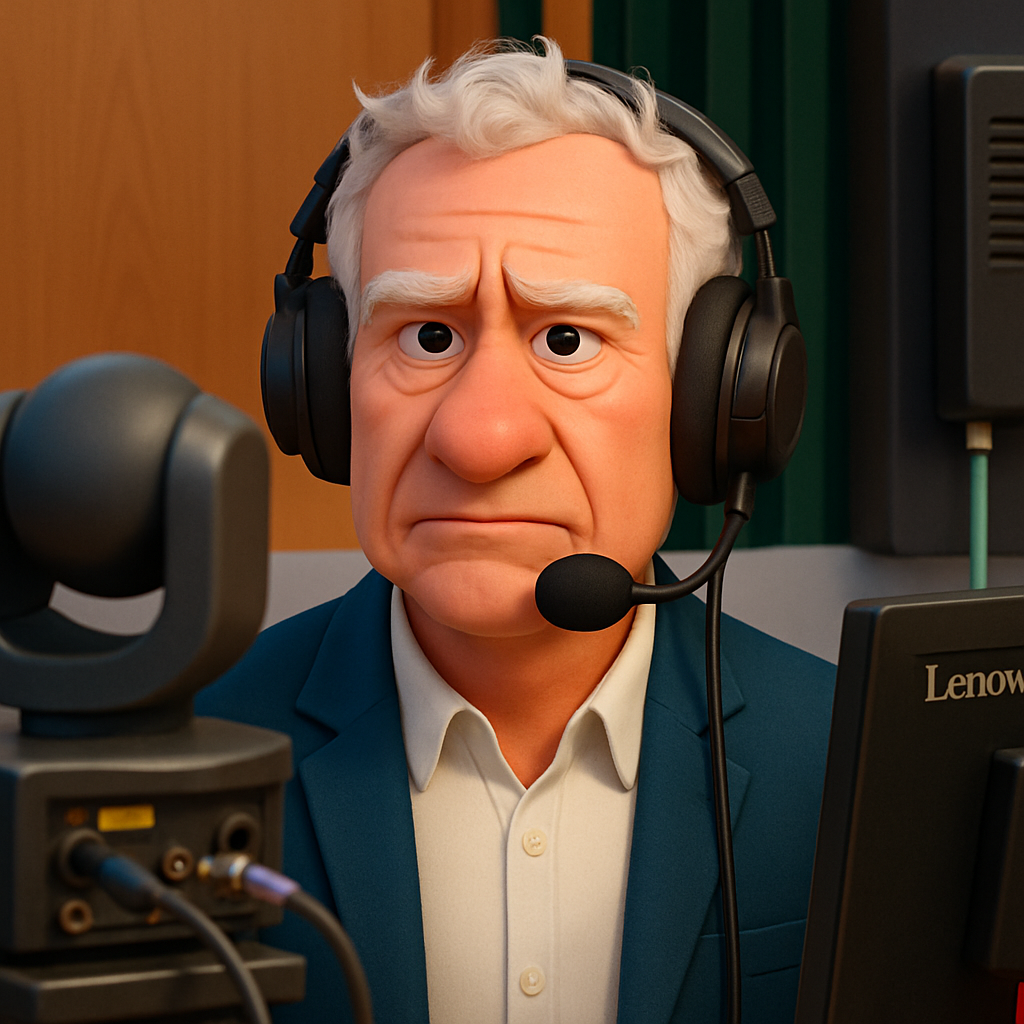
NEW YORK — Tennis legend John McEnroe, known as much for his fiery on-court temper as his sublime volleying skills, has found himself in hot water once again. This time, the controversy unfolded not on the hallowed grass of Wimbledon, but in the bustling terminal of a New York airport, where the 65-year-old broadcaster was captured on video telling a young fan to "go f*** yourself."
The Viral Airport Confrontation
The incident, which quickly went viral across social media platforms, occurred at LaGuardia Airport on Tuesday afternoon. According to multiple eyewitness accounts and the video footage, a young male fan, reported to be in his late teens or early twenties, approached McEnroe for a photograph. The exchange began cordially enough, with McEnroe initially posing for the picture. However, the situation deteriorated rapidly when the fan, seemingly excited, continued to engage McEnroe in conversation, possibly about tennis.
In the now widely circulated clip, McEnroe, wearing a baseball cap and headphones, can be seen growing visibly agitated. He turns to the fan and delivers the expletive-laden rebuke in a sharp, clear tone. The fan, looking stunned, steps back as McEnroe walks away, shaking his head. The video cuts off shortly after, but the damage to the seven-time Grand Slam champion's public persona was already done, sparking a fresh debate about celebrity, fan etiquette, and the enduring legacy of "Superbrat."
McEnroe's History of On-Court Explosions
For those who followed tennis in the late 1970s and 1980s, McEnroe's airport outburst is a familiar echo from a bygone era. His career was punctuated by legendary tantrums that became as iconic as his playing style. He famously clashed with umpires, tournament officials, and even his own equipment, creating a template for the volatile athlete. His most quoted line, "You cannot be serious!" shouted at Wimbledon umpire Edward James, is etched into sporting folklore.
This persona, dubbed "McEnroe-ism," was a double-edged sword. It captivated audiences and brought a new, rebellious energy to a traditionally genteel sport, but it also earned him fines, suspensions, and a reputation as a bad boy. In recent decades, as a respected commentator and elder statesman of the game, McEnroe has often reflected on his past behavior with a mix of regret and wry humor, acknowledging it was both a flaw and, paradoxically, a part of his competitive engine.
Public and Media Reaction: Sympathy or Condemnation?
The reaction to the airport video has been sharply divided, reflecting the complex nature of fan-celebrity interactions in the age of smartphones. Many on social media condemned McEnroe, arguing that a simple "no, thank you" would have sufficed and that his status does not excuse verbally abusing a young admirer. Critics pointed out that the fan appeared polite and that McEnroe's reaction was disproportionate and needlessly cruel.
Conversely, a significant number of commentators and former athletes came to McEnroe's defense. They cited the constant, often intrusive nature of modern fandom, where public figures are expected to be "on" and accessible at all times—in airports, at restaurants, and during private family moments. This camp argued that while the language was harsh, it was a raw human reaction to a perceived invasion of personal space and a moment of desired privacy. As one sports columnist put it, "We asked for passion from our athletes for decades. Sometimes, that passion doesn't have an off switch."
The incident also raises broader questions about fan behavior. In the era of social media clout-chasing, is an autograph or photo simply a memento, or is it transactional content for a personal platform? This context has led some to re-evaluate the unwritten rules of such encounters. Key points in the debate include:
- The Right to Privacy: Do celebrities forfeit all expectation of peace in public spaces, even during travel?
- Appropriate Fan Conduct: What is the polite way to approach a celebrity, and when should a fan take "no" for an answer?
- The Burden of Legacy: Is it fair to hold a 65-year-old man accountable for the temper of his 25-year-old self?
- The Power of the Video Clip: Does a 15-second video tell the whole story, or is crucial context missing?
McEnroe's Response and Damage Control
As of this writing, John McEnroe has not issued a formal public statement regarding the incident. Representatives for the tennis star have also remained silent, a strategy that suggests they may be waiting for the news cycle to move on. This is a marked departure from his playing days, where confrontations were met with immediate, fiery retorts. His current role as a lead analyst for ESPN and the BBC at major tournaments like Wimbledon and the US Open places him in a different spotlight, one where maintaining a certain decorum is part of the job.
The network has not commented on whether the incident will affect his broadcasting duties. However, industry observers note that McEnroe's value as a commentator is intrinsically linked to his unfiltered, passionate perspective—the very same trait that fueled this controversy. It creates a delicate balancing act for his employers. While they cannot condone public profanity directed at a fan, they also rely on the authenticity that makes McEnroe a compelling voice in the booth.
A Pattern of Post-Retirement Irritability?
This is not the first time the retired champion has shown flashes of his old temper in public settings. In recent years, he has been involved in minor controversies during charity events and public Q&A sessions, where he has offered blunt, sometimes harsh, critiques of modern players or become short with interviewers. While these moments are often played for laughs or seen as "classic Mac," the airport incident crosses a line for many because it was directed not at a peer or journalist, but at an anonymous fan seeking a connection.
Conclusion: The Unraveling of a Complicated Legacy
The LaGuardia outburst serves as a stark reminder that the personas we create for our sports heroes are rarely simple. John McEnroe is a study in contrasts: a brilliant tactician who often lost control, a fierce competitor who advocated for sportsmanship, and now, a mellower analyst who can still erupt. This incident forces a re-examination of his legacy. Is he the tortured genius whose passion was inseparable from his greatness, or is he a man who has never fully learned to manage his famous ire, now to the detriment of his reputation?
Ultimately, the episode is less about a single curse word and more about the enduring tension between public life and private frustration. For McEnroe, a man who spent decades in an adrenaline-fueled pressure cooker, the expectation of perpetual graciousness may feel like an unfair final set. For the fan, it was likely a disappointing and shocking encounter with an idol. In the court of public opinion, there is no clear winner, only another contentious chapter in the long, complicated history of one of tennis's most unforgettable figures.