
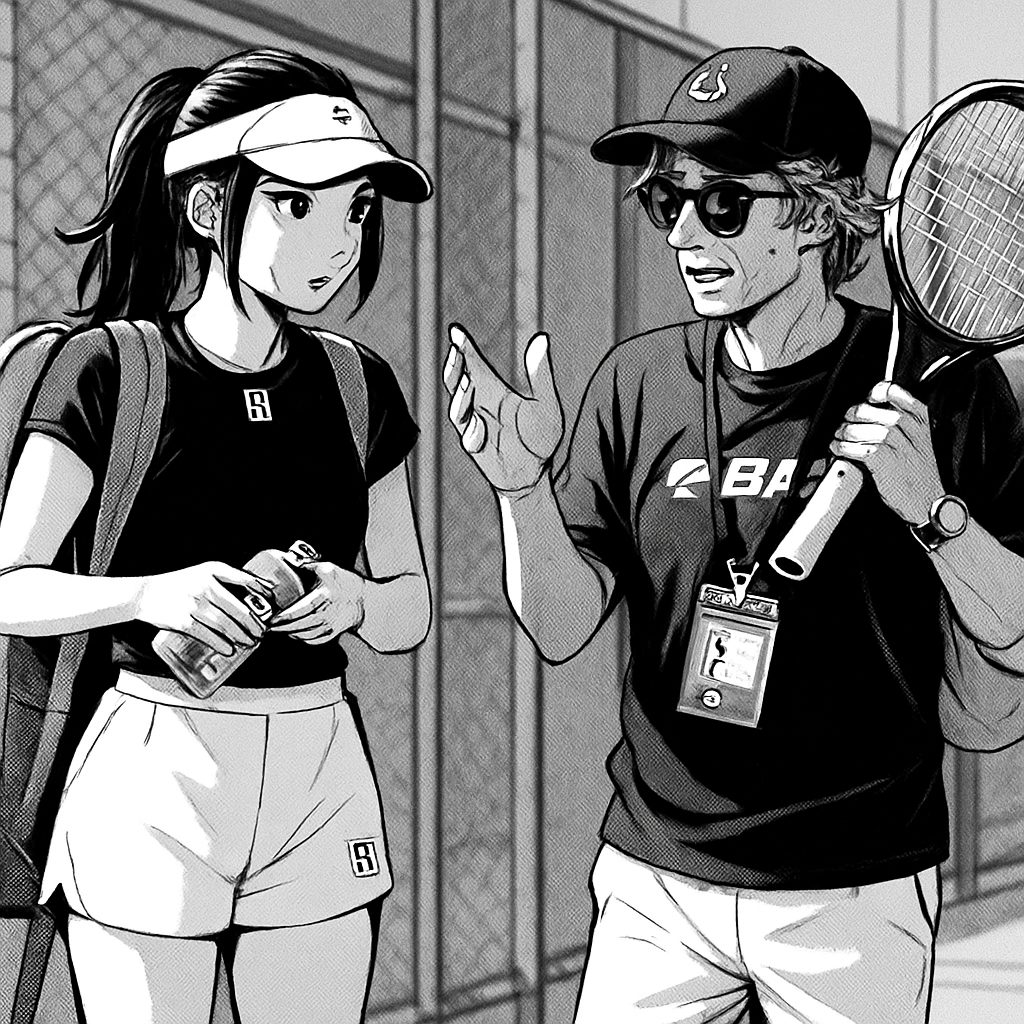
LONDON — The buzz around the National Tennis Centre in Roehampton is palpable whenever Emma Raducanu is in town, but the atmosphere during her recent training block with Francisco Roig has been particularly electric. Having observed a session firsthand, one thing struck me above all else: the profound and immediate impact this new partnership is having. Raducanu, the 2021 US Open champion whose career has since been a rollercoaster of coaching changes and physical setbacks, is benefiting immensely from the quiet authority and technical genius of Rafael Nadal’s long-time collaborator.
A Partnership Forged in Mutual Respect
The collaboration between Raducanu and Roig, while still in its nascent stages, feels different. It’s not a headline-grabbing, blockbuster appointment; it’s a deliberate, strategic union. Roig, a stalwart in Nadal’s camp for over 15 years, is not a coach who seeks the limelight. His value lies in his encyclopedic knowledge of the game, particularly on clay, and his reputation for building resilient, tactically astute players. For Raducanu, who has worked with five different coaches in as many years, the stability and clarity Roig offers could be the antidote to the instability that has plagued her since her Flushing Meadows triumph.
Watching them interact, the dynamic is one of a master craftsman and a gifted apprentice eager to learn. Roig doesn’t bark instructions; he offers concise, pointed feedback. Raducanu, in turn, is a sponge, her focus unwavering. There’s a sense that she trusts his vast reservoir of experience implicitly. This is a coach who has navigated the highest peaks of the sport alongside one of its greatest champions, and that credibility is undeniable. As one onlooker remarked, "She’s listening in a way she hasn’t for a while."
The One Thing That Struck Me: The Forehand
So, what was the single most striking observation? It wasn't a dramatic change in her serve motion or a new-found aggression. It was the meticulous, almost surgical, reconstruction of her forehand. Under Roig’s watchful eye, Raducanu is being guided to hit through the ball with more authority and heavier topspin, a hallmark of his most famous pupil. The key technical adjustments are clear:
- Racket Head Preparation: A more pronounced, higher take-back to generate greater potential energy.
- Contact Point: A relentless focus on meeting the ball further out in front, ensuring she drives through the shot rather than arming it.
- Follow-Through: A fuller, more aggressive finish over the shoulder, designed to impart heavy, penetrating topspin.
The drill was repetitive, almost meditative. Roig would feed ball after ball to her forehand side, constantly reinforcing the new muscle memory. The sound coming off her strings was different—a deeper, more authoritative *thud* compared to the flatter, quicker *pop* of old. This isn't a minor tweak; it's a foundational shift aimed at building a more robust and weaponized shot that can withstand the physical toll of the tour and dominate rallies.
The Nadal Imprint
It’s impossible to watch Roig work without seeing the ghost of Nadal’s game in his instruction. The emphasis on heavy topspin is a direct import from the Manacor training grounds. For Raducanu, whose game has been built on flat, aggressive precision, this represents a significant philosophical change. The potential payoff, however, is enormous. A heavier forehand will give her more margin for error over the net, allow her to push opponents deeper behind the baseline, and be far more effective on slower surfaces like clay, which has historically been her weakest. Roig seems to be building a more complete, all-surface player, not just patching up weaknesses.
More Than Just Technique: The Mental Recalibration
The work, however, extends far beyond technical mechanics. What was equally compelling was the subtle psychological recalibration taking place. Roig’s demeanor is calm and assured. There were no histrionics, no frustrated gestures. When a shot went awry, he would simply walk to the net, explain the cause in a low voice, and reset. This environment of quiet confidence seems to be permeating Raducanu’s own approach. The often-visible frustration that would sometimes creep into her game during a difficult patch was entirely absent. She appeared… patient.
This aligns perfectly with comments Raducanu made recently, which now seem to be a direct reflection of Roig’s influence. She stated, "I feel like with him, it's very structured. We have a plan and we stick to it. There's a clarity there that I really appreciate. He's not trying to reinvent the wheel, just making me a better, more solid player in every department."
This structured, no-nonsense approach is a world away from the turbulence of her recent years. Roig represents a return to tennis fundamentals. He is not a motivator in the traditional, fiery sense; he is a builder. He is building a more technically sound game and, in the process, seems to be rebuilding the confidence that was so radiant during her US Open run.
A Long-Term Project with Immediate Potential
It is crucial to temper expectations; this is a long-term project. The changes to her forehand will take time to bed in and become instinctual under the pressure of match point. There will be growing pains. However, the potential for immediate improvement is also there. The clarity of purpose alone could be a catalyst. For the first time in a long while, Raducanu has a guide who isn't just coaching her for a tournament, but for a career.
The partnership signals a new, mature chapter for Raducanu. She is no longer the surprise teenage champion; she is a professional athlete actively taking charge of her development by aligning herself with one of the most respected technical minds in the sport. As she continues to work with Roig, the tennis world will be watching closely to see if this collaboration can unlock the consistent, top-level performance that her talent has always promised. Based on what I saw on that practice court, the foundations for that future are being laid, one heavy, topspin-laden forehand at a time.