
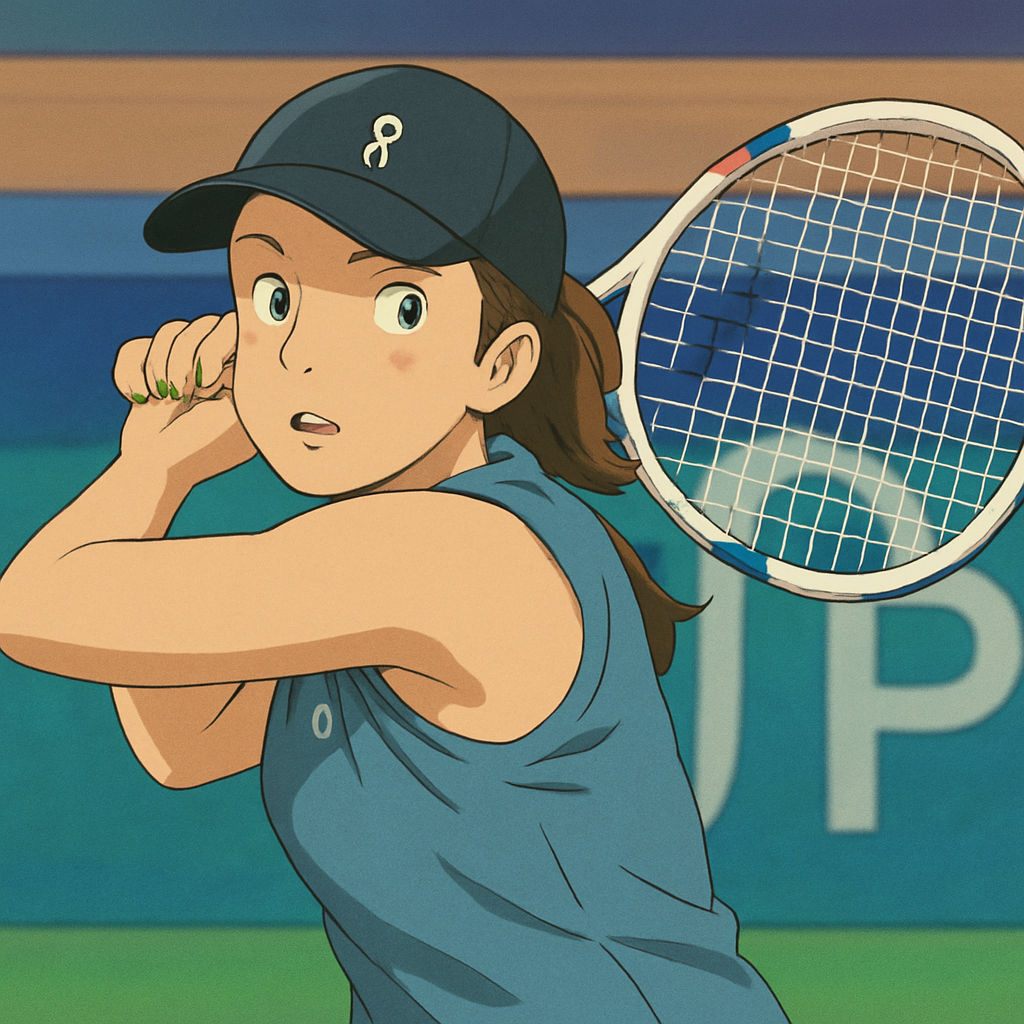
MIAMI GARDENS, Fla. — The world of women’s tennis was left in stunned silence on Tuesday as world No. 1 Iga Swiatek suffered a shock second-round exit at the Miami Open, a result the four-time Grand Slam champion described as her “worst nightmare” in a raw and emotional post-match press conference. The 6-4, 6-3 defeat to unseeded American Emma Navarro marks a new nadir in what Swiatek herself concedes has been a “torrid” and perplexing start to her 2026 season.
A Stunning Collapse on Hard Rock Stadium
For over two years, Iga Swiatek’s dominance on the WTA Tour felt like an immutable law of physics. Her relentless intensity, suffocating court coverage, and peerless forehand forged an aura of invincibility that saw her hold the top ranking for a historic 112 consecutive weeks. Yet, that aura has seemingly evaporated in the early months of 2026. Her latest performance at the Miami Open, a tournament she won in 2022, was a disconcerting display of unforced errors, tactical confusion, and a palpable lack of her trademark fight. Navarro, a player Swiatek had comfortably dispatched in their two prior meetings, played solid, intelligent tennis, but the story of the match was the Pole’s uncharacteristic unraveling.
Swiatek’s Candid Confession: "The Pressure is Eating Me"
In the aftermath, a visibly shaken Swiatek did not hide behind clichés or minor injuries. Instead, she offered a startlingly frank assessment of her mental state. “This feels like my worst nightmare coming true,” she admitted, her voice steady but heavy with emotion. “For so long, I managed the pressure, I used it as fuel. Now, it feels like it’s eating me from the inside. I step on the court and instead of seeing solutions, I see only traps. I’m overthinking every shot, doubting every decision. This is not me.”
Her 2026 campaign, thus far, paints a bleak picture for her standards. The statistical decline is stark:
- Australian Open: Quarterfinal loss to Qinwen Zheng, a match where she held a 4-1 lead in the deciding set.
- Dubai Duty Free Tennis Championships: Third-round exit to a resurgent Jelena Ostapenko.
- BNP Paribas Open (Indian Wells): Fourth-round defeat to rising teen Mirra Andreeva.
- Miami Open: Second-round loss to Emma Navarro.
This represents her earliest exit from a Masters 1000 event since 2019 and her first loss before the quarterfinals in any tournament since August of last year. “The results speak for themselves,” Swiatek said. “It’s not a blip. It’s a pattern, and it’s one I am desperate to break.”
Dissecting the Unraveling: What’s Gone Wrong?
Tennis analysts and former players have been scrambling to diagnose the issues plaguing the game’s former fortress. The consensus points to a perfect storm of psychological and technical factors. Psychologically, the burden of sustained excellence appears to have taken its toll. Swiatek’s coach, Tomasz Wiktorowski, recently alluded to the “immense weight of expectation” she carries every time she plays, a weight that seems to have shifted from her shoulders to her racket swing.
The Serve and Forehand: Diminished Weapons
Technically, two pillars of her game have shown alarming vulnerability. Her first-serve percentage and potency have dipped, offering opponents more looks at her second serve. More critically, her legendary forehand, once a weapon of mass destruction, has become a source of errors. The margins she once played with—hitting close to the lines with heavy topspin—are now resulting in balls sailing long or catching the tape. Against Navarro, she committed 32 unforced errors, a staggering number for a player of her precision.
The Field Has Caught Up
Furthermore, the WTA tour has adapted. Players are no longer intimidated. They have studied her patterns and are employing aggressive, high-risk strategies to take time away from her. Navarro’s tactic of taking the ball early and redirecting it to Swiatek’s forehand side, traditionally a strength, exposed a new hesitancy. “Everyone knows her game now,” noted ESPN analyst Pam Shriver. “The blueprint to challenge Iga is out there. It’s on her and her team to find a new chapter, to evolve. Right now, she’s playing a book everyone has read.”
The Road Ahead: A Crucial Clay Season
All eyes now turn to the European clay court season, the surface where Swiatek has been most dominant, boasting three Roland Garros titles. This period, culminating in the French Open, is no longer just about adding trophies; it’s about salvaging a season and reclaiming her identity. Swiatek confirmed she will take a short break before heading to Stuttgart. “I need to reset, to go back to basics with my team,” she stated. “The love for the game is still there, but it’s buried under frustration. I have to dig it out on the practice court. Clay… it’s my home. I need to feel at home again.”
The pressure, however, will be immense. Rivals like Coco Gauff, Aryna Sabalenka, and a host of hungry challengers will see this moment of vulnerability as a prime opportunity to dethrone a queen. The question hanging over the sport is whether this is a temporary slump for a champion in need of a recalibration, or the beginning of a more significant power shift.
Conclusion: A Champion’s True Test
Iga Swiatek’s “worst nightmare” is a scenario few in tennis envisioned so soon. Her candid vulnerability in Miami, while shocking, also reveals the immense self-awareness that has always underpinned her success. Great champions are not defined by their dominance alone, but by their response to crisis. The 2026 season has thrown Swiatek her greatest professional challenge yet. The coming months on the red dirt of Europe will test her resilience, her ability to adapt, and the strength of her champion’s heart. The tennis world waits to see if the nightmare in Miami was merely a disturbing dream, or the prologue to a new and uncertain chapter.