
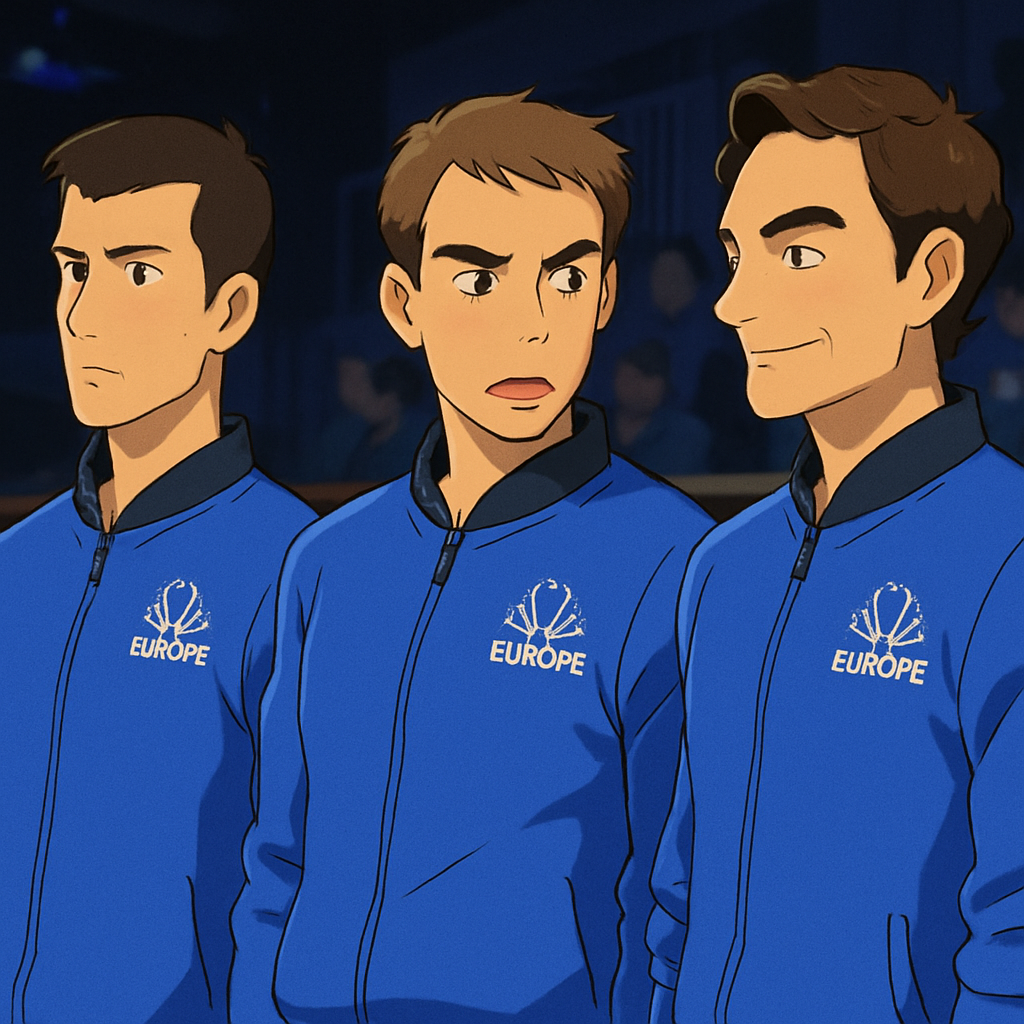
In the golden era of men's tennis, countless players have had the daunting privilege of stepping onto the court across the net from one of the sport's three titans: Roger Federer, Rafael Nadal, and Novak Djokovic. Each presents a unique, monumental challenge. But among those who have faced all three, a fascinating consensus often emerges. While Federer's artistry can leave you in awe and Nadal's physicality can grind you into the dust, there is one whose particular brand of pressure is described in uniquely psychological terms. As several opponents have confessed, only one made them feel, in their own words, like they "couldn't play tennis."
The Federer Experience: A Mesmerizing Challenge
Facing Roger Federer in his prime was often described as a surreal, almost disorienting experience. His game was built on a foundation of breathtaking fluidity and seemingly effortless power. The ball arrived on your side of the net with unusual speed and placement, but the process of him generating it was hidden in a blur of graceful motion. Opponents speak of a sense of helpless admiration. You were being outplayed, but often by shots that felt invented on the spot—a flicked winner from an impossible angle, a serve that kissed the line followed by a nonchalant volley winner. The challenge was immense, but it was the challenge of solving a beautiful, complex puzzle. As former top-10 player Jo-Wilfried Tsonga once put it, "Playing Roger is like playing a ghost. You don't know where the ball is coming from." The feeling was one of being tactically and artistically surpassed, not of being personally dismantled.
The Nadal Ordeal: A Physical and Mental Siege
Then there is Rafael Nadal. To face Nadal, especially on clay, is to submit yourself to a trial by combat. It is a visceral, physical declaration of war. The looping, heavy topspin that kicks up above your shoulders, the relentless court coverage that turns certain winners into mere opportunities, and the sheer, unbreakable competitive spirit create a fortress that must be breached. You know exactly what is coming—the high-bouncing forehand to your backhand—but stopping it is another matter entirely. The match becomes a test of endurance, patience, and pain tolerance. You feel you are playing against the ball, the court, and the elements as much as the man. It’s exhausting, demoralizing at times, but it’s a familiar athletic struggle. You are being overpowered in a very tangible, physical way. You can still play your game; it just isn't enough to move the immovable object.
The Djokovic Phenomenon: The Feeling of Ineptitude
This brings us to Novak Djokovic. The descriptions from players who have faced the Serbian legend diverge into a different psychological territory. It is not merely about being outplayed or overpowered; it is about having your own game systematically erased. Djokovic’s supreme flexibility, his otherworldly return of serve, and his two-handed backhand that functions as a relentless laser beam create a unique sensation. He doesn’t just beat you; he makes your strengths look like weaknesses and cuts off your options before you even conceive of them. The court feels smaller. Your serve, your biggest weapon, comes back at your feet with interest. Your favorite rally pattern is redirected into a corner you cannot reach. The feeling is one of profound frustration and, at its peak, a sense of personal incompetence.
This sentiment has been voiced by multiple elite opponents. Gael Monfils, a spectacular athlete himself, has famously struggled against Djokovic, holding a 0-19 record. He has described the sensation as being "in a washing machine"—spun around with no control. Perhaps the most telling quote comes from former world No. 3 Dominic Thiem, a man who has beaten all three legends. Reflecting on the difference, Thiem stated, "With Roger, everything is nice. With Rafa, everything is tough and intense. With Novak, it’s like you have to play your absolute best just to win a single point, and even that might not be enough. It can make you feel helpless."
The Anatomy of the "Lockdown" Feeling
So, what specifically in Djokovic’s arsenal triggers this unique response? Analysts and players point to a combination of factors that create a perfect storm of pressure:
- The Ultimate Return: Djokovic is widely considered the greatest returner in history. He stands deep, takes the ball early, and neutralizes even the biggest serves. This removes a player's primary point-starting weapon and immediately creates pressure on every first and second serve.
- Elastic Defense: His sliding, flexible style of defense allows him to retrieve balls that would be winners against anyone else, turning offense into defense in a blink. This discourages opponents from going for shots, planting seeds of doubt.
- Tactical Mirroring & Improvement: Djokovic has a history of absorbing an opponent's best shot and then using it against them. He studies and adapts mid-match, often solving a player’s game faster than they can execute it.
- The Mental Fortress: His legendary mental toughness, especially in clutch moments, communicates an aura of inevitability. The belief that he will always find a way seeps into his opponent's mind.
Together, these traits don't just win points; they dismantle game plans and erode confidence. You're not just losing; you're being shown that your entire tactical approach is futile. This is the core of the "I can't play tennis" feeling. As Andy Murray, who knows the challenge as well as anyone, has said, "He makes you play terrible. He just has a way of doing that to players."
Conclusion: The Ultimate Compliment to a Complete Player
To be clear, stating that Djokovic can make world-class professionals feel inept is not a dismissal of Federer's genius or Nadal's ferocity. It is, rather, the ultimate compliment to the specific and comprehensive nature of Djokovic’s dominance. Federer’s game inspires awe for its beauty. Nadal’s inspires respect for its relentless intensity. Djokovic’s, however, inspires a unique form of despair for its oppressive completeness. He doesn't just beat you; he exposes the gaps in your game you didn't know existed and removes the tools you rely on. In the pantheon of tennis greatness, each of the Big Three has carved their own legacy of fear. But the particular fear of being rendered incapable, of having your craft stripped away point by point, is a signature of the Novak Djokovic experience. It is the feeling of facing a wall that not only doesn't fall but also closes in on you, until there is simply nowhere left to play.