
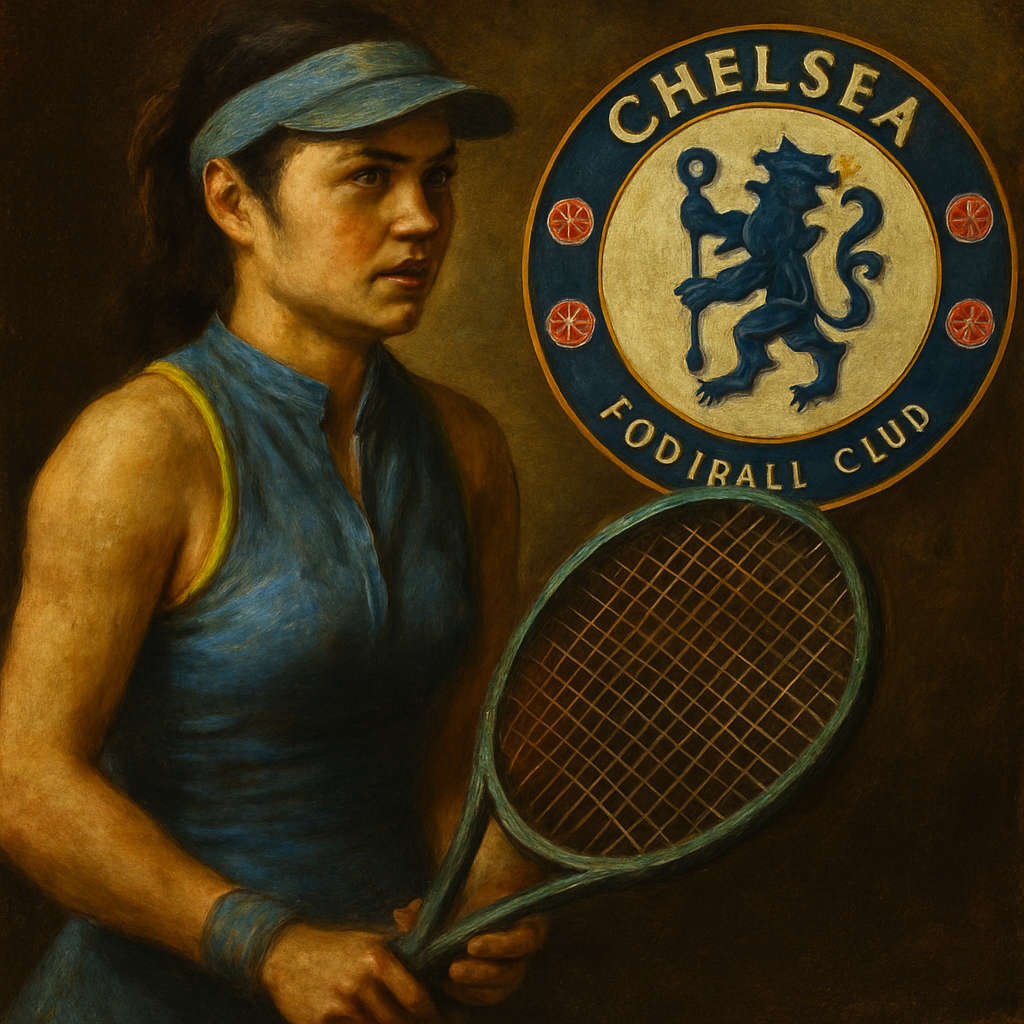
LONDON — The narrative surrounding Emma Raducanu’s career has taken a sharp turn from fairytale to cautionary tale. The 2021 US Open champion, who captivated the world with her stunning run as a qualifier, is now facing a wave of criticism not for her on-court performances, but for her relentless churn of coaching staff. Following her recent split with Nick Cavaday, her ninth coach in under three years, the tennis world is drawing a brutal and unexpected parallel: comparing the 21-year-old Brit to the notoriously trigger-happy football club, Chelsea FC.
A Revolving Door of Expertise
Since her historic triumph in New York, Raducanu’s search for a lasting coaching partnership has been frantic. The list reads like a who’s who of tennis instruction, each tenure remarkably brief. It began with Andrew Richardson, who guided her to the US Open title but was swiftly replaced. The procession continued with Torben Beltz, Dmitry Tursunov, Sebastian Sachs, and most recently, Cavaday, a childhood coach she re-hired in December. This constant state of flux has left pundits and fans bewildered, questioning the strategy behind the musical chairs.
Tennis legend John McEnroe voiced a common concern, stating, "It feels like she’s searching for a magic formula, a quick fix, when what she really needs is stability and time to develop a consistent game under one guiding voice. You can’t build a house if you keep firing the architect every few months." The comparison to Chelsea, owned by Todd Boehly, is particularly stinging. The club has become synonymous with extravagant spending and rapid managerial turnover, a strategy that has yielded chaotic results on the pitch.
The Chelsea Comparison: Harsh but Resonant
The analogy, first crystallized by British media, has gained traction because of its uncomfortable accuracy. Like Chelsea under its current ownership, Raducanu’s camp appears to be operating with immense resources and potential but lacking a coherent, long-term project. Each new coach represents a new "project," a new philosophy, before the previous one has had time to bear fruit. This creates a disruptive cycle where Raducanu is perpetually adapting to new methods rather than deepening her own game.
Former British No. 1 Greg Rusedski offered a blunt assessment: "It’s a revolving door. It reminds you of Chelsea Football Club – new manager every five minutes. How can you build any form of consistency? She’s got to find the right team and stick with them through the tough periods, not just when things are going well." The criticism centers on the perception that Raducanu, or her management, may be seeking a coach who simply tells her what she wants to hear, rather than one who will challenge and develop her.
The Toll of Constant Change
Beyond the optics, the practical implications are severe. A coach-player relationship in tennis is deeply technical and psychological. It takes months to build trust, understand nuances in technique, and develop a competitive strategy. With each split, Raducanu loses:
- Continuity in technical development: One coach’s adjustment is undone by the next.
- A trusted confidant: Someone who understands her mental state under pressure.
- Scouting and tactical planning: Deep knowledge of opponents built over time.
- Stability during injury rehab: Crucial for her recent return from multiple surgeries.
This instability is seen as a significant factor in her struggle to string together consistent results since her Grand Slam win. Her ranking, which peaked at World No. 10, has fluctuated wildly, and she is currently working her way back from outside the top 300 following surgeries on both wrists and an ankle.
Searching for a "Super Coach" or a Scapegoat?
A theory gaining ground is that Team Raducanu is in pursuit of an elusive "super coach" – a figure like a Darren Cahill or a Patrick Mouratoglou who can instantly transform fortunes. However, these relationships also require time and, crucially, player buy-in. There is a growing suspicion that when results don’t immediately improve, or when a coach imposes difficult, necessary changes, the partnership is severed. This pattern risks portraying Raducanu as unwilling to endure the hard graft required after a meteoric rise.
In a revealing press conference last year, Raducanu herself hinted at the high expectations placed on her team, saying, "I ask my coaches a lot of questions. I want to understand the ‘why’ behind everything we’re doing. I think that’s how I learn best." While a commendable approach for an intelligent player, it can also lead to friction if a coach feels their authority is being undermined by constant interrogation.
A Crossroads and a Path Forward
The consensus from the tennis community is clear: the next appointment must be different. Raducanu is at a critical juncture. She has shown flashes of her brilliant ball-striking since returning to the tour, but her game lacks the match sharpness and tactical cohesion of a top-30 player. To rebuild, she doesn’t necessarily need the biggest name; she needs a committed, patient coach who is empowered to lead a long-term development plan, and she must commit to them in return.
As the 2024 grass-court season approaches, with Wimbledon looming as the ultimate spotlight, the pressure intensifies. The Chelsea comparison, while harsh, serves as a stark warning. Football fans have witnessed how a club can drift into mediocrity through perpetual revolution without evolution. The tennis world is pleading with Raducanu to break the cycle. Her unparalleled talent deserves a foundation of stability upon which to build the rest of what could still be a spectacular career. The ball, as they say, is in her court.