
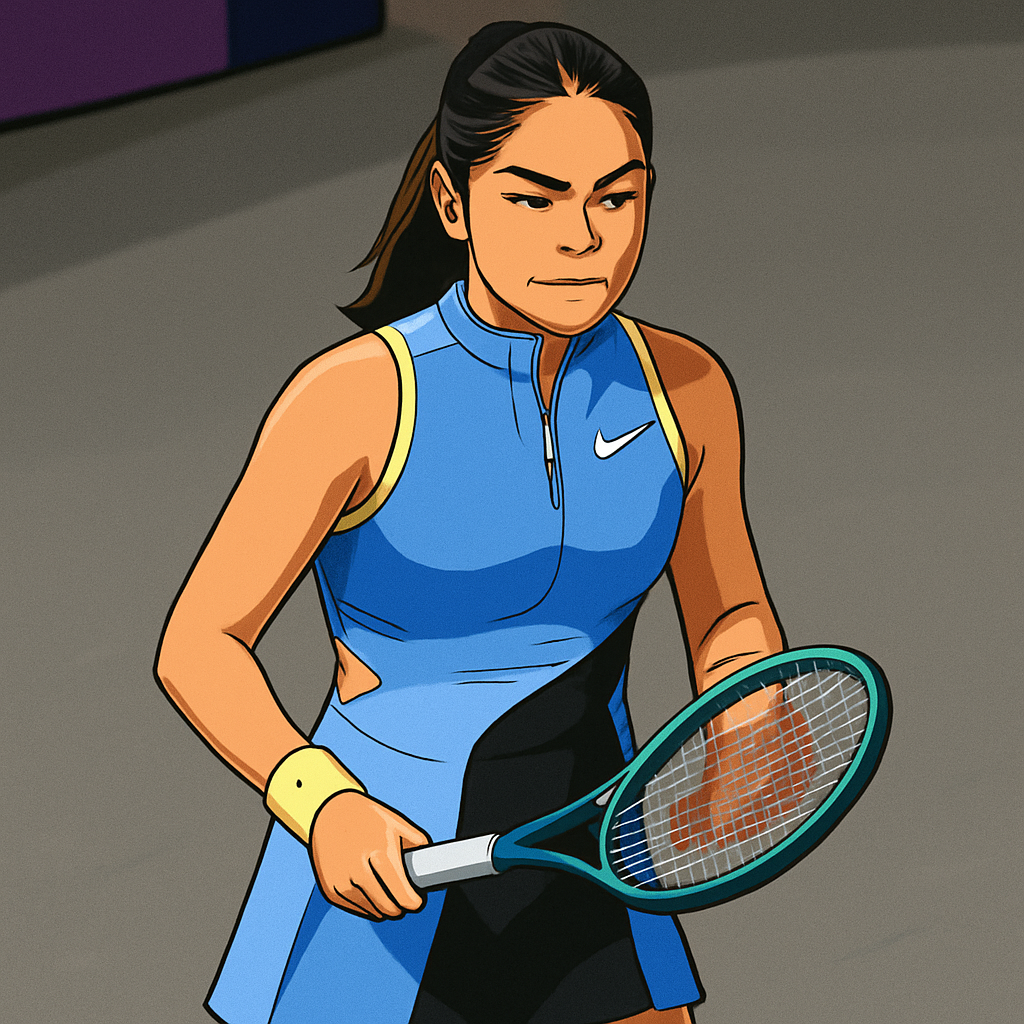
CLUJ-NAPOCA, Romania — Emma Raducanu's hopes of a triumphant return to the scene of her first WTA title were emphatically dashed on Sunday as she was comprehensively outplayed by Romania's Sorana Cirstea in the final of the Transylvania Open. The British star, who won this event in 2021 as a teenage sensation, was swept aside 6-2, 6-1 in a brutally one-sided contest that lasted a mere 63 minutes.
The match, played in front of a partisan home crowd at the BTarena, was a stark reminder of the gulf in experience and current form between the 22-year-old Raducanu and the veteran Cirstea. From the outset, the 33-year-old Romanian, competing in her first final in six years, dictated play with relentless depth and power, leaving Raducanu scrambling and unable to impose her own game. The Briton’s serve, a key weapon when she is confident, faltered under pressure, yielding five double faults and winning just 44% of points behind her first delivery.
A Dominant Display from Start to Finish
Cirstea set the tone immediately, breaking Raducanu’s serve in the opening game. She never looked back. Her aggressive baseline hitting, particularly off the forehand wing, pinned Raducanu deep behind the baseline. Raducanu, who had shown flashes of her brilliant best in reaching the final without dropping a set, struggled to find any rhythm or answer to Cirstea’s intensity. The first set was wrapped up in 33 minutes, with Cirstea winning an impressive 86% of points behind her first serve.
Any hopes of a Raducanu fightback in the second set were quickly extinguished. Cirstea broke twice to race into a 4-0 lead, her confidence soaring with every crushing winner. Raducanu’s errors mounted—she finished with 21 unforced errors to just nine winners—as her frustration became visible. She managed to avoid the dreaded "bagel" by holding serve for 1-5, but Cirstea served out the match to love in the next game, sealing victory with a powerful serve that Raducanu could only return long.
The Stark Numbers Behind the Defeat
The statistics from the final paint a clear picture of Cirstea’s dominance and Raducanu’s struggles. Beyond the lopsided scoreline, the match data reveals the comprehensive nature of the performance:
- Total Points Won: Cirstea 58, Raducanu 33.
- Break Points Converted: Cirstea 4/7, Raducanu 0/0.
- First Serve Points Won: Cirstea 86%, Raducanu 44%.
- Winners: Cirstea 14, Raducanu 9.
Perhaps most telling was Raducanu’s failure to earn a single break point opportunity against the Cirstea serve. This complete lack of pressure allowed the Romanian to swing freely and maintain relentless aggression throughout the brief encounter. In her post-match analysis, Raducanu was candid, stating, "Sorana played really well and I think I started off slowly. I never really got into it. She was dominating the play."
Contrasting Journeys to the Final
The final represented a crossroads for two players on very different trajectories. For Cirstea, this was a career-resurgent moment. Her victory marked her third WTA title, a full 16 years after her first, and is set to propel her back into the world's top 25. The emotional weight of winning at home was not lost on her. "It’s a very special moment to win at home," Cirstea said. "The crowd was incredible from the first point to the last. I felt like I played some of my best tennis this week."
For Raducanu, the week in Cluj-Napoca was nonetheless a significant positive step in her long and arduous comeback from multiple wrist and ankle surgeries. Since her stunning 2021 US Open victory, her career has been plagued by injuries and inconsistency. This run to a final—her first since that Flushing Meadows triumph—represented her most consistent tournament in over two years. She defeated top-50 players like Ana Bogdan and showed glimpses of the fearless tennis that made her a global star. However, the final exposed the work still required to compete with the tour’s most in-form players.
The Road Ahead for Raducanu
Despite the heavy loss, the consensus is that Raducanu’s Transylvania Open campaign should be viewed as a net success. She demonstrated improved physical resilience, playing four matches in five days without apparent issue—a crucial milestone. Her ranking is projected to rise from around 83 back inside the top 70, easing her path into bigger tournaments. The key takeaway, however, will be the level required to win titles. As she acknowledged, "It’s a great step forward for me this week. I’ll take the positives."
The challenge now is to build on this momentum. The defeat to Cirstea highlighted specific areas for immediate focus: developing a more reliable first serve under pressure, constructing points more effectively against aggressive opponents, and maintaining tactical discipline when her initial game plan is neutralized. Her team will likely dissect the match as a valuable learning tool against a veteran who executed a perfect game plan.
A Triumph of Experience and Home Support
For Sorana Cirstea, the victory was a testament to perseverance and the galvanizing effect of a home crowd. Her powerful, flat-hitting style was perfectly suited to the indoor hard courts, and she managed the occasion with the poise of a player who has been in 15 previous WTA finals. She dedicated the win to her late father, who introduced her to tennis, making the moment in front of her compatriots profoundly emotional. "This one is for him," she said, fighting back tears during the trophy ceremony.
The Romanian’s victory also served as a reminder that on the WTA Tour, experience and peak form can decisively trump youthful talent on any given day. She capitalized on every opportunity, punished short balls mercilessly, and gave Raducanu no time to settle. It was a masterclass in proactive, front-foot tennis that fully deserved the title.
In conclusion, while the headline from the BTarena will focus on Emma Raducanu’s heavy defeat, the broader narrative is more nuanced. For Raducanu, the tournament was a successful and necessary step in her return to the upper echelons of the sport, even if the final revealed the summit is still some distance away. For Sorana Cirstea, it was a fairytale homecoming and a glorious validation of her enduring quality. The 63-minute final, though brutally one-sided, provided a compelling snapshot of two compelling careers at very different points, with one player celebrating a long-awaited peak and the other steadily climbing back toward hers.