
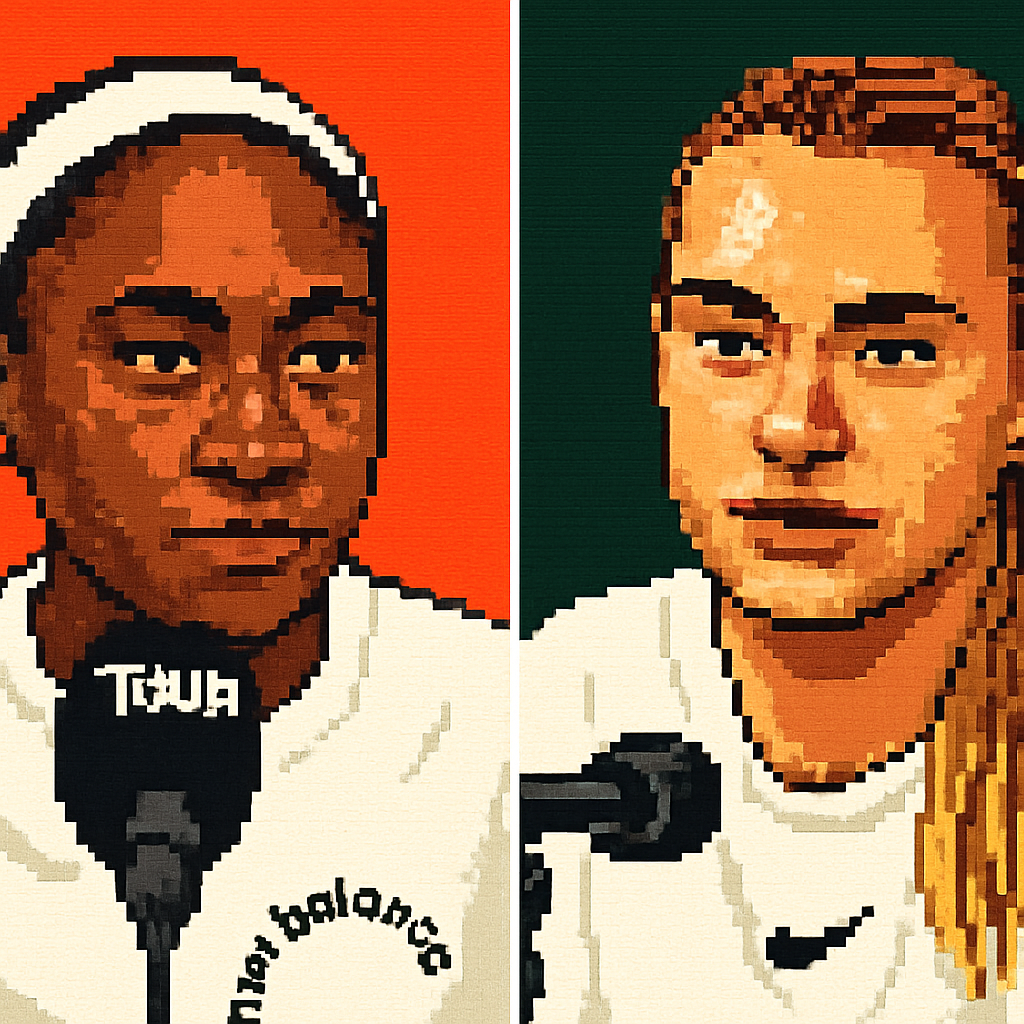
DUBAI — The tennis world finds itself embroiled in another controversy at the intersection of sport and geopolitics, as world No. 2 Aryna Sabalenka’s withdrawal from the Dubai Tennis Championships has sparked a furious reaction from the Belarusian star and a powerful show of support from her American rival, Coco Gauff.
Sabalenka, the reigning Australian Open champion, was forced to pull out of the WTA 1000 event just hours before her opening match, citing a lower back injury. However, the situation escalated dramatically when it was revealed that her participation had been under a cloud of uncertainty due to the tournament's reported stance on providing her with security assurances. The incident has reignited the debate over the treatment of Russian and Belarusian athletes since the onset of the war in Ukraine.
The Spark: Security Concerns and a Threatened Boycott
According to multiple reports, Sabalenka’s team had sought specific security guarantees from tournament organizers in Dubai, a request stemming from the heightened political tensions and the potential for protests or hostile reactions from some spectators. When those assurances were not fully met, Sabalenka made the difficult decision to withdraw, citing the injury but leaving little doubt about the underlying context.
In an emotional statement posted to her Instagram, Sabalenka did not mince words, expressing her deep frustration and hinting at a potential future boycott of tournaments she feels do not ensure her safety. "It’s the worst feeling ever to not be able to compete because of the things that are not under your control," she wrote. "I hope the WTA will solve this issue and I cannot wait to be back stronger than ever."
The core of Sabalenka’s grievance centers on the WTA’s policy, which allows Russian and Belarusian players to compete as neutral athletes but does not mandate specific security protocols from individual tournaments. This leaves players like Sabalenka to negotiate their own safety arrangements, a situation she finds unacceptable. Her statement carried a clear warning: "I hope I never have to make a decision like this again, but if my safety is not guaranteed, I will not put myself at risk."
Gauff’s Unwavering Support: A Voice of Unity
In the midst of the brewing storm, US Open champion Coco Gauff stepped forward with a powerful message of solidarity. Speaking to reporters in Dubai after her own victory, Gauff unequivocally backed Sabalenka’s position, framing the issue as one of fundamental player safety and fairness.
"I think she should get security," Gauff stated firmly. "I feel like any player, if they request security, should get it. Especially for her, being in the situation she’s in. I don’t think it’s fair to put the player in the position to have to choose between their safety and playing the tournament."
Gauff’s support is particularly significant given the political backdrop. As an American, her stance transcends the typical narratives of division, emphasizing a shared professional responsibility. She highlighted the unique pressures faced by athletes from Russia and Belarus, noting, "It’s a tricky situation for her and for all the players in her position. No one should feel unsafe doing their job."
Gauff’s advocacy didn't stop at words of support. She pointedly called on the WTA to establish a clearer, more robust framework to prevent similar situations. Her comments underscored a belief that the tour’s leadership must take a more active role: "The WTA should have a protocol for this. It shouldn’t be left to the player to figure out or to have to withdraw. That’s not right."
A Recurring Wound for the WTA
This incident is not isolated. It echoes the distress voiced by Ukrainian players like Lesia Tsurenko and Marta Kostyuk, who have spoken about the emotional toll of competing against neutral athletes from nations involved in the war. Now, the tour faces the inverse problem: athletes from Russia and Belarus feeling vulnerable and unprotected.
The WTA finds itself in an increasingly impossible position, trying to balance its founding principles of open competition with the stark realities of global conflict and ensuring the well-being of all its athletes. The current neutral-flag policy, while a compromise, appears to be satisfying few and creating new operational crises at tournaments.
Key points of tension include:
- Player Safety: Who is ultimately responsible for guaranteeing the physical security of athletes in politically charged environments?
- Tournament Autonomy: Should individual event organizers bear the cost and logistics of enhanced security?
- WTA Mandate: Does the tour need a universal security standard for all players, regardless of nationality?
The Road Ahead: Implications and Reactions
Sabalenka’s threatened boycott poses a serious challenge to the WTA. The potential absence of a top star from major tournaments over safety concerns would be a significant blow to the sport’s commercial and competitive integrity. Other players from Russia and Belarus will be watching the outcome closely, potentially considering similar actions if their concerns are not addressed.
The tennis community’s reaction has been mixed. Some fans and commentators support Sabalenka’s right to demand safety, while others argue that athletes from nations engaged in conflict must accept a degree of added scrutiny. Yet, Gauff’s stance has shifted the conversation, framing it less as a political issue and more as a basic duty of care from a professional sports organization.
As of now, the WTA has issued a standard statement acknowledging Sabalenka’s withdrawal due to injury but has not publicly commented on the security negotiations or Gauff’s calls for a policy change. This silence is likely temporary, as pressure mounts for an official response.
Conclusion: A Defining Moment
The clash in Dubai transcends a single player’s withdrawal. It has exposed a critical fault line in the WTA’s post-invasion governance. Coco Gauff’s decision to stand up for Aryna Sabalenka, her direct competitor, highlights a powerful consensus among players: the tour must do more to protect its athletes.
What began as a back injury announcement has blossomed into a defining moment for women’s tennis. The WTA is now confronted with a urgent choice: maintain its current hands-off approach and risk further instability and player boycotts, or step in to create a clear, enforceable safety protocol that applies to all.
As Gauff powerfully asserted, the goal should be universal. "I hope that the WTA can come to a solution for not just Aryna, but for all the players who might feel unsafe. We’re all here to play tennis. That should be the only thing on our minds when we walk onto the court." The world will be watching to see if the tour’s leadership can turn that hope into a concrete reality.