
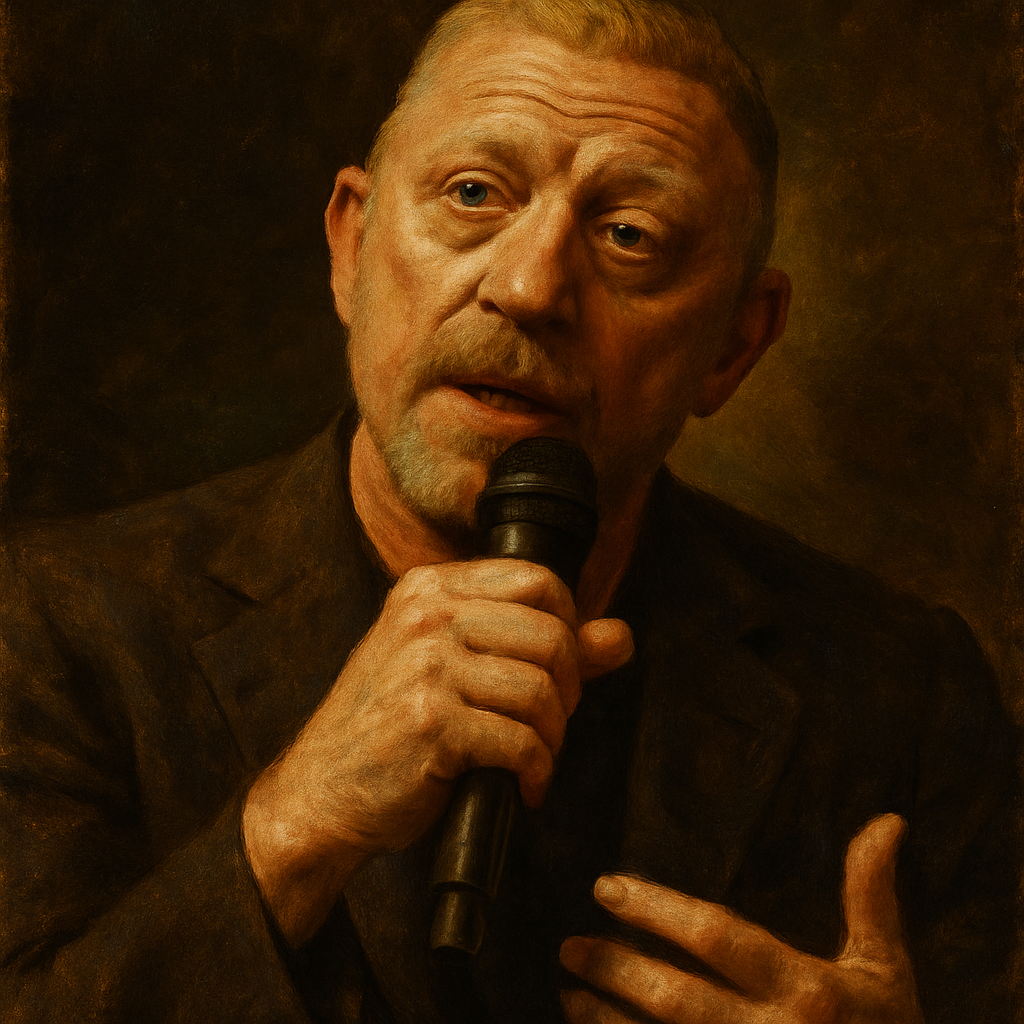
Tennis legend Boris Becker has spoken with shocking candor about his eight-month incarceration in a British prison, describing a world of constant noise, fear, and the haunting screams of fellow inmates. The three-time Wimbledon champion, who was released in December 2022, has detailed his experience inside HMP Wandsworth and HMP Huntercombe, painting a stark picture of life behind bars in one of the UK's toughest institutions.
A World of Noise and Fear
LONDON — In a series of interviews following his release and subsequent deportation to Germany, Becker revealed the psychological toll of his imprisonment. He was sentenced to two and a half years in April 2022 for illicitly transferring large amounts of money and hiding assets after he was declared bankrupt. Of his sentence, he served just eight months in the UK before being released and deported.
Becker was initially sent to HMP Wandsworth, a Category B men's prison in South London known for its overcrowding and challenging conditions. He described the environment as a sensory assault, a far cry from the quiet concentration of Centre Court. "Prison is a very noisy place," Becker stated. "There is no silence. You are listening to the screams and the doors banging and the curses 24/7."
The six-time Grand Slam champion admitted he lived in a state of constant low-grade fear, a feeling unfamiliar to an athlete used to controlling a match. He learned quickly that survival depended on adapting to a new set of rules. "You are scared every day... You have to be on your guard all the time," he reflected, noting that the bravado and aggression of other inmates created a perpetually tense atmosphere.
Life Inside Wandsworth's Walls
Becker's daily routine was a stark contrast to his former life of international travel and luxury. At Wandsworth, he was assigned a job sewing mailbags, for which he was paid a pittance. He shared a small, cramped cell with another inmate, a space that became his entire world for a significant portion of his sentence.
The former world number one outlined a typical day, which was governed by a strict and monotonous schedule:
- 6:00 AM: Wake-up and cell unlock.
- 7:00 AM: Breakfast in the cell.
- 8:00 AM: Work shift, often sewing or another menial task.
- 12:00 PM: Lunch and limited association time.
The afternoons were often spent locked back in the cell until the evening meal. Becker noted that the lack of privacy and constant supervision were among the most difficult adjustments. "You have no freedom. You are told when to eat, when to sleep, when to wake up. You are a number," he said.
The Threat of Violence
Becker did not shy away from discussing the underlying threat of violence that permeated the prison. He described witnessing fights and having to navigate complex social hierarchies to avoid conflict. "There are people in there who have nothing to lose. You learn to keep your head down, to be respectful, to not make eye contact with the wrong person," he explained.
He credited his survival to his mental fortitude, developed over years of high-pressure tennis, and his ability to connect with people from all walks of life. Remarkably, he even found a role as an informal advisor and listener for other inmates, some of whom sought his advice on their own legal and personal problems.
A Transfer and a Glimmer of Hope
After several months, Becker was transferred to HMP Huntercombe in Oxfordshire, a Category C prison with a lower security level and a focus on resettlement. The environment was notably different from Wandsworth. "Huntercombe was quieter, more open. There was grass, there was a field. You could breathe a little," he recalled.
At Huntercombe, Becker was given a job as a fitness trainer, a role that better suited his skills and helped restore a sense of purpose. He began teaching sports and fitness classes to other prisoners, rediscovering a piece of his identity that had been lost behind bars. This period, he said, was crucial for his mental preparation for release.
Reflection and Rehabilitation
Now living in Germany, Becker has had time to process his ordeal. He acknowledges his crimes and expresses deep regret for the actions that led to his imprisonment. "I made mistakes. I paid for them. It was the loneliest and most punishing experience of my life," he stated.
He has spoken about the profound lessons learned from his time inside, emphasizing the importance of humility and responsibility. The experience has given him a new perspective on his life and fame. "You are stripped of everything in there. Your name, your title, your money. It doesn't matter. You are just a man in a cell."
Becker also expressed criticism of the UK prison system, particularly its focus on punishment over rehabilitation. He argued that many inmates are released without the skills or support to reintegrate into society, leading to a cycle of reoffending. He has since expressed a desire to work with prison reform charities, using his platform to advocate for change.
A New Chapter
Since his deportation, Becker has returned to his role as a television pundit for Eurosport, covering major tennis tournaments. Colleagues and viewers have noted a newfound depth and gravitas in his commentary. His personal life has also stabilized, and he has spoken about the joy of being reunited with his family and the simple freedoms he once took for granted.
Boris Becker's story is a dramatic fall from grace and a testament to the harsh reality of the penal system. His account of listening to screams in the dark, of surviving on wits and willpower, offers a rare glimpse into a world few ever see. As he told an interviewer, "Prison breaks you down to build you back up, but it doesn't always succeed. I was one of the lucky ones. I got out, and I will never, ever go back."