
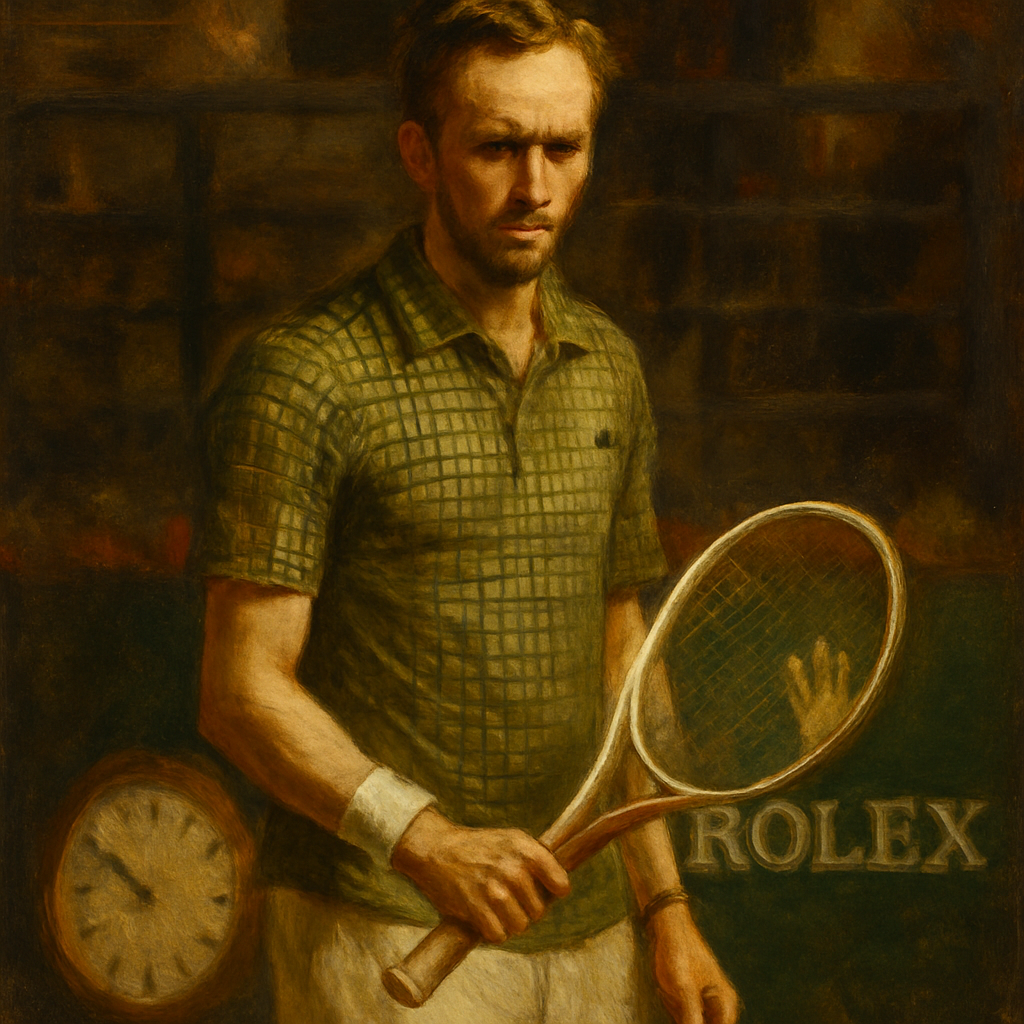
DUBAI — The global tennis tour, a symbol of seamless international travel and elite competition, has been abruptly halted by geopolitical turmoil. A significant contingent of players, including former world No. 1 Daniil Medvedev, finds itself stranded in Dubai following a series of explosions and a significant escalation of conflict in the region, prompting the ATP to issue a formal statement on the unprecedented situation.
The disruption stems from Iran’s large-scale drone and missile attack on Israel over the weekend, which has led to severe airspace closures and massive flight cancellations across the Middle East. With Dubai International Airport—a major global hub—grappling with the fallout, numerous players who had just competed in the ATP 250 event in Marrakech, Morocco, are unable to reach their next scheduled tournament, the Monte-Carlo Masters, which begins on April 7th.
The Stranded Contingent
Among the most prominent names affected is Daniil Medvedev, the 2021 US Open champion and a key figure on the ATP Tour. Medvedev, who lost in the quarterfinals in Marrakech, is now stuck in transit in Dubai alongside several other top players. The group is reported to include Russian compatriets Karen Khachanov and Roman Safiullin, as well as other international stars like Argentina's Sebastián Báez and Spain's Alejandro Davidovich Fokina, all of whom are slated to compete in the prestigious Rolex Monte-Carlo Masters.
The players face a logistical nightmare. With airspace over Israel, Jordan, and Iraq closed and flights across the region heavily impacted, finding alternative routes to the south of France has proven immensely difficult. Social media posts from the players have highlighted the uncertainty and frustration. "We are stuck in Dubai. We don't know when we will fly out. We are trying to find a solution," one player's representative told reporters, capturing the mood of the stranded contingent.
ATP Breaks Its Silence
Facing growing questions about player safety and the integrity of the upcoming Masters 1000 event, the ATP released an official statement addressing the crisis. The tour acknowledged the "highly complex and evolving situation" and confirmed it is working tirelessly to assist affected players and their teams. "The safety of our players and staff is our top priority," the statement read, emphasizing that the organization is in constant communication with relevant authorities and security experts.
The ATP's communication outlined the immediate challenges and their response plan, which includes:
- Continuously monitoring air travel updates and security advisories.
- Exploring all possible travel alternatives, including potential charter flights and rerouting through other European hubs.
Furthermore, the statement addressed the potential impact on the Monte-Carlo tournament schedule, stating, "We are in close contact with the tournament director of the Rolex Monte-Carlo Masters. Contingency plans are being discussed to accommodate any late arrivals, including potential adjustments to the match schedule in the early rounds." This suggests that the tournament may have to grant special allowances or delay matches for players who cannot arrive in time for their scheduled fixtures.
A Broader Tour Disruption
The situation in Dubai is not an isolated incident but a stark reminder of how international sports are vulnerable to global events. The conflict has caused ripple effects across the tennis calendar. The ATP Challenger tour event in Tel Aviv, Israel, was immediately canceled. Meanwhile, the WTA 500 tournament in Stuttgart, Germany, set to begin next week, is also monitoring the situation closely, as several players are in similar transit limbo.
This crisis echoes previous tour disruptions, such as the travel chaos caused by the 2010 Icelandic volcanic ash cloud and, more recently, the global pandemic. However, the direct link to active military conflict adds a layer of grave concern beyond mere logistics. Player agents and tour officials are not just booking flights; they are conducting urgent security assessments for every potential travel route.
The Human Element: Player Anxiety
Beyond the schedule, the human cost is palpable. Players, often lauded for their mental toughness on court, are confronting a profound sense of vulnerability. Being stranded thousands of miles from their next destination, with news feeds dominated by reports of explosions and retaliation, takes a significant psychological toll. The uncertainty undermines the meticulous preparation that defines elite athletic performance.
As one veteran coach noted anonymously, "These are athletes who thrive on routine and control. This situation strips all of that away. They're worried about their safety, their families back home, and whether they'll be physically and mentally ready to compete even if they do get there. It's an immense, unplanned burden." This anxiety is shared by support staff, families, and tournament organizers, creating a cloud of stress over what is typically a celebratory start to the European clay-court season.
Looking Ahead: Contingencies and Questions
As the ATP and players scramble for solutions, several critical questions remain unanswered. The viability of charter flights depends on securing landing rights and navigating still-congested air corridors. The Monte-Carlo tournament, played at the picturesque Monte-Carlo Country Club, now faces the prospect of a depleted or exhausted draw, potentially affecting the quality of one of the tour's most iconic events.
This incident is likely to spark broader conversations within tennis governance about crisis protocols for regional conflicts. While tours have robust plans for weather delays or medical emergencies, geopolitical disruptions of this scale present a unique and complex challenge. The coming days will be a critical test of the ATP's logistical capabilities and its commitment to player welfare under extreme circumstances.
For now, Daniil Medvedev and his fellow competitors wait in Dubai hotels, their tennis bags packed but going nowhere. Their plight underscores a simple, stark reality: in a divided world, even the globe-trotting circus of professional tennis cannot outrun the reverberations of international conflict. The hope for a swift and safe resolution is the only serve anyone can currently attempt.