
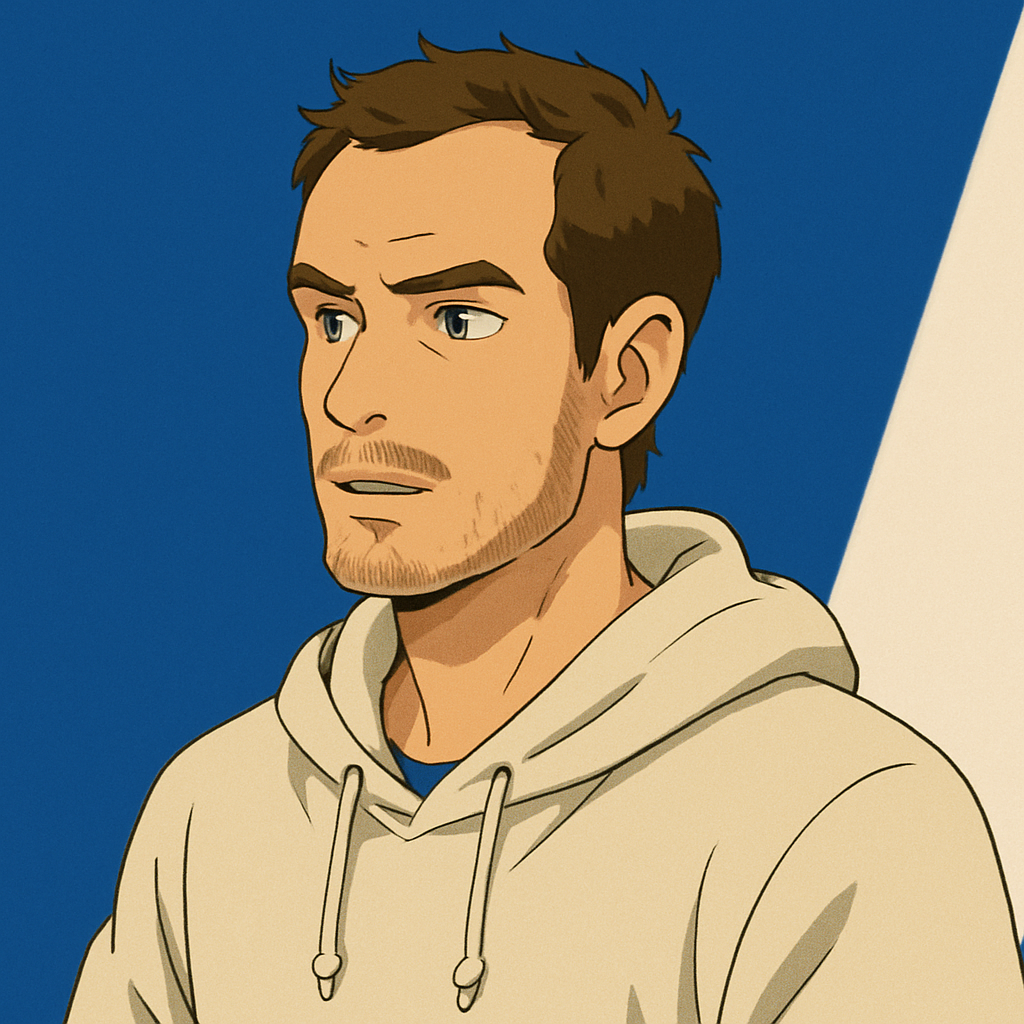
LONDON — In a rare and deeply personal revelation, former world number one Andy Murray has opened up about the profound impact his professional tennis career had on his family, particularly his eldest daughter, Sophia. The three-time Grand Slam champion, who has been navigating a prolonged and emotional farewell from the sport, shared that Sophia "really struggled" with the conclusion of his playing days.
Murray, 37, made the candid admission during a wide-ranging interview ahead of what is expected to be his final Wimbledon appearance. While the physical toll of his career—marked by a metal hip and countless surgeries—is well-documented, Murray shifted focus to the unseen emotional cost borne by his loved ones. He described a poignant moment of realization when he understood that his retirement was not just an endpoint for him, but a seismic shift in the life of his eight-year-old daughter.
The Unseen Toll of a Globetrotting Career
For the majority of Sophia’s life, her father’s identity has been inextricably linked to his presence on the tennis court. From her birth in 2016, Murray’s schedule was a relentless cycle of global tournaments, training blocks, and extended periods away from home. While he and his wife, Kim Sears, worked tirelessly to maintain normalcy, the structure of their family life was fundamentally built around the rhythms of the ATP Tour.
"Kids thrive on routine and predictability," Murray explained. "And for Sophia, her routine involved Daddy travelling, playing matches on TV, and then coming home. It was her normal. When it became clear that was stopping, that her normal was disappearing, she found it incredibly difficult to process. She’s a bright, sensitive girl, and she was mourning the loss of something that was a huge part of her world."
This period coincided with Murray’s own very public and physically painful attempts to prolong his career. The Brit, known for his gritty perseverance, underwent major hip resurfacing surgery in 2019 in a last-ditch effort to continue competing. His subsequent comeback, while inspirational, involved visible limping, early exits, and frequent discussions about retirement in the media—a narrative his children could not escape.
A Father's Guilt and a Daughter's Confusion
Murray revealed that Sophia’s struggles manifested in questions about identity and a palpable sense of loss. "She would ask things like, 'But if you’re not a tennis player, what are you?' or 'Will we not go to Wimbledon anymore?'" he shared. "It hit me then that I hadn’t just been preparing myself for this transition. I needed to prepare my family, too. There was a guilt there, for sure, that my career choice caused her such upset."
The tennis star described the delicate balancing act of managing his own complex emotions—grief for a career ending, pain from his body, pressure from the public eye—while being the steady rock his daughter needed. He emphasized that the support of his wife, Kim, was "the only thing that made it manageable."
To help Sophia and his younger son, Edie (6), understand and navigate the change, Murray and his family have taken deliberate steps. These include:
- Open Communication: Encouraging questions and talking honestly about feelings of sadness and change.
- Maintaining Traditions: Ensuring they still attend Wimbledon as a family, shifting from a workplace to a cherished spectator event.
- Creating New Normals: Building new routines that don’t revolve around tournament schedules.
Broader Reflections on Sport and Family Life
Murray’s experience casts a spotlight on a rarely discussed aspect of elite athletics: the effect on athletes' children. The lifestyle, often glamorized, involves immense sacrifice from the entire family unit. "People see the finals, the trophies, the travel," Murray noted. "They don’t see the missed birthdays, the school plays attended via FaceTime, or the confusion in a child’s eyes when you leave for the tenth time that year. And they certainly don’t see the adjustment when it all stops."
He expressed hope that by speaking out, he might help other athletes and their families prepare for the inevitable transition. "The end of a career is talked about in terms of rankings dropping or legacy. We need to talk more about the human side—the identity crisis, not just for the athlete, but for their spouse and kids who have lived it with them every single day."
Looking Forward to a New Chapter
Now, with his retirement imminent following the summer, Murray’s focus is firmly on the future. He reports that Sophia, with time and support, is adapting to the new reality. "She’s starting to get excited about me being home more, about doing normal dad things. That’s the silver lining," he said with a smile. "I’ll be there for the school runs, the homework, the weekends that aren’t interrupted by a flight to another continent. That’s what I’m looking forward to now."
While the sporting world prepares to bid farewell to one of Britain’s greatest athletes, Murray is embarking on what he considers his most important role yet. The man who carried the hopes of a nation on his shoulders for over a decade is now prioritizing the emotional well-being of his young family, proving that the toughest battles are often fought far from the Centre Court spotlight.