
MELBOURNE — The Australian Open is a tournament of raw emotion, where the hopes of a nation often rest on the shoulders of its local heroes. For Alex de Minaur, the weight of expectation was immense as he entered the second week as the top-ranked Australian man. Yet, on a dramatic Monday at Melbourne Park, the spotlight shifted from his own commanding victory to a scene of shared heartbreak, as his partner, British No. 1 Katie Boulter, suffered a stunning collapse on an adjacent court.
De Minaur had just delivered a masterclass, dismantling Italian fifth seed Andrey Rublev 6-4, 6-7(5), 6-7(4), 6-3, 6-0 in a four-hour epic to reach his first Australian Open quarterfinal. The atmosphere in Rod Laver Arena was electric, a cathartic release for a player finally breaking through the last-16 barrier at his home Slam. But as the cheers subsided, news began to filter through from Margaret Court Arena.
There, Boulter, the 27-year-old who had been in scintillating form, held a commanding 5-1 lead in the final set against China’s Qinwen Zheng, the 12th seed. A place in her own maiden Grand Slam quarterfinal was within touching distance. What followed was a brutal unraveling. Zheng, showing the resilience that would carry her to the final, reeled off six consecutive games to snatch a 6-7(4), 6-3, 6-7(8) victory, saving two match points in the process. The collapse was total and devastating.
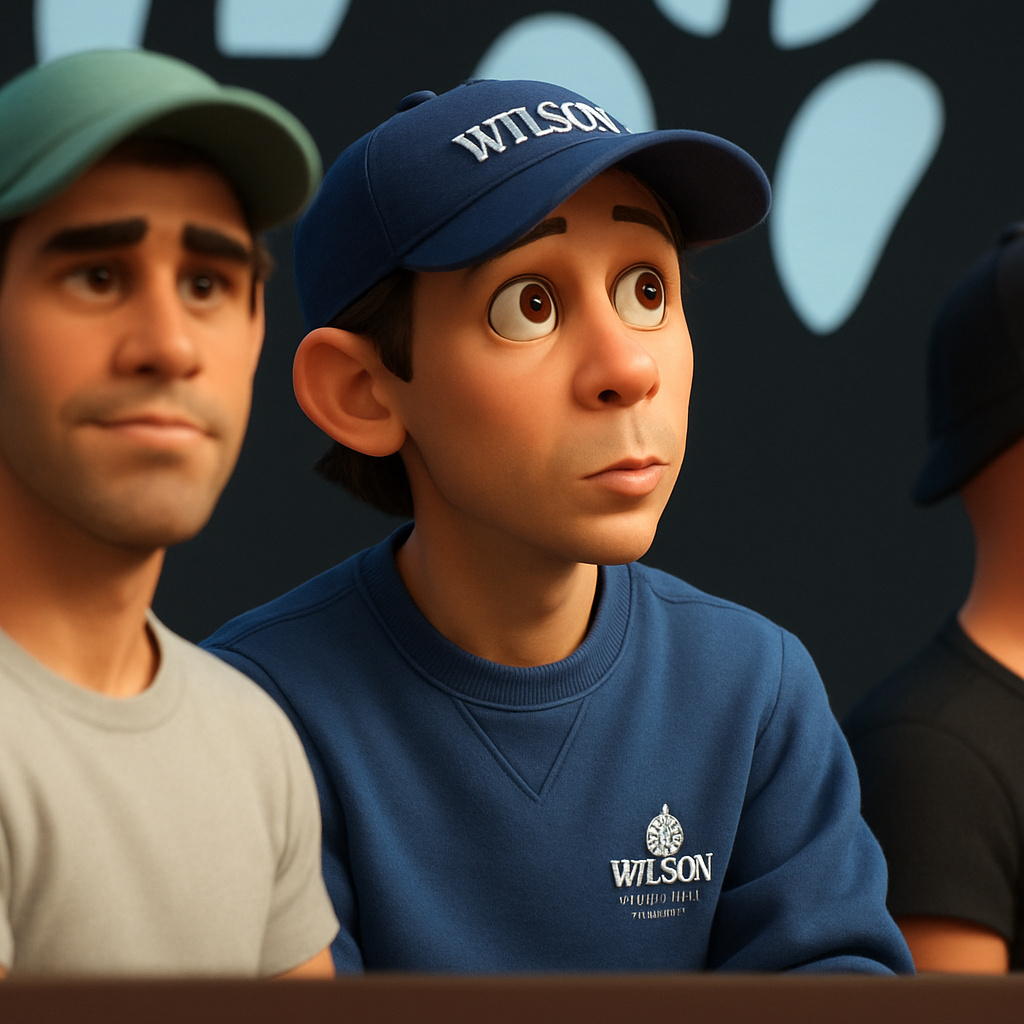
It was in the player’s tunnel where the most poignant moment unfolded. De Minaur, still buzzing from his own historic win, was captured on broadcast footage waiting for Boulter. When she emerged, the devastation was etched on her face. De Minaur’s reaction was immediate and instinctive. He opened his arms, pulling her into a long, tight embrace, his head resting gently on hers. He whispered words of consolation, his own triumphant euphoria momentarily set aside to share in her profound disappointment.
A Tale of Two Matches: Triumph and Agony
The juxtaposition of the two matches could not have been more stark. De Minaur’s victory was a testament to his newfound physical and mental fortitude. Once criticized for a lack of weaponry, ‘The Demon’ hunted down Rublev’s powerful forehand with relentless defensive prowess, turning defense into offense with breathtaking speed. His post-match interview was filled with the joy of a dream realized. "I'm extremely happy that I was able to get the win and give myself a look at a quarter-final," he said, beaming.
Conversely, Boulter’s match was a slow-burn tragedy. After splitting the first two sets, she fought off two match points in a gripping third-set tiebreak, seemingly seizing all momentum. Her powerful, flat groundstrokes were dictating play. The decisive factors in her collapse were multifaceted:
- Nerves: Serving for the match at 5-2 and 5-4, the magnitude of the occasion seemed to tighten her game.
- Zheng’s Resilience: The Chinese star elevated her level, particularly her serve and forehand, under extreme pressure.
- Physical Drain: The cumulative effort of a long, intense battle began to show in Boulter’s movement.
Boulter was gracious in defeat but visibly shattered. "I'm absolutely gutted," she admitted in her press conference. "I put myself in a position to win, and I didn't take it. I think she raised her level and I maybe dropped a little bit. It's a tough one to swallow."
The Power Couple’s Support System
The moment in the tunnel laid bare the unique dynamic of tennis’s premier power couple. Both are top-50 players carrying the hopes of their respective nations, a shared experience that few can truly understand. Their relationship, public and supportive, offers a window into the personal sacrifices and emotional rollercoaster of the tour. De Minaur has often spoken about how they push each other, analyzing each other’s games and providing a sanctuary from the sport’s intense pressures.
This incident highlighted that support system in its rawest form. De Minaur’s victory was instantly tempered by his partner’s pain. His priority was not celebrating his own career-best run, but offering solace. It was a silent testament to their bond, speaking volumes about his character. There was no performative celebration; instead, there was empathy, quiet strength, and shared silence in the face of a crushing setback.
The Road Ahead for De Minaur
The emotional whiplash of the evening now presents a unique challenge for de Minaur. He must compartmentalize the shared disappointment and re-focus on the greatest opportunity of his career: a quarterfinal against either world No. 2 Carlos Alcaraz or unseeded Miomir Kecmanovic. The Australian will need to harness the confidence from his win over Rublev while setting aside the emotional drain of Boulter’s loss.
Tennis history is littered with players whose campaigns have been derailed by off-court emotional distractions. However, de Minaur’s coach, two-time Grand Slam champion Lleyton Hewitt, will undoubtedly be drilling focus. The local hope has shown remarkable mental growth over the past 18 months, transforming from a perennial fourth-round contender into a genuine threat to the very best.
When asked later about balancing his own success with Boulter’s result, de Minaur was typically understated but revealing. "It's part of life, part of the journey," he said. "We're both professionals. We understand the highs and lows of the sport. Today was a high for me and a low for her. We'll be there for each other, like we always are."
Conclusion: More Than Just a Tennis Match
The story of Day 9 at the Australian Open was not just about a stunning comeback and a breakthrough victory. It was a human story, captured in a single, unguarded moment in a concrete tunnel. Alex de Minaur’s reaction to Katie Boulter’s defeat reminded everyone that behind the rankings, the prize money, and the roaring crowds, the athletes are people navigating a shared, often brutal, professional path.
While Boulter will rue a monumental missed opportunity, the support from her partner may prove a crucial anchor in processing the defeat. For de Minaur, the embrace was a reminder that some victories are personal, and that resilience is needed off the court as much as on it. As he prepares for his quarterfinal, he carries not only the hopes of Australia, but the quiet understanding of what it means to fall just short—a perspective that may yet make his own run even more determined.